
Your California Home: More Than Just Four Walls and a Roof
For many of us, a home in California isn’t just a building. It’s a dream, a sanctuary, a place where memories bloom. And usually, that dream includes a yard. Maybe it’s a sprawling garden in Sonoma, a drought-tolerant oasis in Pasadena, or a simple patch of green in the Valley where your kids play. We pour time, money, and love into these outdoor spaces. They define our curb appeal, offer shade on a scorching summer day, and often, they’re the first thing we see when we pull into the driveway.
But here’s the thing. Living here, especially in those beautiful, brush-laden hills or the dryer parts of the Inland Empire, means living with fire risk. It’s a reality we can’t ignore. Those stunning oak trees and native shrubs, while lovely, can also be a significant factor when it comes to protecting your home from wildfire. And that brings up a question most homeowners don’t think about until it’s too late: What exactly does my fire insurance say about my prized petunias, my mature citrus trees, or even that fancy new patio cover?
The Dual Nature of Your Yard: Beauty and Risk
Think about your yard for a moment. It’s a place of beauty, right? A place you’ve probably invested a good chunk of change in. You’ve got trees, shrubs, maybe some flower beds, a manicured lawn. Perhaps a fence, a detached shed, or even an outdoor kitchen. All of it adds value, enjoyment, and character to your property.
But in California, your yard also plays another role. It’s your home’s first line of defense — or its biggest vulnerability — against wildfire. A well-maintained, fire-resistant yard can slow a fire’s spread, giving firefighters precious time. A yard full of dry brush, highly flammable plants, or unmaintained dead leaves, though? That’s an express lane for embers, directly to your home. It’s a big difference.

What Your Policy Likely Covers (and Where It Falls Short)
You might assume that if a wildfire rips through your property, your insurance will just replace everything that’s gone. The short answer is yes. The real answer is more complicated. Most standard homeowners’ policies, even those covering fire, *do* offer some coverage for landscaping. This usually falls under “other structures” or “additional coverages.”
Typically, you’ll find a limit expressed as a percentage of your dwelling coverage. Say your home is insured for $500,000. Your policy might offer 5% of that for trees, shrubs, and other plants. That’s $25,000. Sounds like a lot, right? But wait — there’s usually a per-item limit, too. Maybe it’s $500 or $1,000 per tree. Suddenly, that mature avocado tree you’ve nurtured for years, worth far more than a grand, might only get you that specific amount back. It’s a hard pill to swallow if you’ve lost several valuable specimens.
This coverage usually applies to damage from perils like fire, lightning, explosion, vandalism, or even a vehicle hitting your tree. Wind damage might be covered, but often not for trees that just fall due to rot or old age. That’s a maintenance issue, not an insurable event.
What about structures in your yard? A detached garage usually has its own coverage limit. But fences, pergolas, gazebos, or a fancy outdoor fire pit? These might fall under “other structures” coverage, which also has a specific limit, perhaps 10% of your dwelling coverage. It’s separate from your plant coverage. And here’s another kicker: a lot of policies *don’t* cover the cost of removing debris from fallen trees or burnt landscaping *unless* it damages a covered structure. That cleanup can be incredibly expensive, especially after a major fire.
The “Why” Behind Insurers’ Scrutiny of Your Yard
For California homeowners, especially those in high-risk zones like parts of Ventura County or the Sierra foothills, getting — or keeping — fire insurance has become a challenge. Premiums jumped 40% between 2022 and 2024 for many. Some insurers, like State Farm and Allstate, have even pulled back from offering new policies in the state, citing wildfire risk and rebuilding costs.
Which brings up something most people miss. Your landscaping isn’t just about what *could* be replaced; it’s about whether you can get coverage *at all*. Insurers are looking for homes that are actively mitigating risk. They’re following state regulations, like CalFire’s defensible space rules, which require homeowners in high-risk areas to create a 100-foot buffer around their homes.
This isn’t just a good idea; it’s often a requirement for coverage. If your property doesn’t meet these standards, an insurer might refuse to renew your policy, or offer you only the bare-bones coverage through the California FAIR Plan — a last-resresort option that’s often more expensive and less comprehensive. They’re making a calculated risk assessment, and your yard is a huge part of that equation.
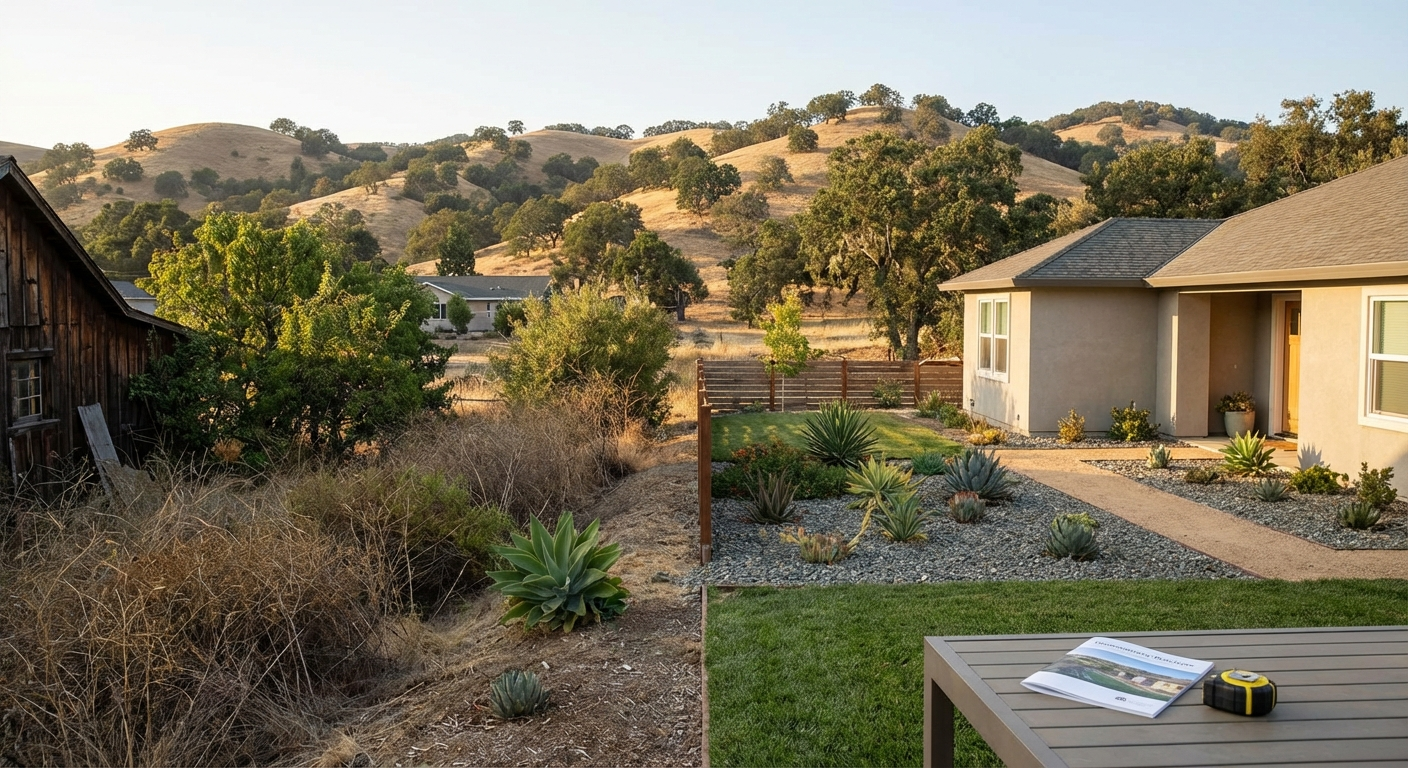
Turning Your Yard into a Fire-Safe Zone
So, what can you do? A lot, actually. And it directly impacts your insurability and, more importantly, your family’s safety.
First, understand the defensible space zones. Zone Zero is the immediate five feet around your home — think concrete, gravel, or very low-flammability plants. No combustible materials here. Zone One extends 30 feet out, requiring lean, clean, and green landscaping. Remove dead plants, thin out shrubs, keep grass mowed short, and remove anything combustible from under decks. Zone Two goes out 100 feet, focusing on reducing fuel loads and breaking up continuous vegetation.
Next, choose your plants wisely. Succulents, certain native grasses, and deciduous trees (which lose their leaves in winter) are generally less flammable than conifers like pines and junipers, or plants with oily leaves like eucalyptus. Think about spacing, too. Plants should be strategically placed to avoid creating a “fuel ladder” that can carry fire from the ground to your roof.
Honestly, this isn’t just about looking good. It’s about creating a hardened home. It’s about proactive maintenance. Clearing dead leaves, removing brush, trimming low-hanging branches — these aren’t just chores. They’re insurance policy actions. Many insurers are starting to offer discounts or preferred rates for homes that demonstrate strong mitigation efforts. It’s a shift in thinking, spurred by the realities of wildfires in places like Paradise or the hills above Los Angeles.
Finding the Right Advisor in a Shifting Landscape
This whole situation can feel overwhelming, especially with the constant changes in California’s insurance market. You’ve got Prop 103, new regulations, and insurers constantly adjusting their risk models. That’s why having a knowledgeable, local insurance agent is so important. Someone who understands the nuances of the California market, the specific risks in areas like Malibu or Lake Arrowhead, and what different carriers are looking for.
An agent like Karl Susman of LA Fire Coverage Insurance (CA License #0B75129) can walk you through your current policy, explain the limits on your landscaping, and help you understand what steps you can take to improve your home’s fire resiliency and, in turn, your insurability. You don’t want to find out you’re underinsured after a fire. It’s a conversation worth having *before* disaster strikes.
It’s not just about protecting your house; it’s about protecting everything that makes your house a home — including the yard you’ve worked so hard on. Get the peace of mind you deserve.
Ready to discuss your specific situation and see how your landscaping factors into your fire insurance? Get a quote today.
Frequently Asked Questions About Fire Insurance and Landscaping
Does my standard homeowners insurance cover trees and shrubs if they burn in a wildfire?
Most standard homeowners’ policies do offer some coverage for trees, shrubs, and other plants damaged by fire. However, this coverage is usually limited to a percentage of your dwelling coverage (often 5-10%) and also has a per-item limit, which might be $500 or $1,000 per tree. It’s important to check your specific policy for these limits.
Is debris removal for burnt trees and plants covered by my fire insurance?
Not always. Many policies only cover debris removal if the fallen or burnt trees and plants cause damage to a covered structure, like your home or a detached garage. The cost of simply clearing away burnt landscaping that didn’t damage a structure might not be covered, and that can be a significant out-of-pocket expense.
Can my landscaping choices affect whether I can get fire insurance in California?
Absolutely. Insurers are increasingly evaluating a property’s wildfire risk based on factors like defensible space and the flammability of landscaping. If your yard doesn’t meet state-mandated defensible space requirements or is filled with highly flammable vegetation, an insurer might deny coverage, refuse to renew your policy, or only offer a more expensive and limited policy through the California FAIR Plan.
Are fences, sheds, or outdoor kitchens in my yard covered by my fire insurance?
Yes, these types of structures are generally covered under the “other structures” portion of your homeowners’ policy. This coverage typically has its own limit, often 10% of your dwelling coverage. It’s separate from the coverage for trees and plants. Make sure to review your policy to understand these specific limits.
What’s the best way to make sure my landscaping helps, not hurts, my fire insurance situation?
Focus on creating robust defensible space around your home. This means maintaining clear zones around your house, choosing fire-resistant plants, regularly removing dead vegetation, and spacing plants appropriately. Consider consulting with a fire-wise landscaping expert. Then, talk to a knowledgeable agent like Karl Susman to ensure your efforts are reflected in your coverage and to understand any potential discounts.
Don’t wait until a fire is on the horizon. Understand your coverage and take steps to protect your home and yard. Get a quote from Karl Susman and LA Fire Coverage Insurance (CA License #0B75129) today!
This article is for informational purposes only and does not constitute financial advice.