What You’ll Learn
- How tiny embers cause massive damage, often far from the main fire.
- Why finding fire insurance in California has become a real challenge.
- What your existing policy likely covers – and where it might fall short.
- Practical steps to reduce your home’s fire risk and potentially lower premiums.
- How to work with an independent agent like Karl Susman to find the right coverage.
The Sneaky Threat: How Embers Burn California Homes
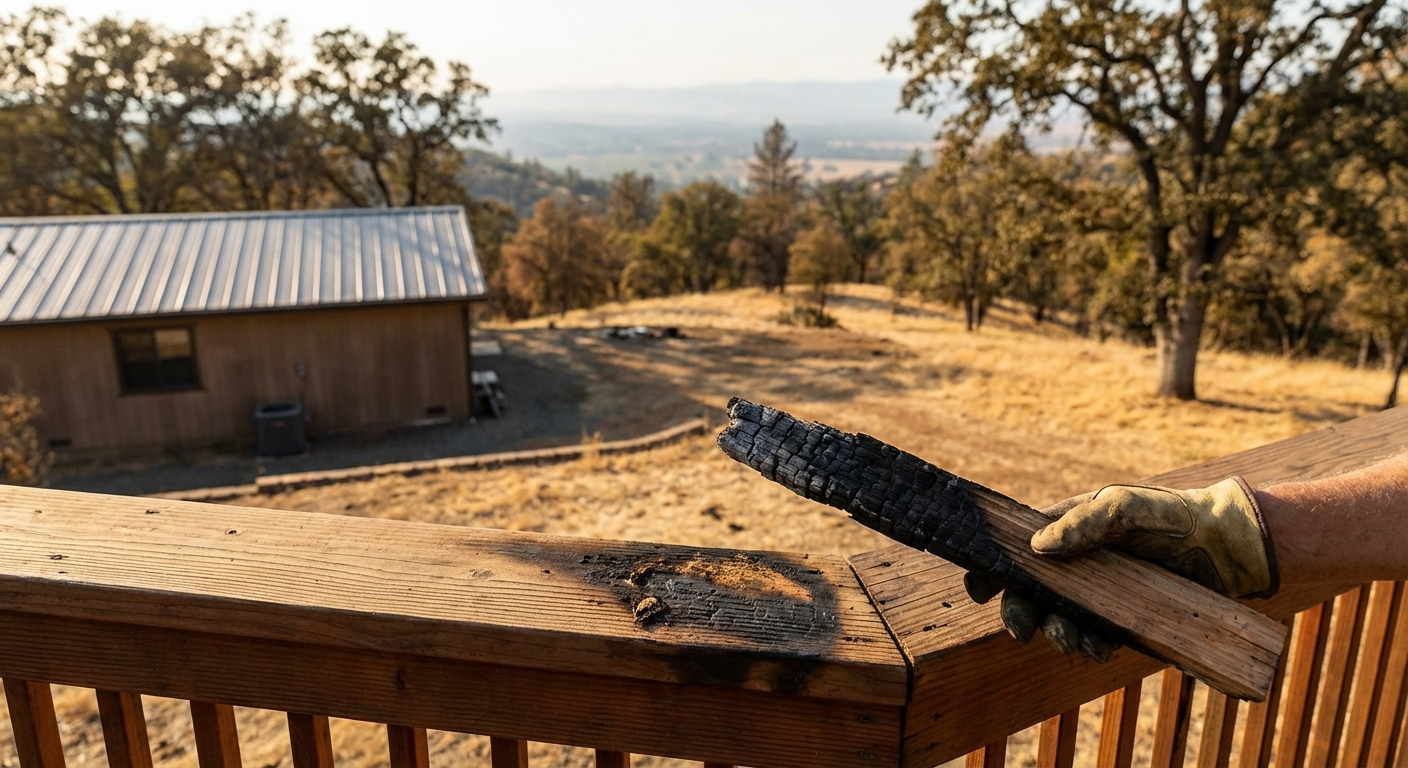
Most folks picture a raging wall of flame when they think about wildfires. They imagine their house being directly hit by that inferno. But here’s the thing: often, the biggest threat isn’t the flame front itself. It’s the embers. These tiny, glowing pieces of burning vegetation – sometimes no bigger than a fingernail – can travel for miles on strong winds. They’re silent. They’re relentless. And they’re responsible for a shocking amount of structural damage in California wildfires.
Think about the Camp Fire in Paradise. Or the Woolsey Fire that tore through Malibu and parts of Ventura County. Many homes didn’t burn because the main fire reached them. They burned because embers landed on a shake roof, slipped through an attic vent, or ignited a pile of leaves on a deck. Once inside, those embers can smolder for hours, undetected, before erupting into a full-blown house fire. It’s a sobering reality for anyone living in the wildland-urban interface – and frankly, for many communities well beyond it.

Why Ember Damage Is a Game-Changer for Insurance
Insurers have always modeled fire risk. But the scale and frequency of recent California fires, driven by hotter, drier conditions, have shifted the math. The sheer destruction caused by embers means that homes once considered “safe” because they weren’t directly adjacent to heavy brush are now seen as high risk. A house in the Valley might be miles from the Santa Monica Mountains, but if the winds are right, embers can still reach it.
This change in risk assessment has thrown the California insurance market into a tailspin. Many big names – State Farm, Allstate, Farmers – have either stopped writing new policies in high-risk areas or pulled back dramatically across the state. They’re struggling to keep up with the payouts. Which leaves homeowners scrambling.
Finding Coverage: A California Homeowner’s Gauntlet
For years, getting home insurance was a pretty straightforward deal. You’d call a few companies, compare rates, and pick a policy. Not anymore. Especially if you live anywhere near brush, or in a community that’s seen a major fire in the last decade. Suddenly, you might find yourself denied by every standard insurer.
This isn’t just about the immediate fire zone. Even communities like those in the Inland Empire or parts of Sonoma County, which have seen fires spread rapidly, are finding it tougher. Insurers are using sophisticated mapping software, looking at everything from your roof type to the slope of your yard, to the vegetation within a few hundred feet of your property. They’re even checking how close you are to a fire station. Every single factor plays into their decision.
The FAIR Plan: Your Last Resort (and What That Means)
When standard insurers say no, many Californians turn to the California FAIR Plan. This isn’t a private insurance company. It’s an “insurer of last resort” created by the state, funded by all the other insurers operating here. It provides basic fire coverage – and usually *only* fire coverage. You’ll often need a separate “wrap-around” policy for things like liability, theft, or water damage.
The FAIR Plan is better than nothing. It meets mortgage lender requirements. But it often comes with higher premiums and less comprehensive coverage than a traditional policy. And it’s a sign that the market is truly stressed.
What Your Fire Insurance Policy *Actually* Covers
Okay, so you’ve got a policy. That’s a start. But do you know what it covers if embers land on your roof and ignite your home? Most standard homeowner policies (HO-3, HO-5) include fire damage, but the devil’s in the details.
1. Dwelling Coverage (Coverage A): This is the big one. It covers the cost to rebuild or repair your home’s structure. Make sure your dwelling coverage reflects current construction costs, which have soared in California. Don’t just rely on what you paid for the house years ago. Rebuilding a standard 2,000 sq ft home in Los Angeles could easily top $700,000 now.
2. Other Structures Coverage (Coverage B): Think detached garages, sheds, fences, pergolas. Embers love these. They often ignite easily. This coverage is usually a percentage of your dwelling coverage – typically 10%.
3. Personal Property Coverage (Coverage C): Everything inside your home. Clothes, furniture, electronics. Many policies offer “replacement cost” coverage, which is what you want. “Actual cash value” means they factor in depreciation, leaving you with less money.
4. Loss of Use / Additional Living Expenses (ALE) (Coverage D): If a fire makes your home unlivable, this pays for temporary housing, food, and other increased living costs while your home is being repaired or rebuilt. This is absolutely critical. Imagine being out of your home for a year or more after a major fire. That adds up fast.
The Gaps You Might Not See
Here’s where it gets interesting. Some policies have specific exclusions or limits for wildfire. Others might cap the amount they’ll pay for brush removal after a fire, or for debris cleanup. And what about “ordinance or law” coverage? If building codes have changed since your home was built, you might need extra coverage to bring your rebuilt home up to current standards – like requiring fire-resistant vents or a specific roof type. Without it, you could be on the hook for those upgrades.
Your Home’s Risk Score: What Insurers See
Insurers aren’t just guessing anymore. They’re using advanced tech to score your home’s wildfire risk. What are they looking at?
* Brush Clearance: This is huge. California law requires 100 feet of defensible space around your home. Insurers check if you’re meeting it.
* Roofing Material: Wood shake roofs are a major liability. Class A fire-rated roofs (tile, metal, composition shingle) are preferred.
* Vents: Unscreened or poorly screened attic and foundation vents are prime entry points for embers. Upgraded, ember-resistant vents are a big plus.
* Windows: Single-pane windows can shatter quickly from heat, letting embers in. Dual-pane, tempered glass is better.
* Decking: Wood decks, especially those with gaps where leaves accumulate, are ember traps. Composite or fire-resistant decking helps.
* Slope: Homes on hillsides are generally at higher risk because fire travels uphill faster.
* Access: Can firefighters easily get to your home? Is there a second way out?
* Local Fire Department: How close is the nearest fire station? What’s their response time?
If you live in a place like Santa Clarita, parts of Orange County, or even the hills of Oakland, these factors are scrutinizing your property.
A Roadmap to Finding Fire Insurance in California
So, what’s a homeowner to do? It’s not hopeless, but it does require some proactive steps.
1. Get Your Home Ready
This is the single most impactful thing you can do. Focus on defensible space and home hardening.
* Clear that brush: Maintain at least 100 feet of defensible space. Remove dead vegetation, prune low-hanging branches, clear gutters.
* Harden your home: Replace wood shake roofs. Install ember-resistant vents. Enclose eaves. Replace single-pane windows. Move firewood piles away from your house.
* Create Zone 0: This is the first 0-5 feet around your home. Make it non-combustible. No plants, no mulch, no flammable items. This is your home’s immediate ember protection zone.
Many communities, like those impacted by the 2025 LA fires (hypothetically), are seeing increased pressure to adopt these measures.
2. Gather Your Information
When you’re shopping for insurance, you’ll need detailed info: your home’s construction year, square footage, roof type, recent upgrades, and details about your defensible space efforts. Photos can help.
3. Work with an Independent Agent
This is where someone like Karl Susman comes in. An independent agent, like Karl at LA Fire Coverage Insurance (CA License #0B75129), doesn’t work for one single insurance company. They work for *you*. They have access to multiple insurers – including those smaller, regional carriers that might still be writing policies in your area. They know the market inside and out, and they can help you navigate the complexities of the FAIR Plan if it comes to that.
Don’t spend hours calling individual companies only to hear “no” repeatedly. Let an expert do the legwork. They often know which carriers are more likely to take on certain risks.
To start the conversation about your options, you can reach out to Karl or his team. They understand the California market better than most. Get a quote today and see what’s available for your home: https://lafirecoverageinsurance.com/quote/
4. Understand Your Policy (and the Fine Print)
Once you get a quote or a policy, read it carefully. Ask questions. Understand your deductibles, your coverage limits, and any specific wildfire exclusions. Don’t be afraid to ask your agent to explain anything you don’t understand. It’s your home, your money, and your peace of mind.
5. Review Annually
The California insurance market is constantly changing. Your home’s value, construction costs, and your risk profile can all shift. Review your policy every year with your agent to make sure you still have adequate coverage and are getting the best possible rate.
The situation might feel daunting, but you aren’t alone. With the right information and a skilled agent, you can protect your home and your family. For a personalized assessment of your fire insurance needs in California, don’t hesitate to reach out. Get a quote now: https://lafirecoverageinsurance.com/quote/
Frequently Asked Questions
Q: My home isn’t in a “high-risk” area. Do I still need to worry about ember damage?
Honestly, yes. Embers can travel for miles, especially in windy conditions. While homes directly adjacent to brush are at higher risk, a strong wind can carry embers far into suburban neighborhoods. It’s why home hardening and defensible space are important for almost any California homeowner.
Q: What’s the difference between “replacement cost” and “actual cash value” for personal property?
Big difference. Replacement cost pays you what it would cost to buy a brand-new version of your damaged item. Actual cash value pays you what the item was worth at the time of the loss, factoring in depreciation. Always aim for replacement cost coverage for your personal property if you can get it.
Q: Can making my home fire-resistant actually lower my insurance premiums?
It can. While there’s no guarantee, many insurers are starting to offer discounts or are more willing to write policies for homes that have taken significant steps to reduce their wildfire risk. Things like a Class A roof, ember-resistant vents, and excellent defensible space can make a real difference in how an insurer views your property.
Q: If I have to use the FAIR Plan, do I still need a separate policy?
Most likely. The FAIR Plan typically covers only fire, brush fire, lightning, and internal explosion. You’ll need a “Difference in Conditions” (DIC) policy, often called a wrap-around policy, from a standard insurer to cover perils like theft, vandalism, liability, and water damage. Your independent agent can help you piece these together.
Q: My insurer dropped me. What should I do first?
Don’t panic. First, contact an independent insurance agent like Karl Susman at LA Fire Coverage Insurance (CA License #0B75129). They specialize in finding coverage for homeowners in challenging markets and have access to more options than you might find on your own. They can help you explore all your avenues, including the FAIR Plan.
This article is for informational purposes only and does not constitute financial advice.