Is it impossible to get fire insurance in California by 2026?
Honestly, this is the biggest worry for most California homeowners. You hear about insurers pulling back, premiums skyrocketing, and folks feeling like they’re stuck between a rock and a hard place. It’s certainly a tough market, no question. But to say it’s impossible? That’s not quite right.
The short answer is yes, you can still get fire insurance. The real answer is more complicated. It takes more effort, often costs a lot more, and sometimes means looking beyond the big names you’ve always known. We’re seeing a major shift, a shake-up in how insurance companies view risk in our beautiful, but fire-prone, state.
Think about it: after years of devastating wildfires, from the Camp Fire that wiped out Paradise to the blazes that tore through parts of Malibu and Ventura County, insurers have had to re-evaluate everything. They’re looking at brush clearance, roof materials, even the slope of your yard. It’s not just about a zip code anymore; it’s about the individual property and its immediate surroundings. And for 2026, those evaluations are only going to get more granular.
Myth: Insurers are abandoning California entirely.
Not exactly. Some big players, like State Farm and Farmers, have indeed announced they’re not writing new policies in certain areas, or for specific types of risks. That’s a big deal. It shrinks the market, no doubt. But it doesn’t mean they’ve packed up and left the state completely. They’re still servicing existing customers, and some are still writing policies for homes that meet very strict criteria.
Which brings up something most people miss. When a major insurer pulls back, it creates a void. Smaller, specialty carriers sometimes step in, or existing ones expand their offerings. It’s not a complete desert out there, but you might need a guide to find the oases. That’s where an independent agent, like Karl Susman at LA Fire Coverage Insurance, comes into play. They know the market, they know who’s writing what, and they can help you piece together coverage.

Will my fire insurance premiums keep climbing indefinitely?
For most of us, that’s what it feels like, isn’t it? Premiums have jumped dramatically. We’ve seen increases of 30%, 40%, even 50% or more for some homeowners between 2022 and 2024. And let’s be blunt: the trend for 2026 doesn’t look like a sudden drop.
There are a few big reasons for this. First, the sheer cost of rebuilding after a wildfire has gone up. Materials are more expensive, labor is harder to find, and new building codes add to the price tag. Second, the frequency and intensity of fires haven’t really slowed down. Insurers are paying out more than they’re taking in, and they have to make up that difference somewhere. That somewhere is your premium.
But wait — there’s a flicker of hope, or at least a potential change in the wind. The California Department of Insurance (CDI) is working on reforms. Commissioner Ricardo Lara has pushed for changes, aiming to get insurers to return to the market and offer more competitive rates. The catch? Insurers want to be able to factor in their actual projected future risks — something they say Prop 103, passed back in 1988, currently restricts them from doing fully.
What’s the deal with “Safer from Wildfires” discounts?
Here’s where it gets interesting. The CDI is pushing insurers to offer discounts for homes that have been “hardened” against wildfires. This means things like clearing brush 100 feet around your home, installing fire-resistant roofs and vents, and using non-combustible siding. For years, many homeowners felt like their efforts didn’t really matter to their insurer’s bottom line.
That’s changing. By 2026, showing you’ve made these improvements could be absolutely essential, not just for a discount, but for getting *any* coverage from certain carriers. It’s a shift from a reactive approach to a proactive one. If you’ve spent money to make your home safer, you should be rewarded. It makes sense, right? This is a big area where homeowners can take some control back.
If you’re wondering what specific steps count, or how to get those discounts applied, it’s worth talking to an expert. Karl Susman and his team at LA Fire Coverage Insurance (CA License #0B75129) can walk you through it. They understand the nuances of these new programs.
Is the FAIR Plan my only choice for fire insurance in 2026?
For many Californians, especially those in high-risk zones like parts of the Sierra Foothills or the wildland-urban interface areas of the Inland Empire, the California FAIR Plan has become the default option. It’s the state’s “insurer of last resort,” and its role has grown massively in recent years. Enrollment has surged, and it’s carrying a much heavier load than it ever expected.
Is it your *only* choice? Not always. But it’s often the most accessible, if sometimes pricier, option for pure fire coverage. The FAIR Plan covers fire, smoke, lightning, and explosions. That’s it. It doesn’t cover liability, theft, water damage, or most of the other things a standard homeowner’s policy would. So, if you go with FAIR, you’ll need a “Difference In Conditions” (DIC) policy to fill in those gaps. This is usually purchased from a private insurer.
For some, combining FAIR with a DIC policy can actually be more affordable than a single policy from a private carrier, especially in very high-risk areas. For others, it’s just the only way to get protection. It’s a patchwork solution, but it’s a solution nonetheless.
But what about the FAIR Plan’s own issues?
Even the FAIR Plan isn’t immune to the market’s pressures. Its rates have also gone up, sometimes significantly. And because it’s meant to be the last resort, there’s always a discussion about its long-term stability and how it impacts the broader insurance market. It’s a safety net, but it’s a stretched one. Discussions around its capacity and potential reforms are ongoing, and they’ll certainly impact 2026 and beyond.
Finding the right balance between the FAIR Plan and a DIC policy, or finding a private carrier that’s still writing in your area, can feel like a full-time job. That’s why folks reach out to independent agents. They do this research every single day. If you’re feeling overwhelmed, don’t just guess. Get a quote and talk through your options with an expert today.
Can I actually do anything to lower my fire insurance costs?
Absolutely. This is probably the most empowering piece of information for California homeowners. While you can’t control the overall market trends, you *can* control how insurable your property is. And that directly impacts your premiums and even your ability to get coverage.
Three things drive your premium up: perceived risk, replacement cost, and claims history. You can’t change your claims history (unless you stop making small claims), and replacement cost is largely dictated by materials and labor. But perceived risk? That’s where you have power.
- Home Hardening: We talked about this. Fire-resistant roofing, ember-resistant vents, dual-pane windows, non-combustible siding, enclosed eaves. These aren’t just good ideas; they’re becoming requirements for some insurers.
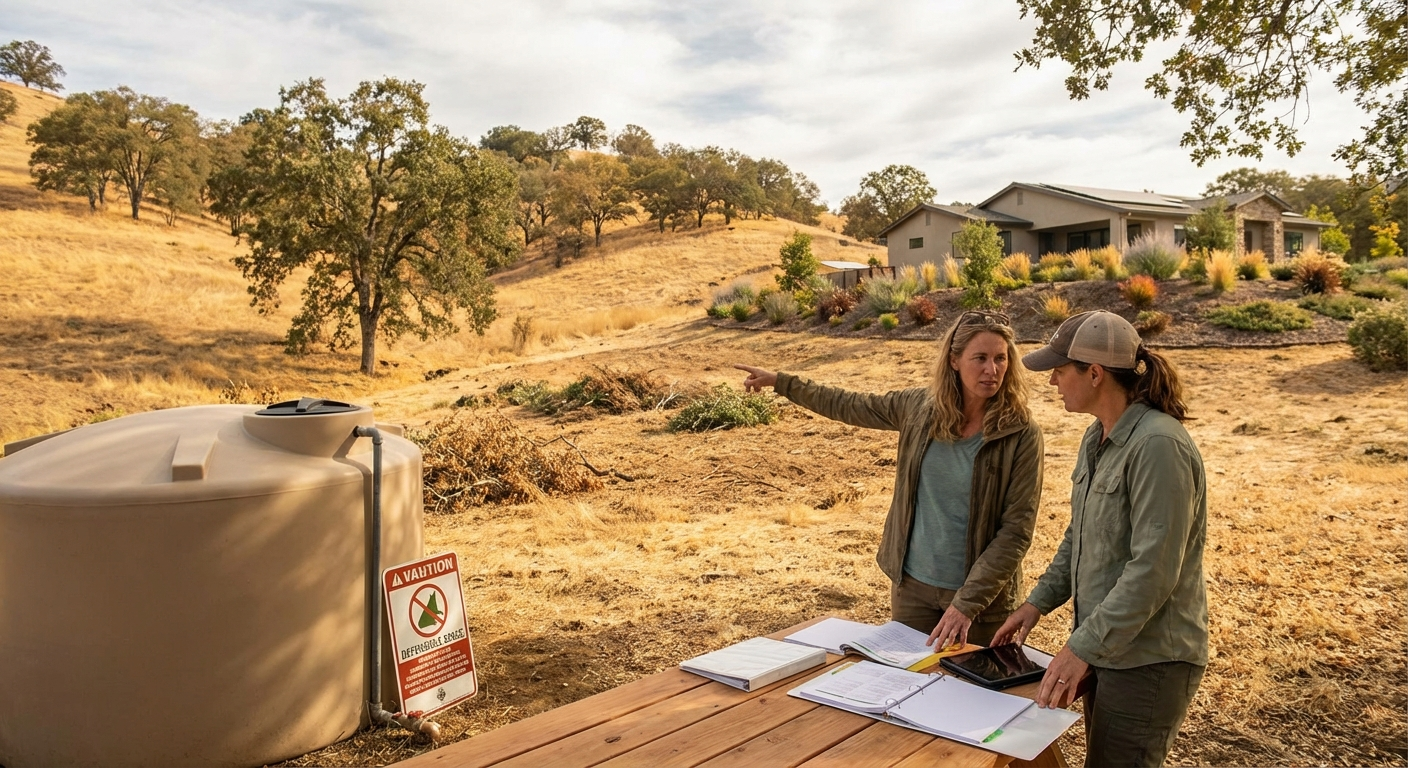
- Defensible Space: Clearing brush, removing dead vegetation, creating zones around your home. The “Safer from Wildfires” framework has very specific guidelines for this. Following them can make a huge difference.
- Community Efforts: Sometimes, entire neighborhoods get together to create fire-safe communities. If your community has a “Firewise USA” designation, it can sometimes lead to better insurance options.
- Regular Maintenance: Keeping gutters clean, trimming trees, and generally maintaining your property signals to insurers that you’re a responsible homeowner.
It sounds like a lot of work. It can be. But think of it as an investment in your home’s safety and its future insurability. For many homeowners, these steps are the difference between having options and having none.
Don’t wait until your renewal notice hits with another massive increase. Start looking at these improvements now. For personalized advice on what changes might make the biggest impact on your specific property and how it relates to insurance, reach out to Karl Susman at LA Fire Coverage Insurance. He’s seen it all, and he’s ready to help you plan for 2026. Click here to get started with a quote.
FAQ: California Fire Insurance 2026
Q: What’s the biggest change I should expect for my California fire insurance in 2026?
A: Expect continued pressure on rates and a much stronger focus on individual home hardening and defensible space. Insurers are getting more specific about what makes a property insurable, and those who don’t adapt might find their options shrinking.
Q: My current insurer isn’t renewing my policy. What should I do first?
A: Don’t panic. Start by contacting an independent insurance agent who specializes in California property insurance. They work with many carriers and can help you explore both private market options and the California FAIR Plan combined with a Difference In Conditions policy.
Q: Are wildfires really getting worse, or is it just media hype?
A: Unfortunately, the data shows a clear trend of increasing wildfire frequency and intensity in California. Factors like climate change, overgrown forests, and more homes built in high-risk areas all contribute to this very real problem.
Q: Will I get a discount if I harden my home?
A: Potentially, yes. The California Department of Insurance is pushing for insurers to offer discounts for homes that meet specific wildfire mitigation standards. Documenting your improvements (receipts, photos) will be key to proving eligibility.
Q: What’s the role of Prop 103 in all of this?
A: Prop 103 requires insurers to get state approval for rate increases and restricts how they factor future risk into their pricing. Insurers argue this makes it hard for them to offer competitive rates and remain profitable in California, contributing to their pullbacks from the market. Discussions around potential changes to how Prop 103 is applied are ongoing.
This article is for informational purposes only and does not constitute financial advice.