The Real Story About California Fire Insurance
For most California homeowners, fire insurance isn’t just a good idea; it’s a must-have. You might think the state itself requires you to carry it. That’s not always true. What *is* true, almost every single time, is that your mortgage lender absolutely requires it. They’ve got a lot of money tied up in your home, after all. They want to protect their investment.
Honestly, getting fire insurance in California has become a bit of a maze. We’ve seen wildfires devastate communities from Ventura County to the Sierra Nevada foothills, from the Inland Empire to the edges of the Valley. These aren’t just abstract news stories anymore. They’re real events that have changed the insurance landscape dramatically.
Why Lenders Insist on Coverage
Think about it from a bank’s perspective. They loan you hundreds of thousands, sometimes millions, of dollars to buy your house. If that house burns down in a wildfire, and you don’t have insurance, who’s going to pay for the rebuild? You probably can’t. The bank certainly doesn’t want to be stuck with a pile of ashes and no way to recoup their loan.
So, when you sign those mortgage papers, there’s a clause in there. It says you *must* maintain adequate hazard insurance, and that includes fire. If you let your policy lapse, your lender can force-place insurance on you. Trust me, you don’t want that. It’s usually much more expensive and offers less coverage than a policy you’d buy yourself.

What a Fire Policy Actually Covers
It’s not just about the flames. A standard homeowners’ policy, which typically includes fire coverage, breaks down into a few key areas.
First, there’s your dwelling coverage. This is what pays to rebuild your actual house. It’s usually the biggest part of your policy. You want enough to cover the full cost of reconstruction, not just the market value of your home. Building costs have jumped significantly in recent years.
Then you’ve got personal property coverage. This protects all your stuff inside the house – furniture, clothes, electronics, everything. Most policies offer coverage for your personal property at actual cash value, meaning depreciation is factored in. But you can often upgrade to replacement cost value, which pays to replace items with new ones. Big difference.
Which brings up something most people miss: loss of use, also called additional living expenses (ALE). If a fire forces you out of your home, this coverage pays for your temporary housing, food, and other increased living costs while your home is being repaired or rebuilt. Imagine living in a hotel for a year or more. That adds up fast.
Finally, there’s liability coverage. This protects you if someone gets hurt on your property and you’re found responsible. While not directly fire-related, it’s a standard part of a homeowners policy package.
The Shifting Sands of California Insurance
California is beautiful. It’s also prone to wildfires. That’s a fact that’s become painfully clear to insurance companies. For years, insurers like State Farm, AAA, and Farmers have been sounding the alarm. They’ve paid out billions in claims after fires like the Camp Fire in Paradise, or the Woolsey Fire that swept through Malibu and Ventura County.
The short answer is yes. The real answer is more complicated. Insurers aren’t just seeing more fires; they’re seeing more *destructive* fires. Homes built in the wildland-urban interface (WUI) – where development meets wildlands – are particularly at risk. Climate change, overgrown forests, and even how we manage our land all play a role.
As a result, many major insurers have either stopped writing new policies in California or have significantly pulled back. Premiums for existing policies have jumped, sometimes by 40% or more between 2022 and 2024. It’s a tough market out there. This isn’t just about making a profit; it’s about managing risk. When the risk becomes too high, they either raise prices drastically or leave.
California’s FAIR Plan: A Safety Net, Not a First Choice
So, what happens if no private insurer will cover your home? That’s where the California FAIR Plan comes in. FAIR stands for Fair Access to Insurance Requirements. It’s an “insurer of last resort.” The state created it to make sure *everyone* can get basic fire coverage, even if they live in a high-risk area.
But wait — the FAIR Plan isn’t a full homeowners’ policy. It primarily covers fire, smoke, lightning, and explosions. It doesn’t include liability, theft, or water damage like a standard policy would. You’ll often need to buy a separate “Difference in Conditions” (DIC) policy from a private insurer to get those other coverages.
The good news is that the FAIR Plan has made some changes. They’ve increased coverage limits, making it a more viable option for higher-value homes. However, it’s still generally more expensive than a private market policy, and the coverage is more limited. It’s a lifeline, but it’s not ideal.
Defensible Space: Your First Line of Defense
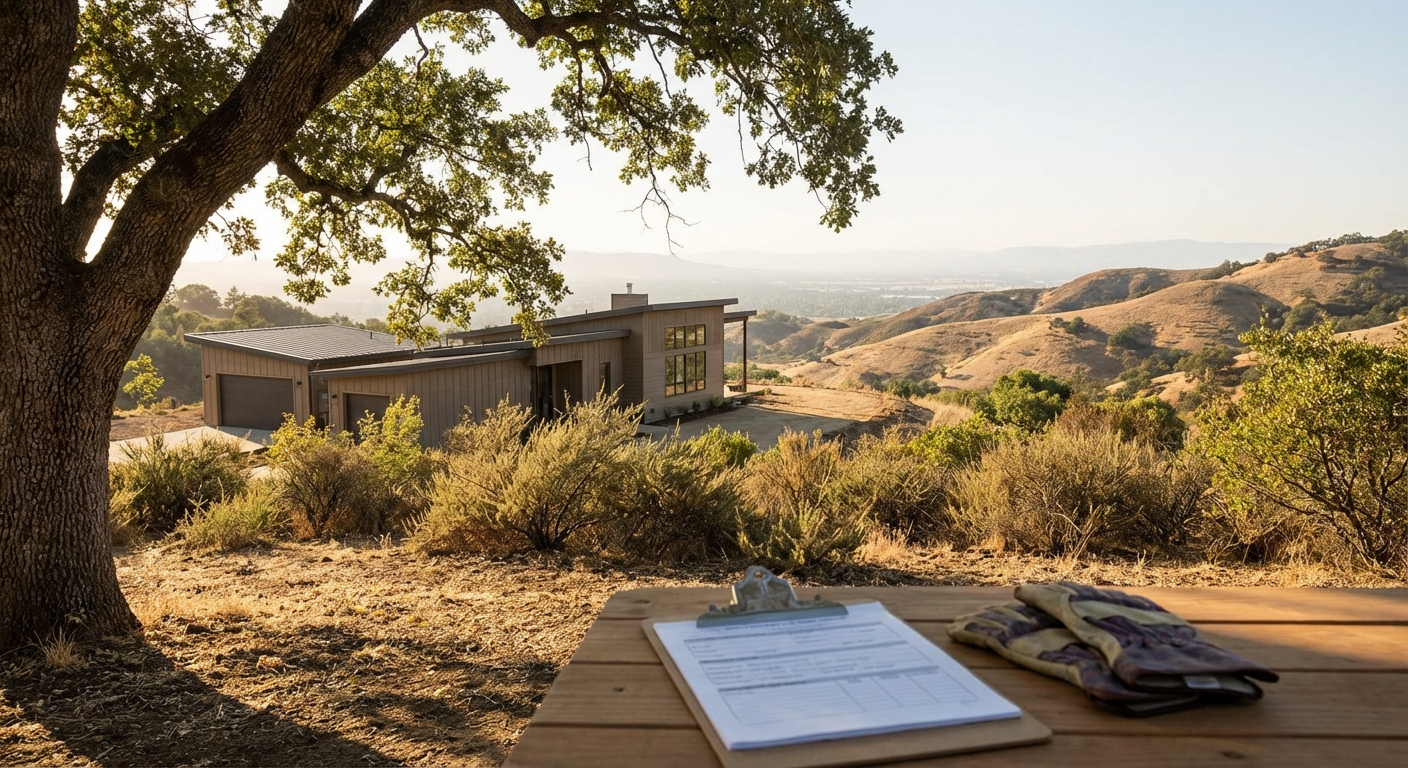
California law says you need to clear brush and maintain a “defensible space” around your home. This isn’t just a suggestion; it’s a requirement, especially for homes in fire-prone areas. We’re talking 100 feet of clearance around your house.
This 100-foot zone is usually broken into two parts:
* Zone 1 (0-5 feet from the house): This is the “ember-resistant zone.” No combustible materials here. Think hardscaping, gravel, very sparse, low-flammability plants.
* Zone 2 (5-100 feet from the house): Here, you reduce fuel. Clear dead vegetation, thin out trees and shrubs, remove lower branches.
Why does this matter for insurance? Insurers often require a defensible space inspection before they’ll offer coverage. If you don’t meet the standards, you might be denied, or your policy could be non-renewed. It’s a direct link between your actions and your insurability.
Home Hardening: Making Your House a Fortress
Beyond clearing brush, making your home more resistant to embers and flames – “home hardening” – is becoming increasingly important. Embers, not direct flames, cause most homes to ignite during a wildfire. They can travel miles, landing on roofs, in gutters, or against walls.
Things like:
* Replacing wood shake roofs with fire-resistant materials (metal, tile, composition shingles).
* Installing ember-resistant vents.
* Upgrading to multi-pane windows with tempered glass.
* Boxing in eaves.
* Using non-combustible siding.
These steps can make a huge difference. Some insurers even offer discounts for homes that have undergone significant hardening. More often, it’s simply a requirement to get any coverage at all in high-risk areas.
Finding the Right Fire Insurance in a Tough Market
So, what’s a homeowner to do? It can feel overwhelming. Many people find themselves declined by their previous insurer or facing huge premium hikes.
This is where an independent insurance agent becomes invaluable. They work with multiple insurance companies, not just one. They can shop around for you, digging into various options, including specialty insurers who might still be writing policies in California’s challenging areas. They understand the nuances of the FAIR Plan and how to layer it with a DIC policy.
Honestly, trying to do this on your own right now is like trying to find a needle in a haystack. An experienced agent knows where to look.
If you’re struggling to find adequate fire insurance or simply want to explore your options, Karl Susman and the team at LA Fire Coverage Insurance can help. They’ve been helping California homeowners for years navigate these complex waters. You can reach them at (877) 411-5200, or start with a quote online.
Get a quote for California fire insurance today: https://lafirecoverageinsurance.com/quote/
The Regulatory Dance: Prop 103 and Beyond
California’s insurance market is heavily regulated. Proposition 103, passed in 1988, gives the state Insurance Commissioner broad authority over rates and regulations. For years, this has kept rates relatively stable for consumers. But here’s where it gets interesting. Insurers argue that Prop 103’s rules make it hard for them to price policies accurately based on current risks. They say they can’t raise rates fast enough to cover their payouts, which is why some are leaving the state.
The California Department of Insurance is working on new regulations. The goal is to encourage insurers to return to the market and offer more coverage options, while still protecting consumers. It’s a delicate balance. These changes could affect how policies are priced, what data insurers can use, and even how quickly rates can be adjusted. It’s a dynamic situation, and it’s something to keep an eye on.
What to Expect When Applying
When you apply for fire insurance today, especially in a high-risk area, expect a thorough process. Insurers aren’t just looking at your credit score anymore. They’ll likely:
* Review your property’s location: They’ll use sophisticated mapping software to assess your home’s proximity to wildlands, slope, and historical fire activity.
* Ask about defensible space: You’ll need to confirm you’re meeting state requirements. They might even send an inspector.
* Inquire about home hardening: What kind of roof do you have? What are your vents like? These details matter more than ever.
* Check your claims history: Past claims can impact your rates and eligibility.
It’s a lot of information, and it can feel intrusive. But remember, the insurer is trying to understand the exact risk they’re taking on. Being prepared with this information can make the process smoother.
The bottom line is that fire insurance in California isn’t a simple transaction anymore. It requires diligence, understanding, and often, the help of a professional who knows the ropes. Don’t wait until your current policy is about to expire to start looking.
Karl Susman, LA Fire Coverage Insurance, CA License #0B75129, is ready to help you navigate these complex requirements. Give them a call at (877) 411-5200 for expert advice and personalized options.
Secure your California fire insurance coverage now: https://lafirecoverageinsurance.com/quote/
Frequently Asked Questions About California Fire Insurance
Is fire insurance legally required in California?
No, the state of California doesn’t legally require every homeowner to carry fire insurance. However, nearly all mortgage lenders do require it to protect their investment in your home. If you own your home outright, it’s your choice, but it’s a very risky one not to have it.
What is the California FAIR Plan?
The FAIR Plan is California’s “insurer of last resort.” It provides basic fire insurance coverage for properties that can’t get it in the traditional private market. It typically covers fire, smoke, and related perils but doesn’t include other common homeowners’ coverages like liability, theft, or water damage. You’ll often need a separate policy for those.
How does defensible space affect my fire insurance?
Maintaining defensible space around your home is crucial. California law requires it, especially in high-risk areas. Insurers often require proof of defensible space compliance, or they might send an inspector. If you don’t meet the standards, it can make it very difficult to get or keep fire insurance, and it could increase your premiums.
Why are so many insurance companies pulling out of California?
Many insurers say they’re pulling back or raising rates because the risk of catastrophic wildfires has increased significantly, leading to billions in claims. They argue that state regulations, particularly Proposition 103, make it difficult for them to price policies accurately to cover these rising risks, making California an unprofitable market for them.
Can I get a discount for making my home more fire-resistant?
Possibly. Some insurance companies offer discounts or better rates for homeowners who have “hardened” their homes against fire, for example, by installing fire-resistant roofs, ember-resistant vents, or dual-pane windows. Even if there’s no direct discount, these improvements can make your home more insurable in a challenging market.
This article is for informational purposes only and does not constitute financial advice.