The Shifting Sands of California Fire Insurance for Businesses
If you own a business anywhere in California, you’ve probably felt it. That low hum of worry. Maybe it’s about the next wildfire season, or the way insurance premiums have jumped 40% between 2022 and 2024 for some businesses. Honestly, it’s a tough spot to be in, especially when you’ve poured your heart and soul into building something. For years, securing decent fire insurance for your commercial property felt like a given. You’d call up State Farm, AAA, or Farmers, get a quote, and that was that.
But here’s the thing. The landscape has changed dramatically. We’re seeing more intense fire seasons—think of the devastating fires near Malibu or in the Santa Cruz Mountains. These aren’t isolated incidents anymore; they’re an annual threat, fueled by hotter, drier conditions and those infamous Santa Ana winds that whip through Southern California. Insurers, frankly, are getting spooked. Many have either pulled back from high-risk areas—or even the entire state—or they’ve hiked up rates to levels that feel unsustainable for small and medium-sized businesses.
Some of my clients in places like Ventura County or the Sierra Foothills have been hit particularly hard. They’re finding it nearly impossible to get traditional coverage, or the cost is just astronomical. It’s not just about protecting your building and its contents anymore; it’s about making sure your business can survive if the worst happens. That’s a big difference.
Why Your Old Policy Might Not Cut It Anymore
Think about your current fire insurance policy. What does it actually cover? For most business owners, it’s about replacing the physical stuff: your building, the inventory, the equipment, maybe even the fancy espresso machine or the custom-built shelving. And that’s incredibly important, don’t get me wrong. You need those assets to reopen.
But what about the weeks, or even months, you spend rebuilding? What about the rent you still have to pay, the employees you want to keep on staff, or the loyal customers who might just find a new favorite spot while you’re closed? That’s not the whole story. Your property policy, as good as it might be, doesn’t typically cover your lost income or the ongoing expenses you rack up while your business is shut down. That’s where business interruption insurance steps in. It’s the unsung hero of commercial policies, especially in a state like California where natural disasters are a regular concern.

Business Interruption: Your Safety Net When Disaster Strikes
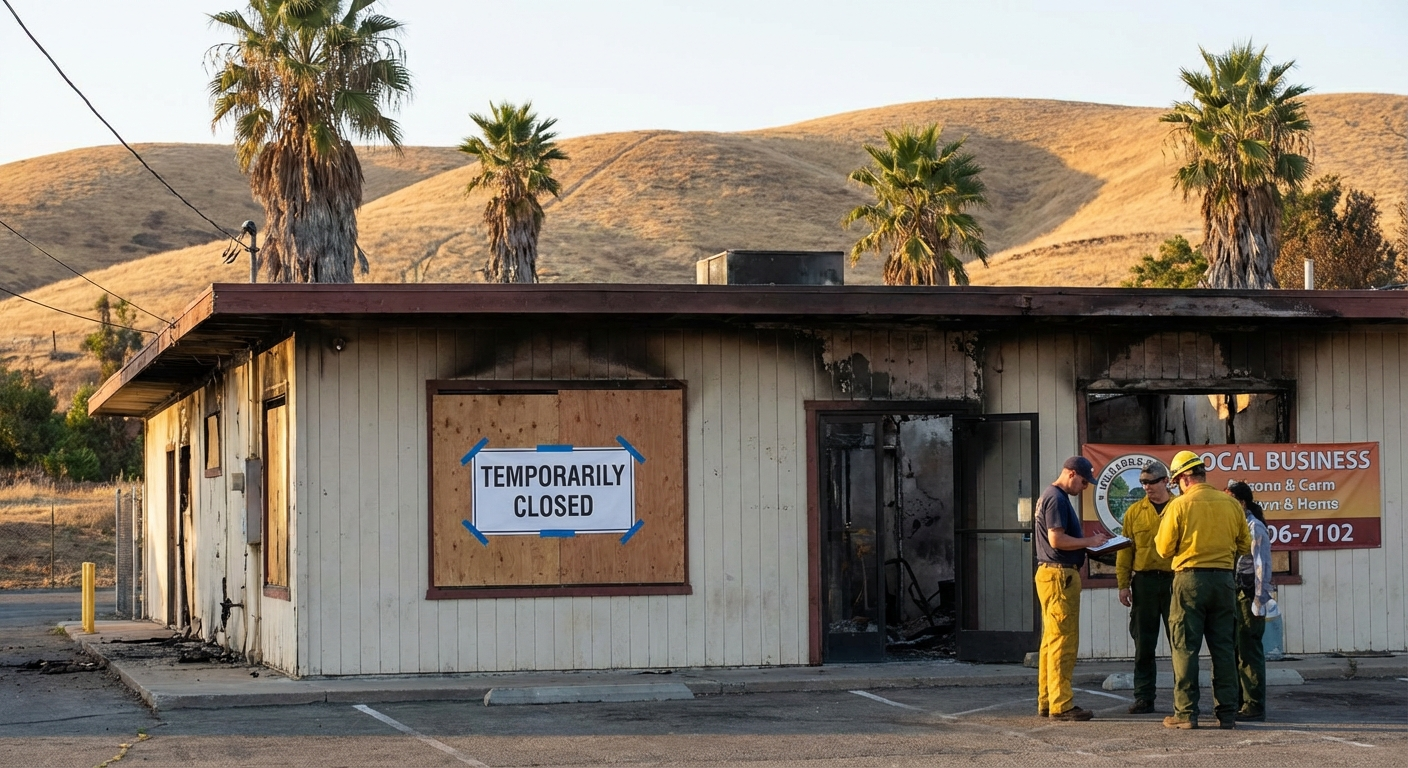
Imagine a fire rips through your neighborhood in the Inland Empire. Even if your shop doesn’t burn to the ground, maybe the street is closed for weeks, or the power is out indefinitely. Or perhaps, worse, your building *is* severely damaged. You’re looking at a complete shutdown. How long can your business survive without any revenue coming in? A week? A month? Most small businesses simply can’t weather that storm without serious financial pain.
Business interruption insurance—sometimes called business income insurance—is designed to replace the income you lose when your business has to close temporarily due to a covered event, like a fire. It covers things like your net profit that would have been earned, had the disaster not occurred. But wait—it also covers your continuing operating expenses, even if you’re not making any money. Think payroll for your key employees, rent or mortgage payments, loan payments, and utilities. It can even cover the cost of a temporary relocation if you need to set up shop elsewhere while your main location is being repaired.
Consider Maria, who owns a charming little bookstore in Pasadena. A small fire started in the apartment above her shop, causing water damage and smoke damage throughout her inventory. The building wasn’t destroyed, but she had to close for two months for repairs and cleanup. Her property insurance covered the damage to her books and fixtures. But her business interruption policy meant she could still pay her two employees, keep up with her lease, and cover her supplier invoices, all while her store was dark. Without it, she’d have been out of business for good. Big difference.
What Happens If Your Business Can’t Open Its Doors?
The financial pressures are immense when your doors are shut. Your employees, who count on their paychecks, might have to look elsewhere. Your suppliers, who rely on your business, could feel the pinch. And your landlord, well, they still expect rent. For a small business owner, these aren’t just business problems; they’re personal ones. Many times, the business *is* your primary source of income, supporting your family and your life.
A fire doesn’t just damage property; it disrupts lives. And in California, where so many communities are intertwined with their local businesses, a disaster can have a ripple effect. If businesses in, say, the Valley, can’t reopen, the entire local economy suffers. This coverage isn’t just about bouncing back; it’s about being able to *stay* in business, period.
The Nitty-Gritty: What to Look For in Your Policy
When you’re looking at business interruption coverage, it’s not just a “yes” or “no” box to tick. There are details that really matter. For example, most policies have a “waiting period”—typically 48 or 72 hours—before coverage kicks in. This means you’re on the hook for those first few days of lost income. Your policy will also have a maximum coverage limit and a “period of restoration,” which is the maximum time frame your policy will pay out, usually 12 months. Some policies offer an “extended period of indemnity,” which can help cover lost income *after* you reopen, while you’re getting back to full speed. This is really important, because customers don’t always flood back the day you unlock the doors.
Which brings up something most people miss. Have you thought about your supply chain? What if a fire impacts one of your critical suppliers, and *their* shutdown means *your* business can’t operate? That’s where “contingent business interruption” coverage comes in. Or what if a civil authority—like the fire department or law enforcement—orders an evacuation or closes off your area, even if your property isn’t damaged? “Civil authority” coverage can help with that. And “ordinance or law” coverage? That’s for when you have to rebuild, but new building codes mean it costs more than just replacing what was there.
Honestly, it gets complicated fast. That’s why having an independent insurance agent who understands the unique risks in California is invaluable. Someone like Karl Susman at LA Fire Coverage Insurance (CA License #0B75129) knows these policies inside and out. He can walk you through the specifics, help you figure out what you truly need, and explain the fine print in plain English.
Thinking about your business’s future in this ever-changing climate? It’s probably time for a serious conversation about your fire and business interruption coverage.
Get a quote and see what options are available for your California business.
Navigating the California Market: FAIR Plan and Beyond
For many businesses in those high-risk zones, finding traditional fire insurance has become a real headache. When insurers like State Farm announce they’re not writing new policies, it sends shockwaves. This often pushes businesses into the California FAIR Plan. The FAIR Plan is a state-mandated program designed to be an “insurer of last resort” for properties that can’t get coverage on the voluntary market. It’s better than nothing, absolutely. But it’s not a full-service policy.
Generally, the FAIR Plan only covers basic fire damage. It usually *doesn’t* include things like liability, theft, or, crucially, business interruption. So, if you’re on the FAIR Plan, you’ll almost certainly need a “difference in conditions” (DIC) policy to fill in the gaps. This DIC policy is what provides coverage for perils not covered by the FAIR Plan, including that all-important business interruption. It’s a patchwork approach, but for many, it’s the only way to get comprehensive protection.
Regulatory changes are always afoot in California, too. Prop 103, for example, gives the insurance commissioner power over rates, but even with that, the pressures on insurers are immense. So, while the state tries to balance affordability with insurer solvency, business owners need to be proactive.
Proactive Steps: Beyond Just Buying a Policy
Insurance is a critical piece of the puzzle, but it’s not the *only* piece. Being proactive about risk mitigation can actually make your business more attractive to insurers and potentially lower your premiums. Have you created defensible space around your property if you’re in a brush area? Are your building materials fire-resistant? Do you have a clear fire escape plan for your employees and customers?
Beyond physical preparations, a solid business continuity plan is key. What steps will you take immediately after a fire? Who do you call? Where do you go? How will you communicate with your employees and customers? Having this mapped out ahead of time can shave days, or even weeks, off your recovery period. And fewer days closed means less lost income. It’s that simple.
Your Business Is More Than Just a Building
Ultimately, your business isn’t just four walls and a roof. It’s a livelihood. It’s a place where people work, where customers gather, where dreams are built. When disaster strikes, the emotional and psychological toll can be just as heavy as the financial one. Knowing you have a safety net—that your business has a real chance to rebuild and recover—can make all the difference. It provides peace of mind, not just for you, but for your employees and the community that relies on you. Don’t leave it to chance.
Ready to protect your California business from the unexpected? Karl Susman and LA Fire Coverage Insurance (CA License #0B75129) are here to help you find the right fire and business interruption coverage. Give us a call at (877) 411-5200 or visit our website to get started.
Frequently Asked Questions About California Fire and Business Interruption Insurance
What’s the difference between fire insurance and business interruption insurance?
Fire insurance (which is usually part of a larger commercial property policy) covers the physical damage to your building, equipment, and inventory caused by a fire. Business interruption insurance, on the other hand, covers the income you lose and the ongoing operating expenses you incur when your business has to close temporarily due to a covered event like a fire.
Does my standard property insurance cover lost income from a fire?
Typically, no. While your commercial property insurance will pay to repair or replace your damaged property, it generally won’t cover your lost revenue or continuing expenses while your business is shut down. That’s why business interruption coverage is so important; it’s a separate, but often essential, component.
How much business interruption coverage do I really need?
Determining the right amount depends on your specific business. You’ll want to estimate your gross profits and continuing operating expenses for a period of at least 12 months, considering how long it might take to rebuild and get back to full operation after a major disaster. An experienced insurance agent can help you calculate this accurately.
What if my business isn’t directly damaged but I can’t access it due to a fire?
This situation is usually covered by “civil authority” coverage, which is often included in a business interruption policy. If a government agency, like the fire department, prevents access to your property due to damage to a nearby property or a general evacuation order, your business interruption policy can kick in to cover your lost income.
Are all fire-related losses covered by business interruption insurance?
Business interruption insurance typically covers income losses due to physical damage from a *covered peril*. Fire is almost always a covered peril. However, the policy won’t cover losses from things like market fluctuations, economic downturns, or even general power outages unless they’re directly caused by a covered event that damages your property or prevents access by civil authority.
This article is for informational purposes only and does not constitute financial advice.
Ready for Your Free Quote?
No obligation. Takes 2 minutes. Speak with Karl Susman and the team at LA Fire Coverage Insurance.