The Unseen Factor in California Fire Insurance: Fire Department Access
For most California homeowners, fire insurance feels like a puzzle. Rates keep climbing. Insurers pull out of areas. You’ve heard about defensible space, hardened homes, and brush clearance. You’ve probably even done the work. But here’s something many people miss: how easily firefighters can get to your property.
It sounds simple, right? A fire truck drives up, puts out the fire. Not always. In California, where wildfires rage across vast, varied terrain from the canyons of Ventura County to the dense forests of the Sierra Nevada, access isn’t a given. The path a fire engine takes to reach your home — or doesn’t take — can make a huge difference in your insurance policy. It impacts what you pay, who will even insure you, and sometimes, if your home can be saved at all.
Think about it: firefighters need speed. They need space. They need reliable water. Without these, even the best-trained crew faces an uphill battle. Insurers know this. They’ve built this reality into their risk models, often in ways homeowners don’t fully grasp until they get that non-renewal notice or an eye-watering premium hike.
How Insurers See Risk: Beyond Brush and Wind
When an insurance company looks at your home for fire risk, they’re not just checking for dry brush or strong Santa Ana winds. Those are big factors, absolutely. They’ll ask about your roof material, your siding, if you have ember-resistant vents. They’ll want to know about your defensible space — that 100-foot buffer around your house. But wait — there’s another layer to this. They’re also looking at the infrastructure around your property.
This means the roads. The water supply. The fire department itself.
Many insurers rely on a system from the Insurance Services Office (ISO) called the Public Protection Classification (PPC) program. ISO isn’t an insurer; they’re a data company that evaluates a community’s fire protection capabilities. They give each community a score, from 1 (the best) to 10 (little to no fire protection). This score is a major piece of information for insurers.
Understanding ISO’s PPC Score
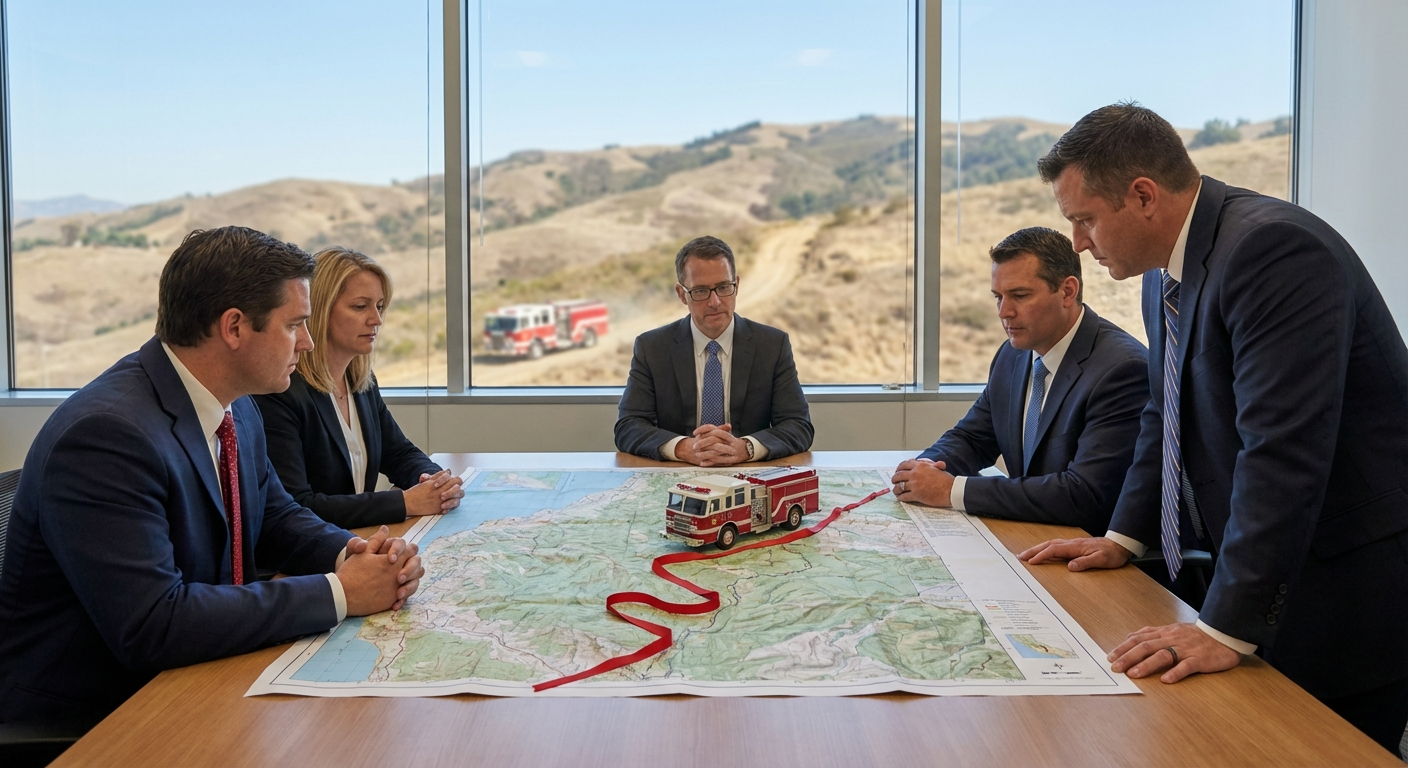
What exactly goes into this PPC score? It’s pretty detailed. ISO looks at three main areas, each weighted differently:
* Fire Department: This is the biggest piece, accounting for 50% of the score. They check things like the department’s staffing levels, training, equipment, how quickly they respond, and how well they maintain their gear. Do they have enough engines? Is the crew well-trained for wildland fires, or just structure fires?
* Water Supply: This makes up 40% of the score. It’s not just about having hydrants, but their condition, how much water pressure they deliver, and how reliable the water system is. Can they pump enough water for a sustained fight? Where are the hydrants in relation to your home?
* Emergency Communications: The final 10% comes from the dispatch center. How quickly do 911 calls get processed? Is the dispatch system reliable? Can they accurately locate an emergency?
A community with a PPC rating of 1 or 2 means excellent fire protection. You’ll likely see lower fire insurance premiums there, all else being equal. But if your home is in a place with a 9 or 10 rating — common in remote, rural parts of California’s Inland Empire or mountain communities — your insurance options shrink dramatically, and costs skyrocket. Some insurers won’t even write policies in those areas.
The Real-World Impact on Your Policy
Honestly, the impact of poor fire department access is stark. It’s not just a minor adjustment to your premium.
For one, you’ll pay more. A lot more. If your home is in an area with a low PPC rating, your fire insurance premiums can jump significantly. We’ve seen rates increase by double-digits for many Californians between 2022 and 2024, and poor access only adds fuel to that fire. Insurers see increased risk, and they price that risk accordingly. They’re trying to cover their potential losses.
That’s not the whole story. Many standard insurers, like State Farm, Farmers, or AAA, have simply pulled back from high-risk areas. They’ve stopped issuing new policies or have non-renewed existing ones. If your home is in a spot with tough access, you might find yourself with very few options.
Which brings up something most people miss. Often, the only remaining choice for homeowners in these areas is the California FAIR Plan. The FAIR Plan is the state’s “insurer of last resort.” It provides basic fire coverage when no one else will. But here’s the kicker: it’s not cheap. And it’s not full coverage. It only covers fire, smoke, and some other perils, leaving out things like liability or water damage. You’ll often need a separate “Difference in Conditions” (DIC) policy to fill those gaps, adding even more cost and complexity. Fire department access issues are a primary reason many homeowners end up on the FAIR Plan.
What “Access” Really Means to a Firefighter
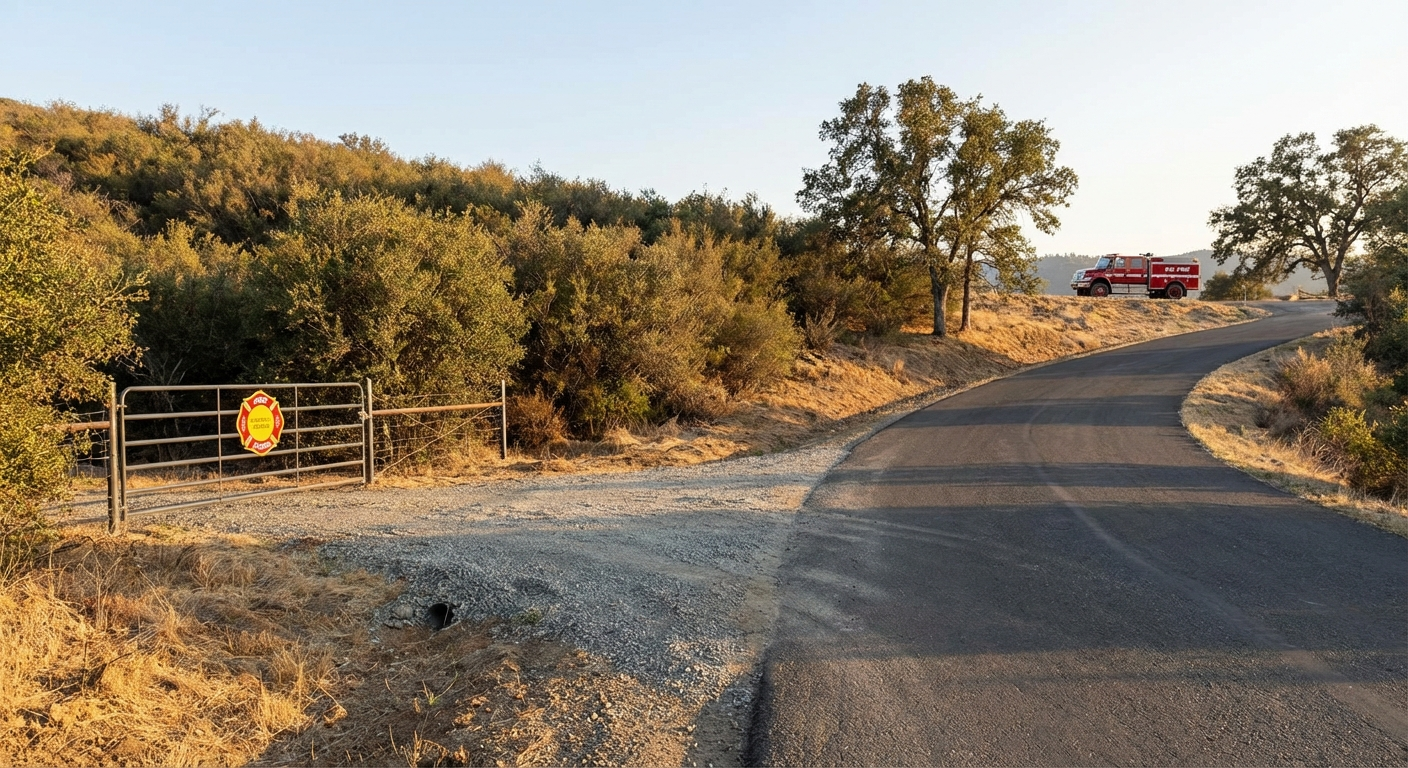
When firefighters respond to an emergency, they’re not just driving a car. They’re maneuvering a massive, heavy vehicle — sometimes multiple vehicles — often under extreme pressure. “Access” isn’t some abstract concept to them; it’s about practical realities on the ground.
* Road Width: Can a 10-foot wide fire engine safely get down your street or driveway? Many older rural roads weren’t built for modern fire apparatus.
* Turnarounds: Once they get to your home, can they turn around? Dead-end roads without proper turnarounds mean firefighters might have to back out for a long distance, wasting precious minutes. Imagine doing that with flames licking nearby.
* Bridge Weight Limits: A fully loaded fire engine can weigh over 30 tons. If the only way to your property is over an old, narrow bridge, its weight limit becomes a serious concern.
* Driveway Steepness and Length: A long, winding, or very steep driveway eats up time. It also presents a challenge for heavy equipment. Firefighters need to get close to the structure.
* Vegetation Encroaching on Roads: Overhanging branches or overgrown bushes can block or damage fire engines. They need clear overhead and side clearance.
* Water Sources: Are there working hydrants nearby? If not, are there other options like dry hydrants, cisterns, or even accessible swimming pools that can be used as a water source? The distance to a reliable water source is critical.
Every one of these factors can delay a response, put firefighters at greater risk, and ultimately increase the chance of your home being lost. Insurers know this. They’re not being arbitrary when they factor these things into your rates. They’re assessing real danger.
What Homeowners Can Do About It
You might feel helpless, but you’re not completely out of options. Understanding these access issues is the first step.
First, try to find out your area’s ISO PPC rating. Sometimes your local fire department or city planning office can provide this. It gives you a baseline for your community’s fire protection.
Second, consider working with your community. Advocate for improvements to local infrastructure. This could mean wider roads, better signage, more hydrants, or improved dispatch systems. These are big, long-term projects, often requiring local government action, but collective effort can make a difference. Many communities in places like the Santa Cruz Mountains or the hills above Los Angeles are actively working on these kinds of projects.
On your own property, there are specific steps you can take:
* Clear Your Driveway and Access Roads: Keep your driveway and any private access roads clear of overhanging branches and dense vegetation. Ensure there’s at least 13.5 feet of vertical clearance and 10 feet of width.
* Maintain Clear Signage: Make sure your address numbers are large, reflective, and clearly visible from the main road, both day and night. This helps emergency services find you quickly.
* Ensure Turnaround Space: If you have a long driveway, consider creating a turnaround area at the end that’s big enough for a fire engine.
* Address Water Sources: If you have a swimming pool, make sure it’s accessible for drafting water if needed. Some homeowners in rural areas install cisterns or dry hydrants.
* Defensible Space: This can’t be stressed enough. Maintain your 100 feet of defensible space. It buys firefighters time and a safer place to work.
Ultimately, navigating California’s fire insurance market requires expert guidance. You need someone who understands these complex factors, including fire department access, and can help you find the best possible coverage. Karl Susman and his team at LA Fire Coverage Insurance (CA License #0B75129) specialize in this. They work with homeowners across California, from the Valley to the coast, to demystify these challenges.
Ready to explore your options and get clear answers about your fire insurance? Start with a personalized quote today. Visit https://lafirecoverageinsurance.com/quote/.
The Future of Fire Insurance and Access in California
California’s fire season isn’t just a season anymore; it’s a year-round threat. Climate change means hotter, drier conditions and more intense fires. Development continues to push into the Wildland Urban Interface (WUI) areas, putting more homes in harm’s way. This combination means fire department access will only become more important to insurers.
We’ve already seen major insurers like State Farm and Farmers pull back or change their offerings significantly. The state, through regulations like Prop 103, tries to balance affordability with insurer solvency. But the reality on the ground, especially regarding fire risk and the ability of emergency services to respond, remains a huge challenge.
Homeowners will continue to face tough choices and higher costs, particularly those in areas with limited fire department access. Staying informed and proactive about your property and community’s fire safety is more important than ever. It’s not just about protecting your home; it’s about protecting your financial future.
Don’t let questions about fire insurance keep you up at night. Get peace of mind by talking to an expert. For guidance on California fire insurance, including how fire department access might affect your policy, reach out to Karl Susman at LA Fire Coverage Insurance. You can call them at (877) 411-5200 or get a quote online: https://lafirecoverageinsurance.com/quote/.
Frequently Asked Questions About Fire Department Access and Your Insurance
Does my home’s distance from a fire station matter?
Yes, it absolutely does. Insurers often use distance from a fire station as a factor in their risk assessment. The closer you are, the faster firefighters can respond, which can mean a lower premium. This is part of the broader fire department access picture.
What if my community has its own private fire service?
Some private communities, especially in remote areas, maintain their own fire services. Insurers will evaluate these services just like municipal departments, looking at their staffing, equipment, and training. Sometimes, these private services can improve a community’s overall fire protection rating.
Can I improve my property’s fire department access?
You can, to a degree. Ensuring your driveway is wide enough, has proper clearance, and includes a turnaround space helps. Clear address signage is also a big one. These individual efforts make a difference for firefighters trying to reach you quickly.
How do I find my area’s ISO PPC rating?
You can sometimes find your community’s ISO PPC rating by contacting your local fire department or city planning office. Your insurance agent, like Karl Susman at LA Fire Coverage Insurance, can also often help you determine this, as it’s a factor they consider when quoting policies.
Is fire department access the only thing insurers care about?
No, it’s not the only thing, but it’s a significant one. Insurers look at a whole range of factors: defensible space, construction materials, roof type, local brush hazards, wind patterns, and your home’s proximity to other structures. Fire department access is just one piece of a complex puzzle.
This article is for informational purposes only and does not constitute financial advice.