
The Immediate Aftermath: What to Do First After a Fire
A fire in your California home isn’t just a loss; it’s a shock. You’re reeling. You’re scared. Often, you’re displaced. The immediate moments after the flames are out are chaotic, but they’re also when crucial first steps need to happen for your safety and, eventually, your insurance claim.
First things first: safety. Don’t re-enter your home until fire officials say it’s safe. Period. There could be structural damage, lingering fumes, or hidden hot spots. Your life is more important than anything inside.
Once the fire department has cleared the scene, you’ll want to contact emergency services again if there’s any immediate danger to others or the public. Think about securing the property. Boards over windows, a tarp on the roof – these are often necessary to prevent further damage from weather or looting. Your insurance policy usually covers reasonable costs for these temporary repairs, sometimes called “loss mitigation.” Keep all receipts. Every single one.
Then, start documenting. Take photos and videos of everything. Every charred beam, every smoke-stained wall, every melted possession. The more visual evidence you have, the better. You might feel overwhelmed, but this visual record becomes incredibly important later on.
Notifying Your Insurer: The First Official Step
With your property secured and some initial documentation, your next call is to your insurance company. Don’t wait. The sooner they know, the sooner the claims process can begin. Most insurers have a 24/7 claims line. You’ll need your policy number, the date of the fire, and a brief description of what happened.
They’ll assign you a claim number and an adjuster. This adjuster is the person from the insurance company who will assess the damage, confirm coverage, and estimate the cost of repairs. They’re the company’s eyes and ears on the ground.

Understanding Your Policy: It’s Not All the Same
Honestly, most people don’t truly understand their fire insurance policy until they need it. That’s a mistake. Your policy is a contract, and it spells out exactly what’s covered and for how much.
Most policies break down coverage into several categories:
* **Dwelling Coverage (Coverage A):** This covers the structure of your home itself – the walls, roof, foundation.
* **Other Structures (Coverage B):** Think detached garages, sheds, fences.
* **Personal Property (Coverage C):** Everything inside your home, from furniture to clothes to electronics. This is where a detailed home inventory really pays off.
* **Loss of Use (Coverage D) or Additional Living Expenses (ALE):** This is for the costs you incur if your home is uninhabitable – temporary housing, extra food costs, laundry services. This can be a lifesaver, especially if you’re out of your home for months, which isn’t uncommon after a major fire in places like Ventura County or the Inland Empire.
If you’re in a high-risk wildfire area, you might have a California FAIR Plan policy. These are often more basic, covering only fire and smoke damage, not necessarily other perils like theft or liability. They’re a last resort, but they’re a policy nonetheless. Understanding its limits is key.
Documenting Your Losses: Photos, Receipts, and More
This is where the real work begins. Your insurance company will ask for a detailed list of damaged or destroyed items. This isn’t just a casual list; it needs to be as thorough as possible.
Start with a room-by-room inventory. For each item, list:
* Description (e.g., “LG 55-inch smart TV”)
* Brand and model (if known)
* Approximate age
* Estimated replacement cost
But wait — this is tough when everything’s gone, right? This is why a pre-fire inventory is gold. Photos or videos of your home *before* the fire, saved off-site, can make a huge difference. If you don’t have one, start gathering receipts, credit card statements, and bank records. Did you buy a new couch last year? Find the receipt. Did you get a new laptop for Christmas? Check your email for the order confirmation. These details prove ownership and value.
Don’t forget the small things. Clothes, dishes, books – they add up fast. Many people underestimate the value of their personal belongings by tens of thousands of dollars.
Working with Your Adjuster: A Partnership, Mostly
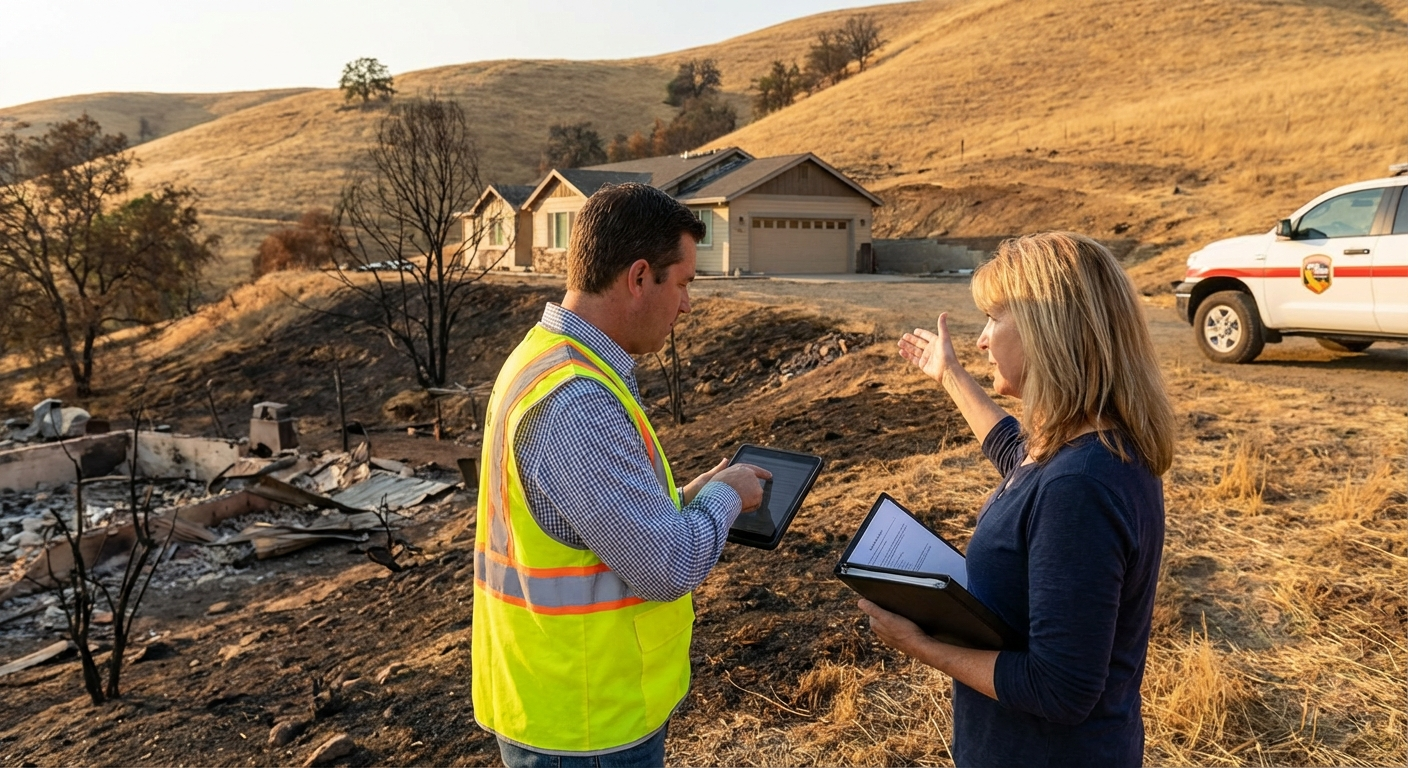
Your adjuster will schedule a time to inspect your property. Be there. Walk through the damage with them. Point out everything you’ve documented. Ask questions. “Is this covered?” “What’s the next step?”
They’ll take their own notes, photos, and measurements. They’ll also likely bring in specialists for things like structural engineering or contents evaluation.
Honestly, this relationship can feel a bit adversarial sometimes. The adjuster works for the insurance company, and their job is to assess the loss *within the terms of your policy*. Your job is to make sure all your losses are fully accounted for. Don’t be afraid to push back if you feel their initial assessment misses something or undervalues an item.
The Estimate and Settlement Process
After their inspection, the adjuster will prepare an estimate for repairs and replacement. This estimate might be an initial offer. It’s not always the final word. Construction costs, especially in California, can fluctuate wildly. The 2025 LA fires, for example, could easily drive up demand for contractors and materials, pushing prices higher than any initial estimate.
Here’s where it gets interesting. Your policy usually pays out in two ways for personal property and dwelling: Actual Cash Value (ACV) and Replacement Cost Value (RCV).
* **ACV:** This is the replacement cost minus depreciation. So, if your 5-year-old couch cost $2,000 new, but its value has depreciated to $800, that’s what you’ll get initially.
* **RCV:** This is the cost to replace the item with a brand new one, without factoring in depreciation. You typically get the ACV first, then the difference (the “depreciation holdback”) once you actually replace the item and provide receipts.
Most homeowners want RCV coverage. It’s a big difference. Make sure you understand how your specific policy handles this.
You’ll likely receive multiple checks. One for temporary living expenses, one for contents (ACV), and potentially one for structural repairs. Don’t expect one big lump sum right away.
When Things Get Tricky: Denials, Delays, and Disputes
Sometimes, the claims process isn’t smooth. Delays are common. Denials happen. Maybe your insurer says a specific item isn’t covered, or they’re offering far less than you believe it’s worth.
If you hit a wall, you have options. First, review your policy again. Understand the specific language. Then, communicate clearly and in writing with your adjuster and the insurance company. Document every call, every email, every conversation.
If you’re still not getting anywhere, consider a public adjuster. Unlike the adjuster assigned by your insurance company, a public adjuster works for *you*. They’ll review your policy, assess the damage, and negotiate with your insurer on your behalf. They typically charge a percentage of your settlement, so they have a vested interest in maximizing your claim. This can be a smart move for large, complex claims.
You can also contact the California Department of Insurance (CDI). They regulate insurance companies and can help mediate disputes. They’re there to protect policyholders, and they take complaints seriously. California’s Proposition 103 gives policyholders strong rights, and the CDI helps enforce them.
Rebuilding and Recovery: Beyond the Check
Getting the settlement checks is a major step, but it’s not the end. Now comes the rebuilding. This involves finding reputable contractors, getting bids, and managing the construction process. Always get multiple bids. Check references. Make sure contractors are licensed and insured.
You’ll also need to deal with permits from your city or county, which can add time and complexity. Stay in close communication with your contractor and, if necessary, your insurance company, especially if unforeseen issues arise or costs exceed the initial estimate.
Preparing for the Next Time: Lessons Learned
No one wants to go through a fire twice. But after the dust settles, it’s a good idea to review your coverage. Did you have enough? Was your inventory up-to-date?
Here’s a simple truth: the best time to understand your fire insurance is *before* you need it. An annual policy review with an experienced agent can make all the difference. They can help you spot gaps in coverage, explain tricky policy language, and ensure your limits are high enough for today’s rebuilding costs. Construction costs, especially in places like Malibu or the Valley, have jumped significantly in recent years.
If you’re looking to protect your California home with the right fire insurance, don’t wait for disaster to strike. Get a personalized quote and ensure you have the coverage you deserve. Visit https://lafirecoverageinsurance.com/quote/ to get started.
Getting the Right Coverage Before Disaster Strikes
Finding the right fire insurance in California can feel like a maze. With insurers pulling out of certain areas and premiums jumping 40% between 2022 and 2024 in some regions, it’s not a simple “one size fits all” situation. An independent agent, like Karl Susman of LA Fire Coverage Insurance (CA License #0B75129), can be an invaluable resource. They work with multiple carriers, not just one, which means they can shop around to find you the best fit for your specific needs and location.
They understand the nuances of California’s fire zones, the specifics of the FAIR Plan, and how to build a policy that truly protects your assets. Don’t guess when it comes to your home’s security.
Want to talk to a real human who understands California fire insurance? Karl Susman and his team are ready to help. Call (877) 411-5200 or visit https://lafirecoverageinsurance.com/quote/ for a quote.
Frequently Asked Questions About California Fire Insurance Claims
How long does a fire insurance claim typically take in California?
Honestly, it varies a lot. A small, contained fire might be resolved in a few weeks. A total loss, especially in a major wildfire event like the ones we’ve seen in Napa or Shasta County, can take months, even a year or more, to fully settle, particularly when you factor in rebuilding time.
What if my insurance company denies my claim?
If your claim is denied, ask for the denial in writing, with a clear explanation. Review your policy carefully to understand their reasoning. You can then appeal the decision directly with the insurer, or consider contacting the California Department of Insurance or hiring a public adjuster to help advocate on your behalf.
Do I have to accept the first offer from my insurance company?
No, you don’t. The initial offer is just that – an offer. You have the right to negotiate. If you believe the offer is too low or doesn’t cover all your losses, present your documentation, estimates, and any other evidence to support a higher settlement.
What is “Additional Living Expenses” (ALE) and how does it work?
ALE, also known as Loss of Use, covers the extra costs you incur if your home becomes uninhabitable due to a covered loss. This includes things like hotel stays, temporary rental housing, extra food costs (since you can’t cook at home), and even laundry services. It’s designed to maintain your normal standard of living as much as possible, up to a certain limit and for a specific timeframe outlined in your policy.
This article is for informational purposes only and does not constitute financial advice.