Myth: “California Fire Insurance Discounts? Good Luck Finding Any.”
Honestly, it feels that way sometimes, doesn’t it? For many California homeowners, especially those living anywhere near a brush fire zone — from the canyons of Malibu to the rolling hills of Ventura County, or even parts of the Inland Empire where development meets wildland — fire insurance has become a major headache. Premiums have jumped. Some folks saw rates climb 40% between 2022 and 2024. Others got non-renewals, forcing them onto the California FAIR Plan, which, while a safety net, isn’t always cheap or comprehensive.
But here’s the thing. While the market is tough, the idea that there are *no* discounts for fire prevention is a myth. A big one. The truth is, the California Department of Insurance, under Commissioner Ricardo Lara, has been pushing insurers to offer these breaks. They want homeowners to harden their homes against wildfires. And some insurers are finally playing ball. It’s not always easy money, mind you. You’ve got to do the work. You’ve got to know what to ask for.
What “Hardening” Your Home Really Means
It’s not just about trimming a few bushes. “Home hardening” is a collection of actions meant to make your house less likely to catch fire from embers or direct flame. Embers, those tiny, glowing bits of burning material, are the real culprits in most home ignitions. They can travel miles ahead of a fire front, landing on your roof, in your gutters, or on your porch.
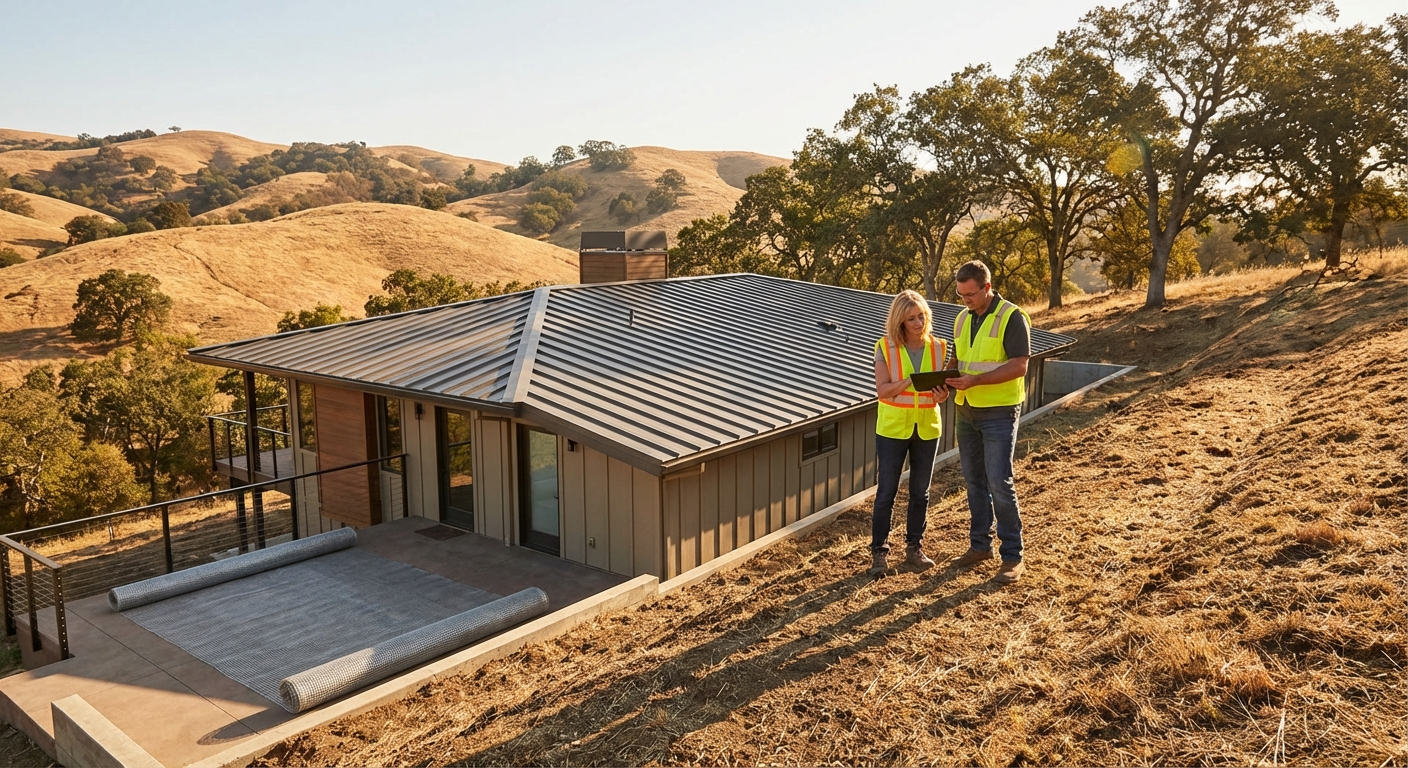
Think about your roof first. Is it made of something like wood shake? Big problem. Class A fire-rated materials — like composition shingles, tile, or metal — are a much better bet. Then there are your vents. Standard attic and foundation vents can suck in embers like a vacuum cleaner. Upgrading to ember-resistant vents, often with very fine mesh, can make a huge difference. Dual-pane windows with tempered glass can also help resist heat and shattering. These aren’t just fancy upgrades; they’re defensive measures. And some insurers are starting to recognize them with real discounts.
Myth: “All Insurers Offer the Same Fire Prevention Discounts.”
That’s not the whole story. This is where it gets interesting, and frankly, a bit frustrating for homeowners. You’d think if you did all the right things, every insurer would reward you equally. Not so. The insurance market in California is a bit like the Wild West right now. Some companies, like State Farm and Allstate, pulled back from the market entirely for a while. Others, like AAA or Farmers, are still writing policies but are very picky about what they’ll cover and where.
Because of this, the discounts offered can vary wildly. Some insurers might give you a small percentage off for having a Class A roof. Others might require a whole suite of improvements, including defensible space measures, before they even consider a discount. This is precisely why working with an independent insurance agent is so important. An agent like Karl Susman of LA Fire Coverage Insurance (CA License #OB75129) spends his days navigating these differences. He knows which companies are offering what, and which ones are more likely to reward your efforts.
The “Home Ignition Zone” – Your Discount Goldmine
Insurers, and fire scientists, often talk about the “Home Ignition Zone” (HIZ). This isn’t some abstract concept; it’s the area immediately surrounding your house, up to 100 feet out, that makes your home most vulnerable to wildfire. Breaking it down helps you see where you can earn those discounts:
* **Zone 0 (0-5 feet from your home):** This is the most critical area. No flammable materials here. That means no wood mulch, no dry plants, no firewood piles. Move them. Move them far away. Consider non-combustible landscaping like rock or concrete. This zone is a huge focus for discount programs.
* **Zone 1 (5-30 feet from your home):** Keep this area lean, clean, and green. Trim trees, remove dead branches, keep grass short. Create breaks between vegetation. Think about spacing.
* **Zone 2 (30-100 feet from your home):** This is where you reduce the intensity of a potential fire. Thin out dense stands of trees, remove ladder fuels (vegetation that allows fire to climb from the ground to tree canopies).
Many insurers are now looking for proof of these specific actions. They’ll want photos. They’ll want to know you’re actively maintaining these zones. If you’ve been doing this work, you’re already on your way to saving money.
Myth: “Discounts Won’t Make a Real Difference on My Sky-High Premium.”
Let’s be real. Nobody’s promising you’ll pay pennies for fire insurance in a high-risk area. Premiums are indeed high. But wait — if your annual premium is, say, $6,000, and you qualify for a 15% discount, that’s $900 back in your pocket every year. That’s real money. Over five or ten years, that adds up to thousands. It’s not just about the immediate savings; it’s about making your home safer, more insurable, and protecting your biggest asset.
The state, through the Department of Insurance, has been pushing for what they call the “Safer from Wildfires” framework. This is a set of voluntary mitigation actions that, if adopted, *should* lead to discounts. This framework is a direct result of Prop 103, which gives the Commissioner the power to approve or reject rates and encourage mitigation. It’s a slow-moving beast, but it’s gaining traction.
The Wildfire Prepared Home Program: A Real Game Changer?
Here’s where it gets interesting. The California Department of Insurance now officially recognizes the “Wildfire Prepared Home” certification from the national Firewise USA® program. This isn’t just a pat on the back. This certification means you’ve met a rigorous standard of home hardening and defensible space.
Insurers are *required* to consider this certification when determining your premium. They don’t have to give you a specific discount amount, but they *must* factor it in. Some insurers are now offering explicit discounts for certified homes. This program could be a real game-changer, especially as more homeowners get certified and more insurers create clear discount pathways. It provides a standardized way for you to prove your efforts.
Want to see if your efforts could translate into savings? It costs nothing to check. You can get a quote and explore your options right now: Click here to get a fire insurance quote.
Myth: “I Just Call My Current Insurer, and They Give Me the Discount.”
If only it were that easy. For most California homeowners, getting a discount isn’t as simple as a quick phone call. Insurance companies, frankly, aren’t always proactive about advertising these discounts. You usually have to ask for them. And then you have to *prove* you’ve earned them.
That means documentation. Lots of it. Did you get a new Class A roof last year? Keep the invoice. Took out that old wooden deck and replaced it with a non-combustible material? Photos, please. Before and after. Did you hire a company to clear your defensible space? Get a receipt, and take pictures of the cleared area. This is where an independent agent can really help. They can tell you exactly what documentation an insurer will want to see and help you compile it. They speak the language of underwriters.
Which brings up something most people miss. Even if your current insurer offers a discount, it might not be the *best* discount you could get. Or, perhaps your current company doesn’t offer *any* wildfire mitigation discounts. That’s common. An independent agent like Karl Susman at LA Fire Coverage Insurance (CA License #OB75129) can shop the market for you, comparing multiple carriers to find the one that rewards your hard work the most. You can reach him and his team at (877) 411-5200.
Myth: “My Neighborhood Is High Risk, So Nothing I Do Matters.”
It’s true that living in a high-risk area, say, deep in the Angeles National Forest or on a ridge overlooking the San Fernando Valley, means higher premiums. Your neighborhood’s risk rating is a huge factor. But here’s the contrarian view: precisely *because* you’re in a high-risk area, your individual mitigation efforts matter even more.
Think about it. If a fire rips through your community, will your home stand a better chance if it’s been hardened? Absolutely. Insurers understand this. They’re looking for homeowners who are actively reducing their risk, not just passively accepting it. Your individual actions contribute to the overall resilience of your community. And that resilience is something insurers are increasingly willing to reward.
The bottom line is, while the California fire insurance market is challenging, ignoring prevention discounts is like leaving money on the table. You’ve got to be proactive, informed, and persistent.
Ready to explore how your fire prevention efforts could save you money? Don’t wait until the next fire season. Get started today: Find out your potential savings with a quick quote.
***
Frequently Asked Questions About California Fire Insurance Discounts
Q: Do all insurance companies in California offer fire prevention discounts?
A: No, not all insurance companies offer the same discounts, and some might not offer specific wildfire mitigation discounts at all. The market is evolving, and while the state is pushing for these discounts, it’s still up to individual insurers to implement them. This is why shopping around with an independent agent is so helpful.
Q: What’s the “Wildfire Prepared Home” certification, and how do I get it?
A: The “Wildfire Prepared Home” certification is a program recognized by the California Department of Insurance that verifies your home meets specific standards for hardening and defensible space. It’s based on the national Firewise USA® program. You typically apply through a local Firewise community or directly through the program’s website, often requiring an assessment by a qualified professional.
Q: How much can I actually save with these discounts?
A: Savings vary widely. It depends on your insurer, the extent of your home hardening efforts, and your property’s overall risk profile. Some homeowners might see a 5-10% discount, while others with extensive mitigation could see 15% or more. Even a small percentage off a high premium can add up to significant savings over time.
Q: What kind of documentation do I need to prove my mitigation efforts?
A: Insurers typically want proof of your actions. This can include before-and-after photos of defensible space clearing, invoices from contractors for a new Class A roof or ember-resistant vents, receipts for non-combustible landscaping materials, and documentation of your “Wildfire Prepared Home” certification if you have one.
Q: If I’m on the FAIR Plan, can I still get discounts?
A: The California FAIR Plan, which is an insurer of last resort, generally offers fewer discounts than the standard market. However, they are also under pressure from the state to consider mitigation efforts. It’s always worth asking about any available credits or discounts for home hardening, even with the FAIR Plan. You might not get as much, but every bit helps.
***
This article is for informational purposes only and does not constitute financial advice.