
When the Smoke Clears: Understanding California Fire Insurance in a Fiery State
You’ve probably felt it, that knot in your stomach. Maybe you’ve seen the red glow on the horizon, smelled the acrid smoke, or had friends evacuate their homes. Living in California means living with the constant, unsettling reality of wildfires. For many homeowners, the worry doesn’t stop with the fire itself; it morphs into a different kind of fear: “Will my insurance cover this? Can I even *get* insurance?” It’s a heavy burden, a question that keeps a lot of people up at night.
Honestly, you’re not alone in feeling this way. The insurance market in California has been a rollercoaster, especially since the devastating fires ripped through places like Paradise, the Santa Cruz Mountains, and parts of Ventura County. Insurers have pulled back. Some won’t write new policies in high-risk areas. Others have raised premiums significantly – we’re talking about hikes of 20%, 30%, even 40% in some neighborhoods between 2022 and 2024. It feels unfair, doesn’t it? You love your home, you’ve invested in it, and now it feels like the system is working against you.
But here’s the thing: while the situation is tough, it’s not hopeless. There are steps you can take, not just to protect your home physically, but to make it more appealing to insurers. A big part of that involves understanding fire-resistant materials and how they play into your coverage.
Why Insurers Care So Much About What Your Home Is Made Of
Think about it from an insurer’s perspective. They’re making a bet. They’re betting your home won’t burn down, or if it does, the damage will be manageable. When fires sweep through neighborhoods, as we saw in the Tubbs Fire or the Woolsey Fire, homes built with certain materials stand a better chance. Some homes burn to the ground. Others, right next door, might just need a good cleaning. Big difference.
That difference is exactly what insurance companies look for. They use sophisticated models, often down to your specific address, to figure out your home’s “wildfire risk score.” This score considers everything from the slope of your property and the surrounding vegetation to – you guessed it – the materials used in your home’s construction and any upgrades you’ve made. The higher your risk score, the harder it is to get traditional coverage, or the more you’ll pay for it.
Here’s where it gets interesting: many insurers offer discounts or are simply more willing to write policies for homes that demonstrate clear efforts toward fire hardening. It’s not just about saving a few bucks; sometimes, it’s the only way to get coverage outside of the state’s FAIR Plan, which can be expensive and offer less protection.
Fire-Resistant Materials: Your Home’s Best Defense
Let’s talk about what actually works. When embers are flying – and embers are often the main culprit for igniting homes, not direct flame contact – the materials on your home’s exterior are your first line of defense.
Roofs: The First Line of Defense
Your roof is probably the most vulnerable part of your home during a wildfire. Embers can land on it, get under tiles, or ignite accumulated debris.
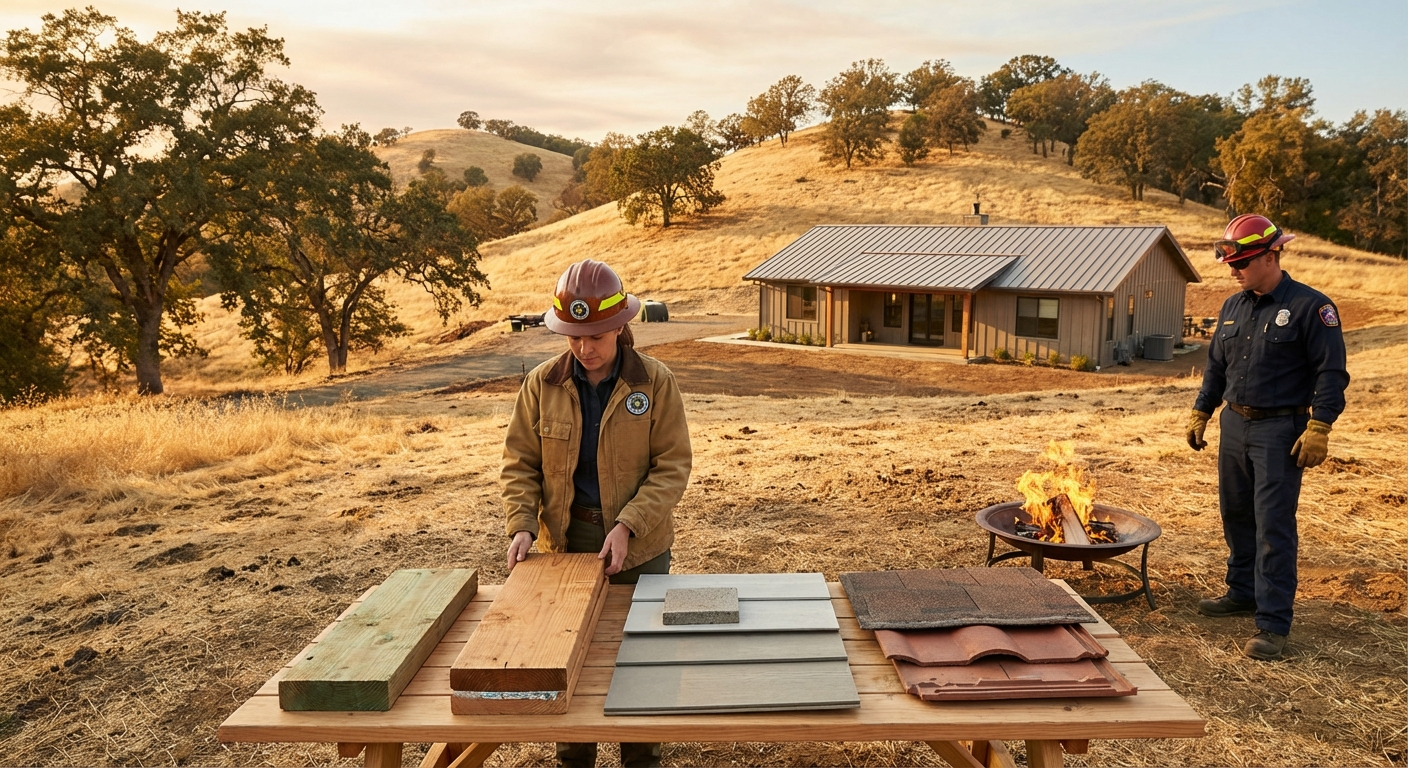
* Class A Rated Roofing: This is the gold standard. Think concrete or clay tiles, metal roofing, or asphalt fiberglass shingles. These materials don’t ignite easily and resist ember penetration. They’re a must-have in high-risk zones.
* Avoid: Wood shake or shingle roofs. They’re beautiful, but they’re basically kindling. If you have one, seriously consider replacing it. Insurers will definitely notice this.
Exterior Walls: Blocking the Heat
What your walls are made of matters a lot. They need to resist ignition from radiant heat and direct flame contact.
* Stucco: A popular choice in California, and for good reason. Stucco offers excellent fire resistance. It’s non-combustible.
* Fiber Cement Siding: Products like HardiePlank are fantastic. They look like wood siding but are made of cement, sand, and cellulose fibers – very fire resistant.
* Stone or Brick: Naturally non-combustible and extremely durable. A great option if you’re building new or doing a major remodel.
* Avoid: Vinyl siding. It melts and burns easily. Also, untreated wood siding, especially redwood or cedar, can be a major liability.
Windows and Doors: Weak Points Made Stronger
Glass breaks under intense heat, allowing embers and flames inside. Doors can also ignite.
* Dual-Pane or Tempered Glass Windows: These are more resistant to breaking from heat than single-pane windows. Some even come with special fire-rated frames.
* Solid Core Doors: Metal or solid wood doors are much better than hollow-core or doors with large glass panels. Make sure any exterior doors have weather stripping to prevent ember entry.
* No Pet Doors: Seriously, embers can blow right through those.
Decks and Eaves: Overlooked Vulnerabilities
These areas often create “ember traps” or provide a path for fire to reach your home.
* Decking Materials: Instead of traditional wood, consider composite decking materials or fire-treated lumber. Also, enclose the area *under* your deck to prevent embers from blowing in and igniting debris.
* Eaves and Vents: Open eaves are a huge problem. Embers get trapped, ignite, and the fire spreads into your attic. Boxed-in eaves with fire-resistant materials are far safer. Make sure all attic and foundation vents have fine mesh screens (1/8-inch or smaller) to block embers.
The “Defensible Space” Connection: Beyond Your Walls
It’s not just the house itself. Insurers also look at what’s *around* your house. This is what we call defensible space, and California law mandates it for properties in high-fire hazard areas.
You’ve probably heard about the 100-foot rule. It means clearing brush, dead leaves, and anything flammable within 100 feet of your home. The first 5 feet are the “ember-resistant zone” – ideally, no combustible materials at all. The next 25 feet should have carefully managed, irrigated landscaping. The remaining 70 feet require thinning and removal of ladder fuels.
This isn’t just busy work. It’s a critical safety measure. And yes, insurers notice when you’ve done the work. They often ask for photos or documentation of your defensible space efforts.
If this sounds like a lot to keep track of, you’re right. It is. But every step you take to harden your home and manage your defensible space significantly improves your home’s survivability – and your chances of finding and keeping good insurance.
Finding Fire Insurance in California: When the System Feels Broken
You’ve done the work. You’ve fire-hardened your home. You’ve cleared your defensible space. But maybe you’re still having trouble getting insurance. Maybe State Farm pulled out of new policies, or AAA won’t renew yours. It’s a frustrating spot to be in.
This is where an independent insurance professional can make a huge difference. Someone who knows the California market inside and out, understands the nuances of Prop 103, and has relationships with multiple carriers – not just one.
Karl Susman, with LA Fire Coverage Insurance (CA License #0B75129), has been helping Californians navigate these exact challenges for years. He understands the fear, the confusion, and the feeling of being left in the lurch. His agency works with a variety of insurers, including those who specialize in high-risk properties or offer specific programs for fire-hardened homes.
Sometimes, it takes a little creative problem-solving. It might mean a “difference in conditions” policy layered on top of the California FAIR Plan, which is the state’s insurer of last resort. The FAIR Plan provides basic fire coverage, but it’s often limited and doesn’t cover things like liability or water damage. A “DIC” policy fills those gaps, giving you more complete protection.
The short answer is yes, you can find coverage. The real answer is it takes persistence and expertise. Don’t give up. Your home is too important.
It’s time to stop worrying and start getting answers. If you’re struggling to find fire insurance or want to explore options for your fire-hardened home, reach out to Karl Susman. Get your quote today: https://lafirecoverageinsurance.com/quote/
The Future of Fire Insurance in California
The California Department of Insurance is working on regulatory changes that could encourage insurers to return to the market and offer more policies. These changes aim to give insurers more flexibility in how they calculate rates, but in return, they’d be expected to write more policies in high-risk areas and offer discounts for mitigation efforts. It’s a slow process, and frankly, it’s not without its critics. Some worry it will lead to higher rates for everyone. Others hope it stabilizes the market.
Either way, the emphasis on fire-resistant materials and defensible space isn’t going anywhere. It’s becoming the new normal for California homeowners. Protecting your home isn’t just about peace of mind; it’s increasingly about access to affordable insurance.
Don’t let the complex world of California fire insurance overwhelm you. Get personalized guidance from Karl Susman at LA Fire Coverage Insurance. He’s here to help. Start your journey to better coverage: https://lafirecoverageinsurance.com/quote/
Frequently Asked Questions About Fire Insurance and Home Hardening
What is “fire hardening” my home?
Fire hardening means making your home more resistant to ignition during a wildfire. It involves using fire-resistant building materials for your roof, walls, windows, and decks, and addressing vulnerable areas like vents and eaves. It’s about creating a barrier against embers and radiant heat.
Will fire hardening guarantee I can get insurance?
No, it won’t guarantee a policy from any specific insurer, but it significantly improves your chances. Many traditional insurers are more willing to write policies for hardened homes, and you might even qualify for discounts. It makes your home a much less risky proposition for them.
What’s the difference between the FAIR Plan and a regular policy?
The California FAIR Plan is the state’s “insurer of last resort” for properties that can’t get coverage on the traditional market. It provides basic fire coverage. A regular, or “admitted,” policy from a private insurer usually offers broader coverage, including liability, water damage, and theft, often with better terms and lower deductibles.
How much does it cost to fire harden a home?
The cost varies wildly depending on your home’s current condition and what upgrades you choose. Replacing a wood shake roof with a Class A metal roof could be tens of thousands of dollars. Installing ember-resistant vents might only be a few hundred. It’s an investment, yes, but one that can pay off in protection and insurance access.
Should I prioritize defensible space or fire-resistant materials?
Both are absolutely essential and work together. Defensible space creates a buffer zone that helps slow down or stop a fire’s approach, reducing the heat and flame exposure to your home. Fire-resistant materials ensure that if embers do reach your home, or if it experiences radiant heat, it won’t ignite easily. You really need both for the best protection.
This article is for informational purposes only and does not constitute financial advice.