What You’ll Learn
Living in California means living with the real possibility of wildfires. It’s a fact of life, especially if you’re anywhere near the hills or canyons. But what happens if the flames never touch your home, yet the air fills with a thick, choking haze for days or even weeks? That’s when smoke damage becomes a serious concern. This guide will walk you through how your California fire insurance policy typically handles smoke damage, what to look for, and what steps you can take if your home gets hit by the lingering aftermath of a wildfire.
- How standard home insurance covers smoke damage.
- The difference between direct fire and smoke-only claims.
- Why policy wording matters more than you think.
- Steps to take immediately after smoke exposure.
- How to work with your insurance company and adjusters.
- Why an experienced California agent makes all the difference.
1. Get to Know Your Policy – The Fine Print Matters
Most folks assume if there’s smoke, their fire insurance kicks in. The short answer is yes. The real answer is more complicated. A standard homeowner’s insurance policy in California – often called an HO-3 policy – usually includes coverage for damage caused by smoke. This isn’t just about the soot you can see. It’s also about the microscopic particles that seep into everything: your carpets, drapes, furniture, even the inside of your walls and HVAC system.
But here’s the thing. Not all smoke damage is treated equally. If a fire starts in your kitchen and fills your house with smoke, that’s one type of claim. If a wildfire burns miles away in Ventura County, sending plumes of smoke across the entire San Fernando Valley for a week, that’s another. Your policy will detail “perils covered.” Smoke is almost always a named peril. Yet, the *source* of the smoke can sometimes change how an insurer views the claim. Most policies cover sudden and accidental smoke damage. Lingering, outside smoke from a distant fire usually falls under this, but you’ll want to confirm.
Before any smoke even appears on the horizon, grab your policy. Read the “Perils Covered” section. Look for phrases like “smoke damage” or “fire and smoke.” If you’re struggling to make sense of the legal jargon – and honestly, who doesn’t? – that’s where an independent agent like Karl Susman comes in. He and his team at LA Fire Coverage Insurance, CA License #0B75129, can help you understand the nuances. Give them a call at (877) 411-5200; they’ve been helping Californians with these exact issues for years.

2. Understand What “Smoke Damage” Really Means
When you think of smoke damage, you probably picture black soot on walls. That’s certainly part of it, but it’s far from the whole story. Smoke carries a cocktail of chemicals – especially from wildfires, which burn everything from natural brush to synthetic materials in homes. These chemicals leave behind a distinct, acrid odor that’s incredibly hard to remove. This smell isn’t just unpleasant; it can be a health hazard, causing respiratory issues for some people.
Invisible damage is a huge concern. Those tiny smoke particles can corrode metal, etch glass, and discolor plastics. They get into your electronics, potentially shortening their lifespan. They contaminate food items, making them unsafe to eat. Your HVAC system, designed to circulate air, can actually spread smoke particles throughout your home, embedding them deeper into every surface. Even if the outside of your home looks fine after a wildfire, the inside might be a different story. If the wind shifts during the 2025 LA fires and pushes smoke directly over your neighborhood for days, you’ll be dealing with this kind of pervasive, hidden damage.
3. Document Everything – Your Phone is Your Best Friend
If your home is exposed to significant smoke, start documenting immediately. This isn’t just a suggestion; it’s a requirement for a successful claim. Take photos and videos of everything. Did you notice a strong smell when you opened the door? Record it. Are there visible soot particles on surfaces? Snap a picture. Show the date and time if your camera allows it.
Make a list of damaged items. This includes everything from drapes and upholstery that smell of smoke, to clothing, electronics, and even food. Don’t throw anything away until your insurance company tells you to. They might want to inspect the damaged goods. Keep receipts for any immediate steps you take, like buying air purifiers or professional cleaning supplies. This paper trail is your proof. It helps your insurer understand the scope of the problem and makes the claims process smoother. Remember, the more evidence you have, the stronger your case for getting your home and belongings back to normal.
4. Contact Your Agent or Insurer Promptly
As soon as you’ve taken initial steps to document the damage, call your insurance agent or company. Don’t wait. Many policies have specific timelines for reporting claims. Even if you’re unsure of the full extent of the damage, it’s better to get the ball rolling. An early report shows good faith and helps avoid any issues later on.
This is where having a local, independent agent can really shine. If you’re a client of Karl Susman and LA Fire Coverage Insurance, CA License #0B75129, you wouldn’t just call a faceless 1-800 number. You’d call Karl or his team at (877) 411-5200. They know the California market, they understand the specific challenges of wildfire season in places like the Inland Empire, and they can guide you through the initial steps of filing a claim. They can explain what to expect from your insurer – whether it’s State Farm, AAA, Farmers, or another carrier – and help you speak their language. This kind of personal touch can make a world of difference when you’re stressed and trying to figure out what’s next.
Ready to review your current coverage or get a fresh perspective on protecting your California home from fire and smoke? Get a fast, free quote today!
5. Mitigate Further Damage (But Don’t Go Overboard)
Your policy likely includes a clause that requires you to take reasonable steps to prevent further damage to your property. For smoke, this means things like airing out your home when air quality improves, changing HVAC filters, and perhaps even light surface cleaning. But wait — there’s a catch. Don’t start a full-scale renovation or hire expensive professionals without talking to your insurer first.
Why? Because if you spend thousands on specialized cleaning and then the adjuster comes out and says it wasn’t necessary or wasn’t done by an approved vendor, your claim might hit a snag. Do the basic stuff: open windows, use fans, wipe down hard surfaces with mild cleaners. For anything more involved, like cleaning ducts or professional odor removal, get approval from your insurance company. They might have a list of preferred vendors or specific protocols they want followed. This helps ensure that the costs you incur will actually be covered.
6. Working with the Adjuster – Be Prepared and Patient
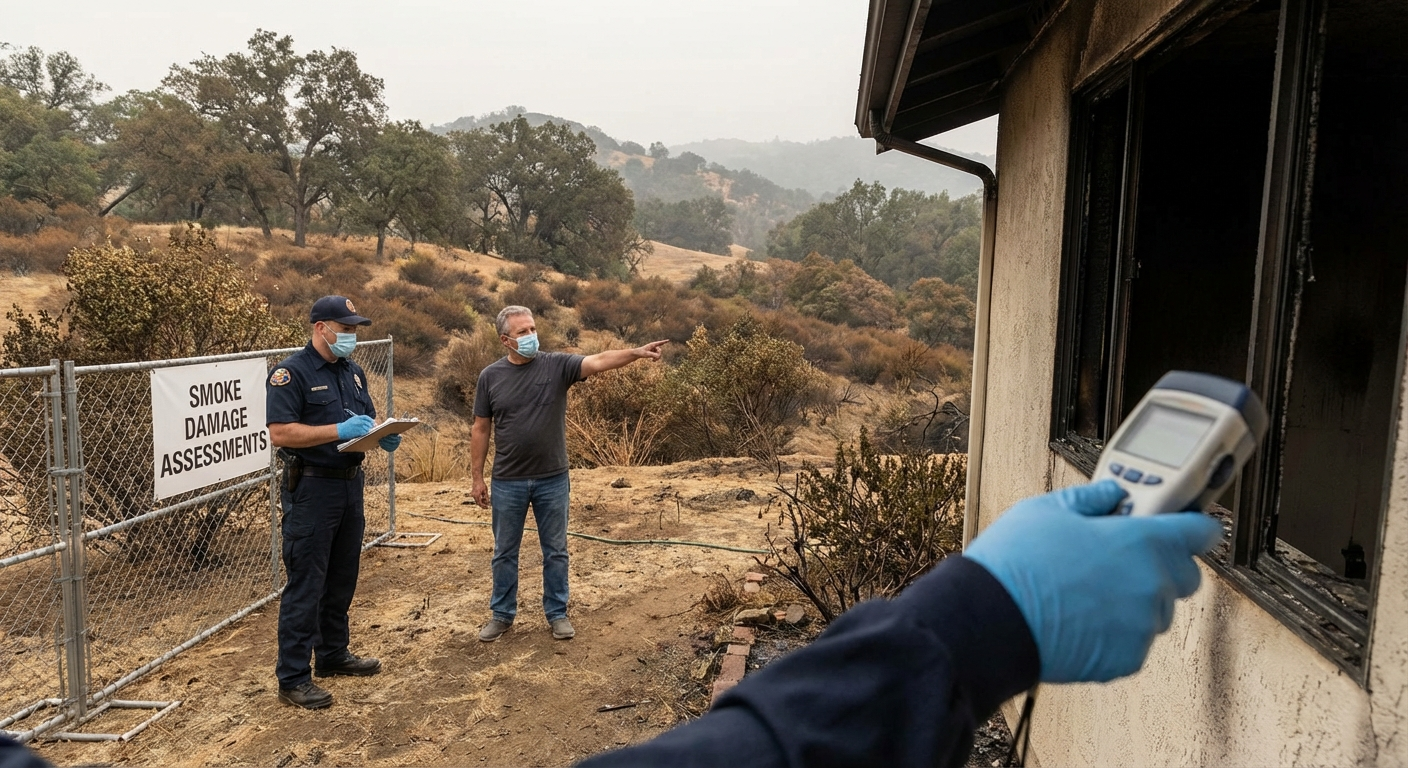
Once you’ve filed your claim, an insurance adjuster will be assigned to your case. This person’s job is to assess the damage and determine what your policy will cover. They’ll want to visit your home. Be present during this visit. Walk them through your property, pointing out everything you’ve documented – the smells, the visible soot, any affected items. Show them your photos and lists.
Don’t be afraid to ask questions. If they say something isn’t covered, ask them to show you where it states that in your policy. Adjusters are busy, especially after a major wildfire event, like the ones that have plagued California in recent years. Be patient, but also be persistent. Follow up regularly. If you feel like you’re not getting a fair shake, or if the process feels overwhelming, remember that Karl Susman and his team at LA Fire Coverage Insurance, CA License #0B75129, are there to advocate for you. They understand the intricacies of California claims and can help you communicate effectively with your insurer. You can reach them at (877) 411-5200.
7. The FAIR Plan and Smoke Damage
For many California homeowners, especially those in high-fire-risk areas, traditional insurers like Farmers or AAA might have pulled back or become incredibly expensive. This has pushed more people onto the California FAIR Plan. The FAIR Plan is designed to be an “insurer of last resort,” providing basic fire coverage when other options aren’t available. But how does it handle smoke damage?
Good news: the FAIR Plan does cover smoke damage. It’s a fundamental part of its fire coverage. However, it’s essential to remember that the FAIR Plan typically offers more basic coverage compared to a comprehensive HO-3 policy from a private insurer. It might not include things like extended replacement cost or personal property coverage at the same levels. So, while smoke damage is covered, the *extent* of that coverage for cleaning, repairs, and replacing personal items might be different. Many people with a FAIR Plan policy also purchase a “Difference in Conditions” (DIC) policy from a private insurer to fill in these gaps, adding coverage for things like theft, liability, and broader dwelling protection. If you’re on the FAIR Plan, it’s even more important to understand exactly what your policy covers for smoke and what a DIC policy could add. This is another area where expert guidance from an agent like Karl Susman is truly valuable.
Protecting your home from the unseen dangers of wildfire smoke is a real concern for California homeowners. Don’t wait for the next fire season to figure out your coverage. Get a no-obligation quote and policy review today.
Frequently Asked Questions About Smoke Damage Coverage
Q1: Will my insurance pay for temporary housing if my home smells too smoky to live in?
A: Most standard homeowner policies, including those in California, offer what’s called “Additional Living Expenses” (ALE) or “Loss of Use” coverage. If your home becomes uninhabitable due to a covered peril, like smoke damage, this coverage can help pay for things like hotel stays, temporary rent, and extra food costs. You’ll need to show that the smoke made your home truly unlivable, though, not just unpleasant.
Q2: My neighbor’s house caught fire, but mine only got smoke. Is that covered?
A: Yes, generally. Smoke damage originating from a neighboring property or a distant wildfire is typically covered under the smoke peril in your standard homeowner’s policy. The fire doesn’t need to have directly touched your property for the smoke damage to be a valid claim.
Q3: What if I have to replace all my clothes because of the smoke smell? Is that included?
A: Your personal property coverage usually includes items damaged by a covered peril like smoke. This means if clothes, drapes, furniture, or other belongings are deemed unsalvageable due to smoke odor or residue, your policy should cover their cleaning or replacement, up to your policy limits. Keep a detailed inventory and receipts!
Q4: My policy mentions "sudden and accidental" smoke. Does wildfire smoke count?
A: For almost all homeowner policies, smoke from a wildfire is considered “sudden and accidental.” This language typically aims to exclude things like smoke from a fireplace that’s regularly used and poorly maintained, or industrial smoke that’s a constant, known issue in an area. Wildfire smoke, even if it lingers for days, generally fits the “sudden and accidental” description.
This article is for informational purposes only and does not constitute financial advice.