Think Your Home is Insured Against Wildfire? The Truth Might Surprise You.
Many California homeowners sleep soundly, assuming their standard policy covers them for fire. It’s a natural assumption, right? You pay your premiums; they pay if something goes wrong. But here’s the thing: wildfire isn’t just “something going wrong” anymore. It’s an entirely different beast for insurers, especially out here.
For years, folks in places like the Santa Monica Mountains or the foothills of the Sierra Nevada knew fire was a risk. Now, even communities deep in the Inland Empire or parts of the Valley are seeing their fire risk jump. That shift means insurance companies are rethinking everything.
They’re not just raising rates. Some of the biggest names – State Farm, AAA, Farmers – have hit the brakes on new policies or even dropped existing ones in high-risk areas. It’s a tough pill to swallow for many families who’ve paid into the system for decades. And it leaves a lot of people scrambling, wondering if they’re truly protected.
“My Policy Covers Everything, Doesn’t It?” Not Always.
The short answer is yes, your homeowner’s policy generally should cover fire. The real answer is more complicated. Insurers aren’t just looking at your address anymore. They’re looking at your specific property with a magnifying glass. They’re asking: What’s around your house? How close are the trees? What’s your roof made of? All these factors now dictate if you can even get a standard policy.
Many folks don’t realize this until they get that dreaded non-renewal notice in the mail. Or worse, when they try to buy a new home and can’t find coverage. It’s a shock. You’ve been paying your premium, maybe for 20 years, and suddenly the rules have changed.
Which brings up something most people miss. What if you can’t get a traditional policy? That’s where the California FAIR Plan often steps in. It’s a state-mandated program, sort of an insurer of last resort. But it’s usually more expensive, and the coverage isn’t as broad. It’s not ideal, but it’s often the only option left for many homeowners, especially after a scary fire season like the one we saw in Ventura County a few years back.
Defensible Space: Your Home’s First Line of Defense, and Your Insurer’s Demand.
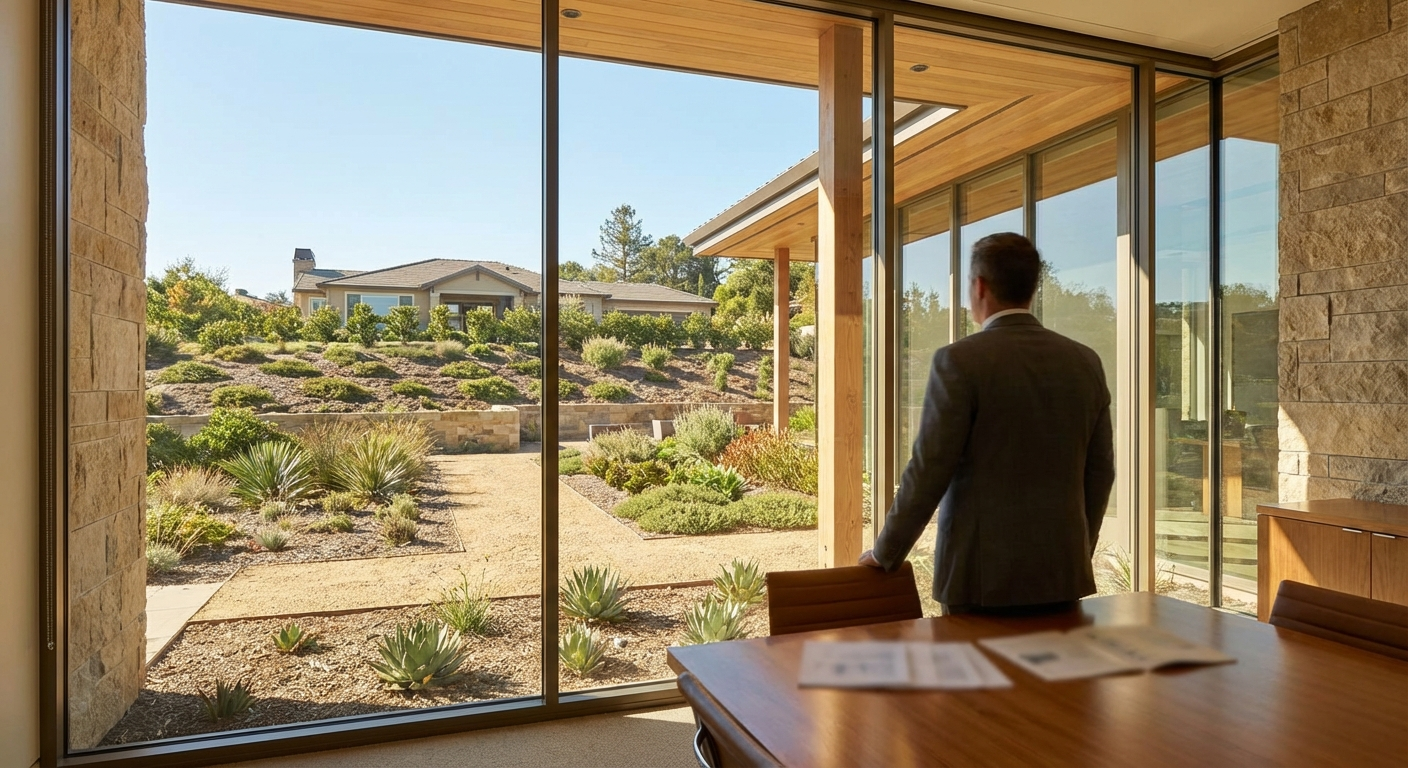
Honestly, if you live anywhere near wildland, or even just a brushy canyon, you’ve probably heard the term “defensible space.” It’s not just a suggestion from the fire department anymore. It’s a non-negotiable requirement if you want to keep your home insured. Insurers are now demanding proof of compliance before they’ll issue or renew policies.
Think of it this way: your home is a fortress. Defensible space is the moat and clear perimeter that keeps the enemy — wildfire — from breaching your walls. It’s about creating zones around your house that are less likely to burn, or at least slow a fire down.
The Zones of Safety: What You Need to Know.
California law breaks defensible space into three key zones, each with its own rules. Don’t skim over these; they’re the details that could save your home and your policy.
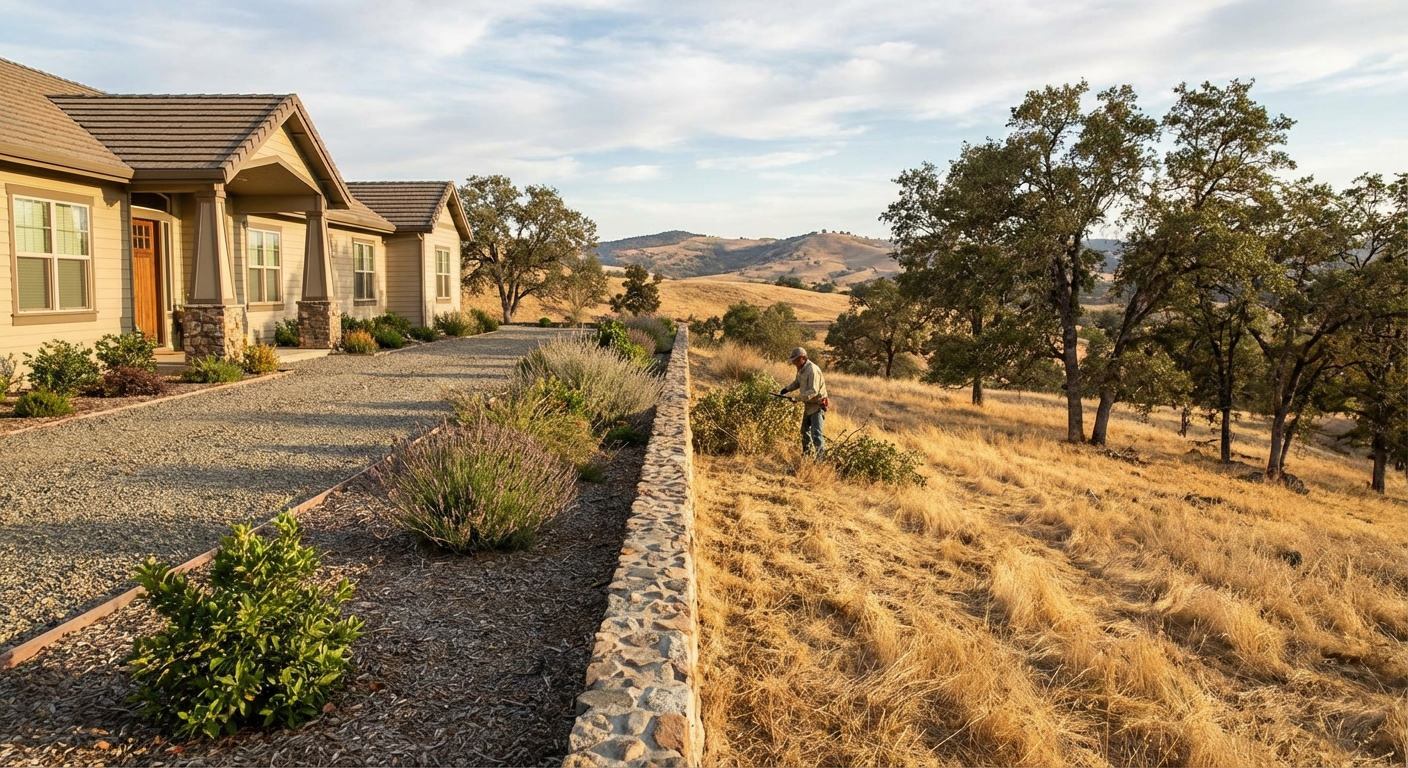
- Zone 0 (Ember-Resistant Zone): 0-5 feet from your house. This is the most critical area. No combustible materials here. That means no bark mulch, no dead leaves, no patio furniture made of wicker. Patios, concrete walkways, gravel — those are good. Keep plants here minimal, non-flammable, and well-watered. Remove anything that could catch fire and throw embers at your house. This zone is all about stopping embers from igniting your home directly.
- Zone 1 (Lean, Clean, Green Zone): 5-30 feet from your house. Here, you want to reduce fire fuel. Cut back shrubs. Clear dead vegetation. Trim tree branches so they’re at least 10 feet from other trees and 6 feet from the ground. Think “lean, clean, and green.” You can have plants, but they should be spaced out, low-growing, and well-maintained. No ladder fuels — anything that allows a ground fire to climb into a tree canopy.
- Zone 2 (Reduced Fuel Zone): 30-100 feet from your house (or to the property line). This zone is about thinning out vegetation. Keep grasses mowed to 4 inches or less. Remove dead trees and shrubs. Create horizontal and vertical spacing between plants. It doesn’t have to be barren, but it needs to be managed. The goal is to slow a fire down and reduce its intensity, giving firefighters a better chance to protect your home.
Many cities and counties, especially after fires like the Camp Fire or the Woolsey Fire, have even stricter rules. Always check with your local fire department for specific ordinances in your area. For example, some areas in the hills above Los Angeles might have requirements extending beyond 100 feet.
Why Insurers Are Suddenly So Strict About Your Yard.
It’s not just about being picky. Insurers are in the business of calculating risk. And frankly, the risk of wildfire in California has skyrocketed. Climate change, years of drought, and more people building homes in wildland-urban interface (WUI) areas have created a perfect, terrifying storm.
When premiums jumped 40% between 2022 and 2024 for many homeowners, it wasn’t arbitrary. Insurers are losing money. A lot of money. They paid out billions after the 2017 and 2018 fire seasons. If they can’t make a profit, they simply stop writing policies. That’s just how the industry works.
But wait — there’s another layer. California’s insurance market operates under Proposition 103, a 1988 law that gives the Insurance Commissioner significant power to approve or reject rate increases. This has created a tension: insurers say they need higher rates to cover their risks, but the Commissioner aims to protect consumers from exorbitant costs. It’s a constant push-pull.
This friction has led to a major problem: insurers can’t always charge what they believe is a fair price for the risk they’re taking. So, instead of raising rates to unsustainable levels, many just leave. Or they non-renew policies in areas they deem too risky, forcing homeowners onto the FAIR Plan.
The New Rules of the Game: What Insurers Look For.
Today, insurers aren’t just sending someone out to eyeball your property. They’re using satellite imagery, AI, and complex algorithms to assess your home’s wildfire risk. They’re looking at roof type, vent screens, window materials, and yes, your defensible space. They can literally see if you have a pile of firewood too close to your house or if your gutters are full of leaves.
They want to see that you’re taking proactive steps. That you’re not just hoping for the best. Good defensible space tells an insurer you’re a responsible homeowner, actively reducing their potential payout. It’s often the only thing that will make your home insurable with a standard carrier.
Your Playbook for Protecting Your Home and Your Policy.
So, what’s a California homeowner to do? Panic isn’t productive. Action is. Your first step is to get your defensible space in order. Don’t wait for an inspection. Don’t wait for a non-renewal notice. Do it now.
- Start with Zone 0. Clear out anything flammable within 5 feet of your house. Every single thing.
- Move to Zone 1. Trim those branches. Clear that brush. Create space.
- Tackle Zone 2. Mow your grass. Remove dead trees. Make it harder for fire to spread.
Beyond defensible space, think about hardening your home. Are your vents screened? Is your roof fire-resistant? Are your windows dual-pane? These upgrades make a huge difference in how a home fares against embers, which are the primary cause of home ignition during wildfires.
Here’s where it gets interesting. Many homeowners try to go it alone, calling different carriers, getting frustrated. That’s a mistake. You need an independent insurance agent who understands the California market, especially the wildfire situation.
Why an Independent Agent is Your Best Friend Right Now.
Someone like Karl Susman, from LA Fire Coverage Insurance (CA License #OB75129), isn’t tied to just one insurance company. He works with many. This means he can shop around for you, find carriers still writing policies in your area, and help you understand the nuances of each one. He knows the ins and outs of the FAIR Plan, too, if that becomes your only option.
An agent can also advise you on what specific improvements will make the biggest difference to an insurer. They can help you prepare for that defensible space inspection. They can be your advocate in a market that feels increasingly stacked against the homeowner.
It’s not just about finding any policy. It’s about finding the right policy for your specific risks and making sure you’re truly protected. The market is changing fast, with new regulations and programs constantly being discussed. You need someone in your corner who keeps up with it all.
If you’re worried about your fire insurance, or just want to make sure you’re doing everything you can to protect your home and policy, reach out. Karl Susman and his team can help you sort through the options.
Ready to explore your fire insurance options? Get a quote today!
Common Questions About Fire Insurance and Defensible Space.
Q: Will defensible space guarantee I get a standard fire insurance policy?
A: Not always, but it vastly improves your chances. Defensible space is a prerequisite for most standard policies in high-risk areas. Without it, you’re almost certainly looking at the FAIR Plan or no coverage at all. Even with perfect defensible space, other factors like your home’s construction materials and proximity to major brush can influence an insurer’s decision.
Q: How often do I need to maintain my defensible space?
A: Regularly. It’s not a one-and-done project. You should be clearing dead vegetation, trimming branches, and mowing grasses at least once a year, usually before fire season kicks into high gear. After a windy period, check for new debris. Insurers often require annual attestations or may conduct their own inspections.
Q: My neighbor doesn’t clear their defensible space. Does that affect my insurance?
A: Unfortunately, yes. Your home’s risk isn’t just about your property; it’s about the surrounding area. If your neighbors aren’t maintaining their defensible space, it increases the overall risk for your community, which can, in turn, affect your insurability and premiums. It’s a shared responsibility in these high-risk zones.
Q: What if I live in a city and don’t think I’m in a “wildfire zone”?
A: Don’t be so sure. Many urban and suburban areas in California are now considered part of the Wildland-Urban Interface (WUI) due to nearby canyons, open spaces, or even large parks with dry vegetation. The 2025 LA fires could easily jump into residential areas. Always check your local fire risk maps and defensible space requirements. Embers can travel miles, igniting homes far from the actual fire front.
Q: Can I get a discount for having good defensible space or home hardening?
A: Possibly! Some insurers offer credits or discounts for homeowners who go above and beyond with defensible space and home hardening measures like fire-resistant roofs, ember-resistant vents, or tempered windows. This is definitely something to discuss with an independent agent like Karl Susman. It shows you’re taking proactive steps, and some carriers will reward that.
Concerned about your current fire insurance situation? Don’t wait until it’s too late. Get a free quote and peace of mind.
This article is for informational purposes only and does not constitute financial advice.