Your Car and California Wildfires: What Your Insurance Really Covers
California’s wildfire seasons aren’t just a threat to homes and communities; they’re a stark reminder that even your vehicle isn’t safe from the inferno. Every year, we see images of charred cars, melted metal, and scorched landscapes. It’s a sobering sight. And it often leaves people wondering: *Does my auto insurance actually cover this kind of damage?*
Many people assume a basic auto policy will step in. The short answer is yes. The real answer is more complicated.
Myth: “My auto insurance always covers fire damage, right?”
Honestly, this is one of the biggest misconceptions out there. If you only carry the bare minimum — liability insurance — then no, your car won’t be covered if it’s damaged or destroyed by a wildfire. Liability coverage is designed to pay for damages *you* cause to *other people’s* property or injuries *you* cause to *other people*. It’s about protecting you from financial ruin after an accident, not about fixing your own car.
To get coverage for fire damage, you need something called “comprehensive coverage.” It’s an optional part of your auto policy, but in a place like California, it feels less like an option and more like a necessity.
The Comprehensive Difference
Think of comprehensive coverage as your policy’s “everything else” protector. It kicks in for damage to your car that isn’t caused by a collision. This includes things like theft, vandalism, falling objects (a tree limb, for instance), and yes, fire. Whether it’s a house fire that spreads to your garage in Ventura County or a raging wildfire that overtakes your neighborhood in the Inland Empire, comprehensive is what you’d rely on.
It doesn’t just cover direct flames either. Smoke damage, soot, even molten debris can wreak havoc on a vehicle. Comprehensive coverage usually addresses those issues too. It’s a small premium to pay for a big peace of mind, especially when you consider the sheer number of wildfires we’ve seen tear through communities from the Valley to San Diego County.
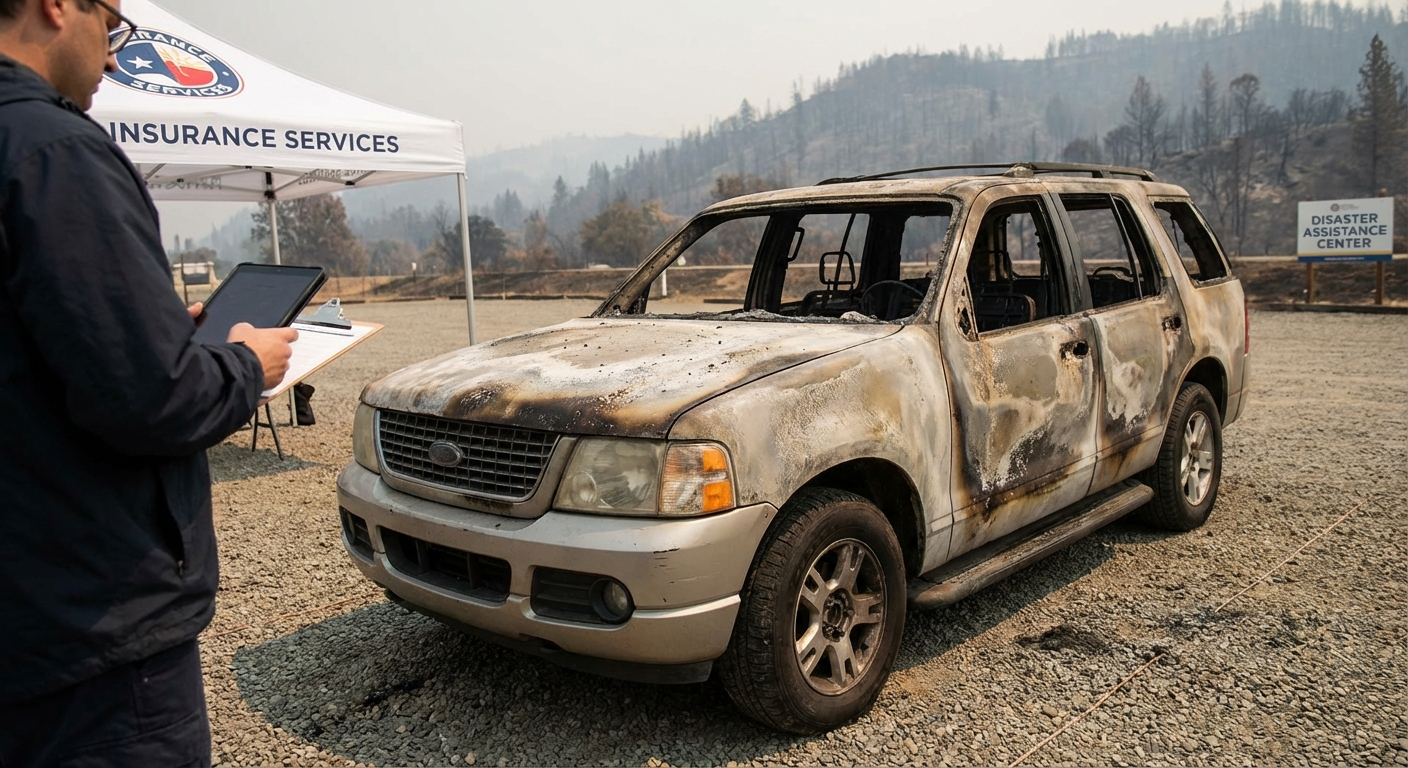
Myth: “My homeowner’s policy will cover my car if it burns near my house.”
This is another common mistake, and it’s a costly one. Your homeowner’s insurance policy and your auto insurance policy are two entirely separate beasts. They cover different things. Your homeowner’s policy protects the structure of your home, other structures on your property (like a detached garage or shed), and your personal belongings *inside* your home.
Your car, however, is almost universally excluded from homeowner’s coverage. Even if it’s parked in your driveway, even if it’s in your attached garage that burns down with the house — the damage to the vehicle itself falls squarely under your auto insurance.
Two Separate Worlds: Home and Auto
It can feel a bit counterintuitive, can’t it? You’d think if your house goes up in flames, everything around it would be covered by one policy. But that’s just not how it works. This distinction becomes especially important in California because of our unique insurance market. For instance, the California FAIR Plan — a state-mandated program that provides basic fire insurance for homeowners in high-risk areas when traditional insurers pull back — *only* covers structures and personal property within them. It offers no protection whatsoever for your vehicle.
So, while your home’s structure might be covered by a FAIR Plan policy, and its contents by a separate “Difference in Conditions” policy, your car needs its own comprehensive auto coverage. It’s a critical piece of the puzzle many people overlook until it’s too late.
Myth: “If I have to leave my car behind in an evacuation, my claim might be denied.”
This worry surfaces often during fast-moving fire events. Imagine a mandatory evacuation order comes down, and you have minutes to get out. Maybe traffic is gridlocked, or you’re helping elderly neighbors, and you simply can’t move your second car. Perhaps you’re away from home when the fire hits. Some folks fear their insurer will see this as “negligence” and deny a claim.
Generally, that’s not how it works. Insurance companies understand the chaos and danger of wildfire evacuations. They don’t expect you to risk your life or obstruct emergency services to save a vehicle. If your car is damaged or destroyed by a wildfire because you couldn’t move it during an evacuation, your comprehensive coverage should still apply.
Evacuation and Your Vehicle
Your safety and the safety of your family are always the priority. Insurers aren’t in the business of punishing people for following evacuation orders or making difficult decisions under extreme duress. What they *do* care about is fraud — someone intentionally abandoning a car to collect on a policy when it wasn’t truly threatened. That’s a different story. But for legitimate fire damage during a real emergency, you should be covered.
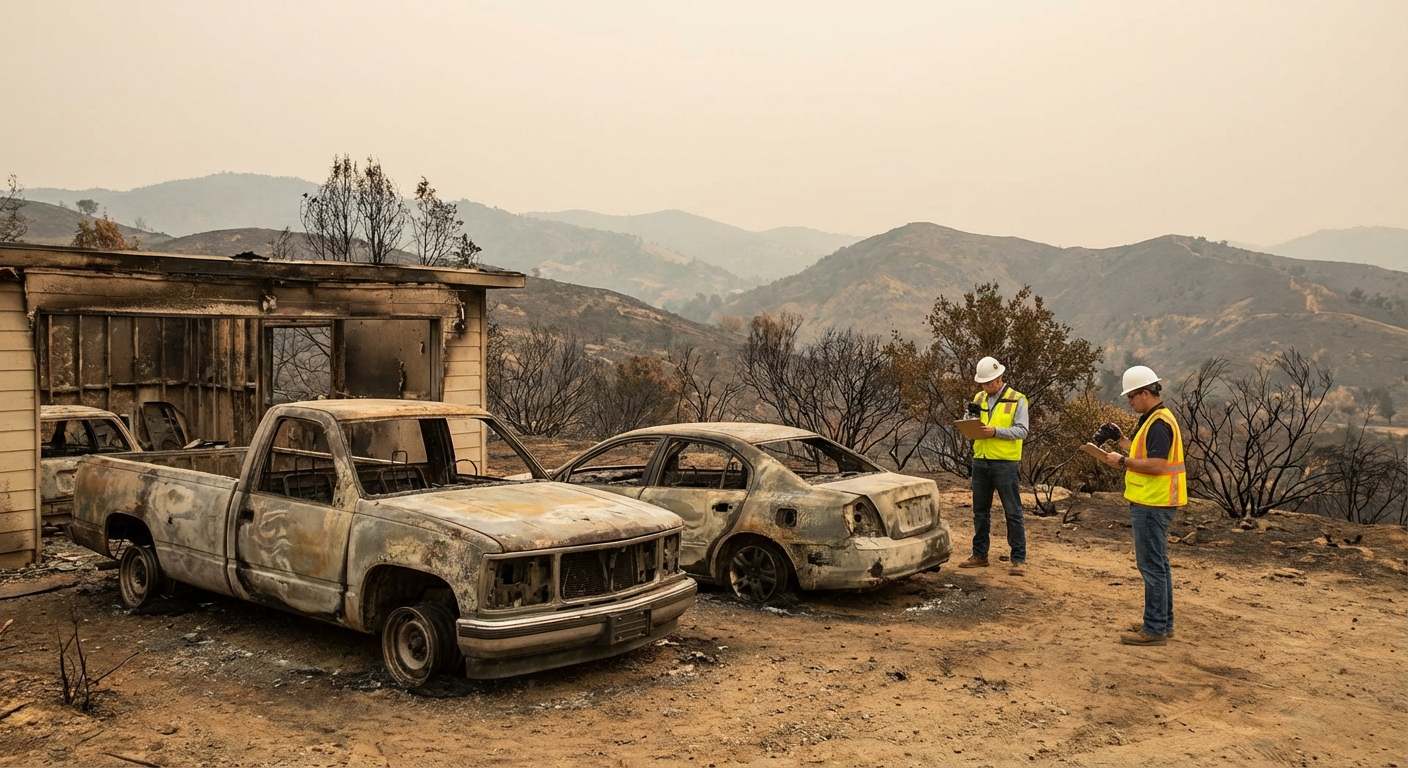
Myth: “My insurance company will just give me a brand-new car if mine is totaled by fire.”
Ah, if only that were always true! Most standard auto insurance policies pay out based on your vehicle’s “Actual Cash Value” (ACV). This means the insurer determines the car’s value *at the moment it was destroyed*, factoring in depreciation, mileage, and condition.
So, if your five-year-old sedan is totaled by fire, you’ll get enough money to buy another five-year-old sedan in similar condition, not a brand-new one. This can be a tough pill to swallow, especially when you factor in current market prices for used cars.
Actual Cash Value vs. Replacement Cost
Some specialized policies, or “new car replacement” endorsements, *do* offer replacement cost coverage for newer vehicles, but these are far less common and come at a higher premium. For most drivers, ACV is the reality. This is also why GAP insurance exists — to cover the “gap” between what you still owe on a car loan and its actual cash value if it’s totaled, which can be significant, particularly with newer cars that depreciate quickly.
Myth: “Living in a high-fire zone means I can’t get comprehensive for my car.”
This is where auto insurance differs quite a bit from homeowner’s insurance in California. While getting *homeowner’s* fire insurance in areas like the Sierra foothills or parts of Malibu has become incredibly challenging — with major carriers like State Farm and Farmers pulling back or limiting new policies — securing comprehensive coverage for your *vehicle* is usually still very possible.
Why the difference? Cars are mobile. They can be evacuated. Homes, obviously, cannot. Insurers view the risk differently. While your premiums for comprehensive might be higher if you live in a historically fire-prone zip code, it’s generally not impossible to get this coverage from standard carriers like AAA, GEICO, or Progressive.
High-Risk Areas and Auto Insurance
In fact, most auto insurers don’t even have the same “non-renewal” or “declination” issues for comprehensive coverage in high-risk fire areas that homeowners face. They’re more concerned with your driving record, the type of car you drive, and how often you make claims. So, don’t assume you’re out of luck just because you live where the hills turn golden brown in summer. It’s always worth checking your options.
Need to check your current auto policy? Or thinking about getting comprehensive coverage for the first time? Don’t wait until the smoke clears. Get a personalized quote today and protect your vehicle from California’s fire threat. Visit https://lafirecoverageinsurance.com/get-a-quote/.
Myth: “A wildfire claim will definitely send my rates through the roof.”
This is another big worry, and it’s understandable. Nobody wants to see their insurance premiums jump. But here’s the thing: a wildfire claim for vehicle damage is generally considered a “not-at-fault” claim. You didn’t cause the wildfire. This distinction is really important.
In California, thanks to consumer protections like Proposition 103, insurers have some restrictions on how much they can raise your rates based on claims you didn’t cause. While any claim can potentially affect your future premiums — especially if you’ve had multiple claims — a single not-at-fault comprehensive claim for wildfire damage isn’t usually treated the same as, say, a collision where you were found to be at fault.
Understanding Rate Changes After a Fire Claim
Will your rates go up at all? Possibly. Insurers look at a lot of factors when setting premiums, including the frequency of claims in your area, the overall cost of claims, and your individual claims history. But it’s unlikely to be the dramatic, punitive increase you might fear, especially if it’s your first major claim of this type. It’s always better to file a legitimate claim and get your vehicle repaired or replaced than to absorb the entire loss yourself.
Still have questions about how a wildfire could impact your car insurance? Karl Susman and the team at LA Fire Coverage Insurance are here to help. With CA License #0B75129, we’ve guided countless Californians through these tough questions. Don’t leave your car’s protection to chance. Call us at (877) 411-5200 or click here to get a quote and speak with an expert: https://lafirecoverageinsurance.com/get-a-quote/.
Frequently Asked Questions About Wildfire Vehicle Damage
Here are some quick answers to common questions about your car and California wildfires:
- Q: Does my car need special “fire insurance” in California?
A: Not a separate policy, no. You need “comprehensive coverage” as part of your standard auto insurance policy. This covers fire damage, along with other non-collision incidents like theft or vandalism. - Q: What if my car is damaged by smoke, not direct flames?
A: Yes, comprehensive coverage typically extends to smoke and soot damage. These can cause significant problems to a vehicle’s interior, engine, and paint. - Q: Will my rental car be covered if my car is destroyed by fire?
A: If you have “rental reimbursement” coverage as an add-on to your auto policy, then yes, your rental car expenses would be covered up to your policy limits while your vehicle is being repaired or replaced. This is an optional coverage. - Q: What if I only have liability insurance on my older car?
A: If you only carry liability, your vehicle will *not* be covered for fire damage. For older cars, people sometimes drop comprehensive to save money. But in California’s fire environment, it’s a decision that carries significant risk. - Q: Can I drop comprehensive coverage to save money?
A: You can, but it’s a gamble, especially in California. While it will lower your premium, you’d be on the hook for the full cost of repairs or replacement if your car is damaged by fire, theft, vandalism, or other non-collision events.
***
This article is for informational purposes only and does not constitute financial advice.