Living with Wildfire Risk in California
California’s beauty is undeniable. Those rolling hills, the golden light, the promise of sunshine nearly every day. But with that beauty comes a formidable challenge: wildfires. They’re not just a seasonal threat anymore; they’re a year-round reality. And for homeowners, this reality hits hardest when it comes to insurance. Getting coverage in certain parts of the state has become a high-stakes game. Many folks are finding their policies non-renewed, or the premiums are simply skyrocketing out of reach. It’s a tough spot for anyone trying to protect their most valuable asset.
Understanding California’s Wildfire Zones
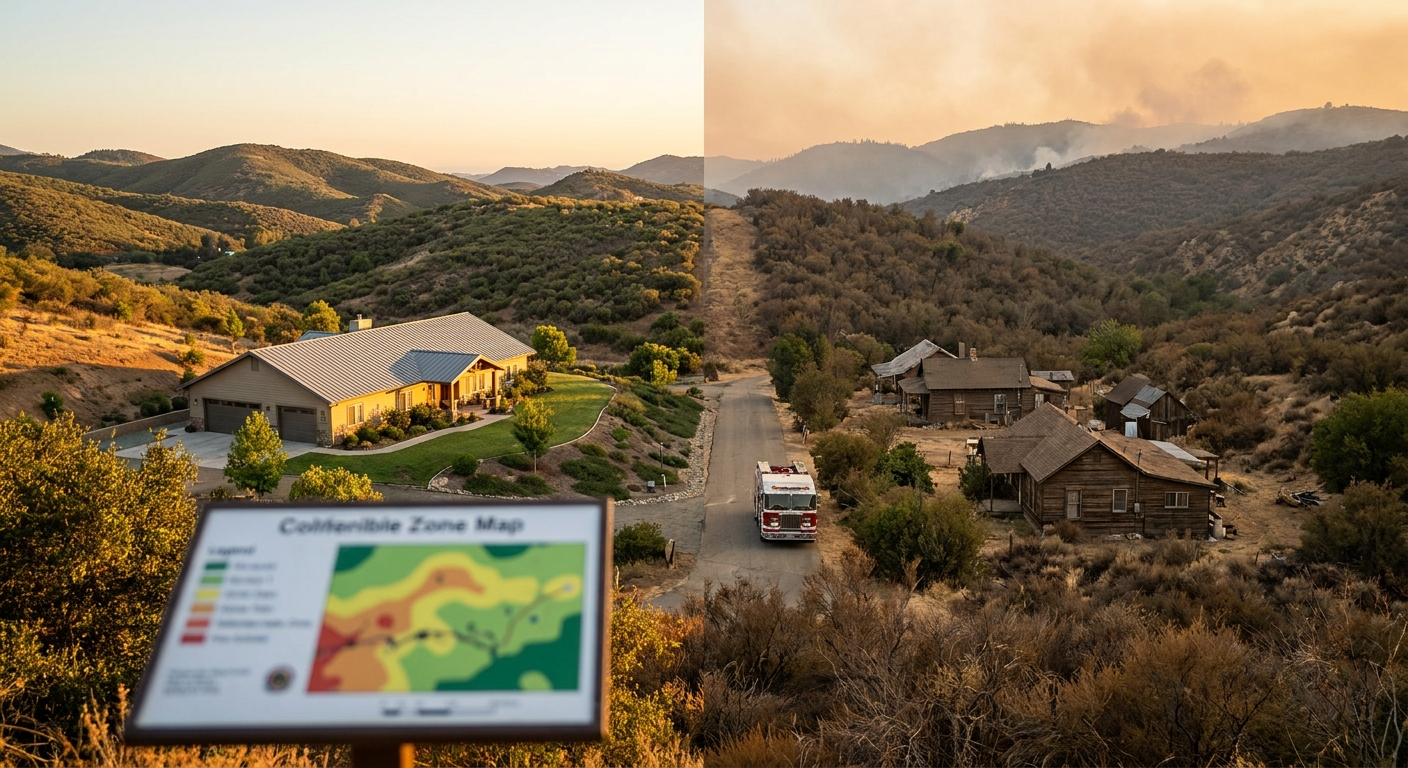
Honestly, it used to be simpler. Insurers would look at general fire risk. Now, it’s far more granular. California’s official wildfire zones – often called Wildland-Urban Interface (WUI) zones or High Fire Hazard Severity Zones (HFHSZ) – are mapped out by CAL FIRE. They use a bunch of factors: vegetation type, how steep the terrain is, historical fire data, and even wind patterns. Think about places like the hills above Berkeley, the canyons of Malibu, or the forested areas of the Sierra Nevada foothills. These aren’t just pretty spots; they’re often red-flagged.
For instance, if you live in parts of Ventura County, especially near the Santa Monica Mountains, or in the eastern fringes of the Inland Empire where the chaparral meets suburban homes, you’re likely in a high-risk zone. The maps are constantly updated, too. What was once considered a moderate risk area might suddenly get reclassified after a big fire or new scientific modeling. This shift can have a huge impact on your insurance.

When Insurers Pull Back
Here’s where it gets interesting. When your home falls into one of these designated high-risk wildfire zones, insurance companies get nervous. Really nervous. They’ve paid out billions after devastating events like the Camp Fire in Paradise or the Woolsey Fire that tore through Malibu and parts of Ventura County. Those losses hit their bottom line hard.
So, what happens? Many major insurers, like State Farm, AAA, and Farmers, have either stopped writing new policies in certain high-risk areas altogether, or they’ve significantly limited the number they’ll take on. Others are just refusing to renew existing policies. Imagine getting that letter in the mail. You’ve paid your premiums for years, and suddenly, you’re told you’re on your own. It’s a gut punch for thousands of Californians. Premiums, even if you can find coverage, have jumped dramatically. Some homeowners have seen their costs go up 40% or more between 2022 and 2024. That’s a big chunk of change.
The FAIR Plan: A Safety Net, But With Holes
But wait — what if you can’t find insurance anywhere else? That’s where the California Fair Access to Insurance Requirements (FAIR) Plan comes in. It’s designed as an “insurer of last resort.” If you’ve been turned down by at least two traditional insurers, you can apply for coverage through the FAIR Plan.
The short answer is yes, it provides coverage. The real answer is more complicated. The FAIR Plan typically only covers fire and extended perils like smoke and wind. It doesn’t offer the broad coverage you’d get from a standard homeowners policy, which includes liability, theft, and other common risks. So, most people on the FAIR Plan still need to buy a “Difference in Conditions” (DIC) policy from a separate insurer to fill those gaps. That means two policies, two bills, and often higher overall costs. Recent changes to the FAIR Plan are also trying to expand its offerings, but it’s still not a perfect solution. It’s a safety net, sure, but it’s got some big holes.
Taking Action: Home Hardening and Defensible Space
If you live in a wildfire zone, you’re not powerless. In fact, taking proactive steps can make a real difference, not just in protecting your home but sometimes in making it more attractive to insurers. These efforts fall into two main categories: defensible space and home hardening.
Defensible space means creating a buffer around your home. That’s typically 100 feet of clear, lean, and green landscaping. Removing dead plants, trimming trees, clearing brush – these aren’t just suggestions; they’re often legally required in high-risk areas. It gives firefighters a fighting chance to save your property.
Home hardening involves making your actual structure more resistant to embers and flames. This means things like installing fire-resistant roofing, upgrading to dual-pane windows, enclosing eaves, using non-combustible siding, and adding ember-resistant vents. Think about how the wind can carry tiny, glowing embers miles ahead of a fire front. Those embers are often what ignite homes, not direct flames. Making your home tougher against embers is a smart move.
Many insurers are starting to offer discounts or are more willing to write policies for homes that have taken these mitigation steps. It shows you’re serious about managing the risk.
Finding the Right Coverage in a Tough Market
This is where it can feel like a maze. With so many insurers pulling back, navigating the options can be overwhelming. You might spend hours calling different companies, only to hear the same story. This is precisely why working with an experienced insurance agent is so important. They know the market, they know which insurers are still writing policies in specific areas, and they can help you piece together coverage, even if it means combining a FAIR Plan policy with a DIC policy.
Someone like Karl Susman of LA Fire Coverage Insurance, CA License #OB75129, has seen it all. Agents like Karl specialize in these complex California markets. They don’t just sell you a policy; they help you understand your options and find solutions when traditional paths are blocked. It’s not about finding the cheapest policy; it’s about finding *any* policy that adequately protects your home.
Regulatory Efforts and the Road Ahead
California’s Department of Insurance, led by Commissioner Ricardo Lara, is trying to stabilize this volatile market. There are ongoing discussions and proposed regulations aimed at getting insurers to return to the state’s high-risk areas. One key part of this involves allowing insurers to factor in the costs of reinsurance (insurance for insurers) and to use forward-looking models that account for climate change, not just historical data. In return, insurers would need to commit to writing more policies in wildfire zones.
It’s a delicate balance. Regulators want to protect consumers from huge rate hikes, but they also need to ensure insurers can operate profitably enough to stay in the market. Proposition 103, which requires public approval for rate changes, adds another layer of complexity to these discussions. The goal is to create a more sustainable market for everyone. It won’t be easy, and it won’t happen overnight.
The situation is dynamic. What’s true today might change tomorrow. Staying informed, taking steps to harden your home, and working with an agent who understands California’s unique challenges are your best bets.
Ready to explore your options for fire insurance in California’s wildfire zones?
Get a Quote Today
Need help finding fire insurance for your California home?
Click Here for a Quote
Frequently Asked Questions About California Wildfire Insurance
What is a High Fire Hazard Severity Zone (HFHSZ)?
These are areas identified by CAL FIRE as having a high risk of wildfire. They’re mapped based on vegetation, topography, and historical fire data. If your home is in one, it generally means higher insurance costs or difficulty finding coverage.
Do I have to buy a separate Difference in Conditions (DIC) policy if I have FAIR Plan insurance?
Yes, you usually do. The FAIR Plan covers fire and related perils, but it doesn’t include common homeowners coverage like liability, theft, or water damage. A DIC policy fills those gaps, giving you more complete protection.
Will home hardening really help me get better insurance rates?
It can. Insurers are increasingly looking at mitigation efforts like fire-resistant roofing or defensible space. While it doesn’t guarantee a lower rate or coverage, it makes your home less risky in their eyes, which can open up more options or lead to potential discounts.
How often do wildfire zone maps change?
CAL FIRE updates its maps periodically, but it’s not on a fixed schedule. New scientific data, changes in vegetation, or significant fire events can trigger updates. It’s a good idea to check your property’s current classification every so often.
Who is Karl Susman and LA Fire Coverage Insurance?
Karl Susman is an experienced insurance agent with LA Fire Coverage Insurance, CA License #OB75129. His agency specializes in helping California homeowners find fire insurance, especially in challenging markets and high-risk wildfire zones. You can reach the agency at (877) 411-5200.
***
This article is for informational purposes only and does not constitute financial advice.