
The Paper Trail to Peace of Mind: Why Your Documents Are Everything in California Fire Insurance
California homeowners are feeling the heat. It’s not just the wildfires, though those are certainly a big part of it. It’s the insurance market itself. Premiums have jumped, sometimes 40% or more between 2022 and 2024 for folks in certain brushfire zones. Some carriers, like State Farm and Farmers, have pulled back or stopped writing new policies in risky areas. It’s a tough situation, and it means being prepared isn’t just a good idea; it’s essential. And preparation, when it comes to fire insurance, starts and ends with your paperwork.
Most people think getting fire insurance is just about filling out an application and paying a bill. The short answer is yes. The real answer is more complicated. What you provide—or fail to provide—can make or break your ability to get coverage, the cost of that coverage, and, most critically, how smoothly your life goes if you ever have to file a claim after a fire.
Myth: “My Homeowner’s Policy Automatically Covers Me for Wildfire Damage.”
Honestly, this is one of the biggest misconceptions out there. Many folks in places like Ventura County or the Sierra foothills assume their standard homeowner’s policy is an all-in-one shield. They figure, if a fire hits, they’re good. Not always. While a basic homeowner’s policy often includes some fire coverage, the specifics can be tricky, especially in California’s high-risk areas. Sometimes, your standard policy might have limited wildfire coverage, or it might exclude certain types of fire events altogether, forcing you to seek a separate fire-specific policy.
That’s not the whole story. Even if your policy does include wildfire, the limits might not be enough. Construction costs have skyrocketed. Rebuilding a home that burned down in, say, Paradise or Santa Rosa a few years ago costs way more now. You might have replacement cost coverage, but if your policy limits are based on old valuations, you could be seriously underinsured. This is why digging into the declarations page of your policy is so important. Don’t just glance at the premium; look at the coverage amounts for dwelling, other structures, and personal property.

First Steps: The Documents You Need When Applying for a Policy
When you’re trying to secure fire insurance in California, especially in an area prone to wildfires, insurers want to know a lot about your property. They’re assessing risk, after all. What documents will you need to hand over?
- Property Details: This includes your home’s age, square footage, construction materials (stucco, wood siding, roof type), and any recent renovations. Often, they’ll ask for an appraisal or a property survey.
- Loss History: Have you filed claims before? Insurers will want a CLUE (Comprehensive Loss Underwriting Exchange) report. This shows claims you’ve made on previous properties, not just your current one. Be honest here; they’ll find out anyway.
- Prior Insurance Information: Details about your previous policies, including policy numbers and coverage dates. This helps show a history of continuous coverage, which insurers like.
- Fire Mitigation Efforts: This is where you can really help yourself. Did you clear defensible space around your home? Did you upgrade to a fire-resistant roof or install ember-resistant vents? Have you hardened your home in other ways? You’ll need proof: photos, receipts from contractors, or a certificate from a qualified fire-safe assessor. Properties in a “Firewise USA” community or those with a “Wildfire Prepared Home” certification often get a second look—and sometimes better rates.
- Site-Specific Information: Sometimes, especially for properties in very high-risk zones, they might ask for a detailed site plan or a report from a fire-risk assessment company. This is more common with specialty insurers or the FAIR Plan.
Providing these documents upfront, clearly and completely, speeds up the application process. It also shows the insurer you’re serious about protecting your property, which can sometimes make a difference in a competitive market.
But Wait — What About the FAIR Plan?
For many California homeowners, especially those in the Inland Empire or the brush-heavy hills of Orange County, the California FAIR Plan is becoming the only option. It’s the state’s “insurer of last resort.” If you can’t get coverage from a traditional private carrier, the FAIR Plan is there to provide basic fire coverage. You’ll still need many of the same documents to apply, but their underwriting might be a little less stringent on certain risk factors since their mandate is to provide access to coverage.
Here’s where it gets interesting. A FAIR Plan policy usually covers just fire, brushfire, and smoke damage. It doesn’t include liability, theft, or other perils a standard homeowner’s policy would. So, you’ll need a “difference in conditions” (DIC) policy from a private insurer to cover those gaps. That means more paperwork, more policy documents, and more things to keep track of.
Staying Prepared: Documents to Keep Updated Annually
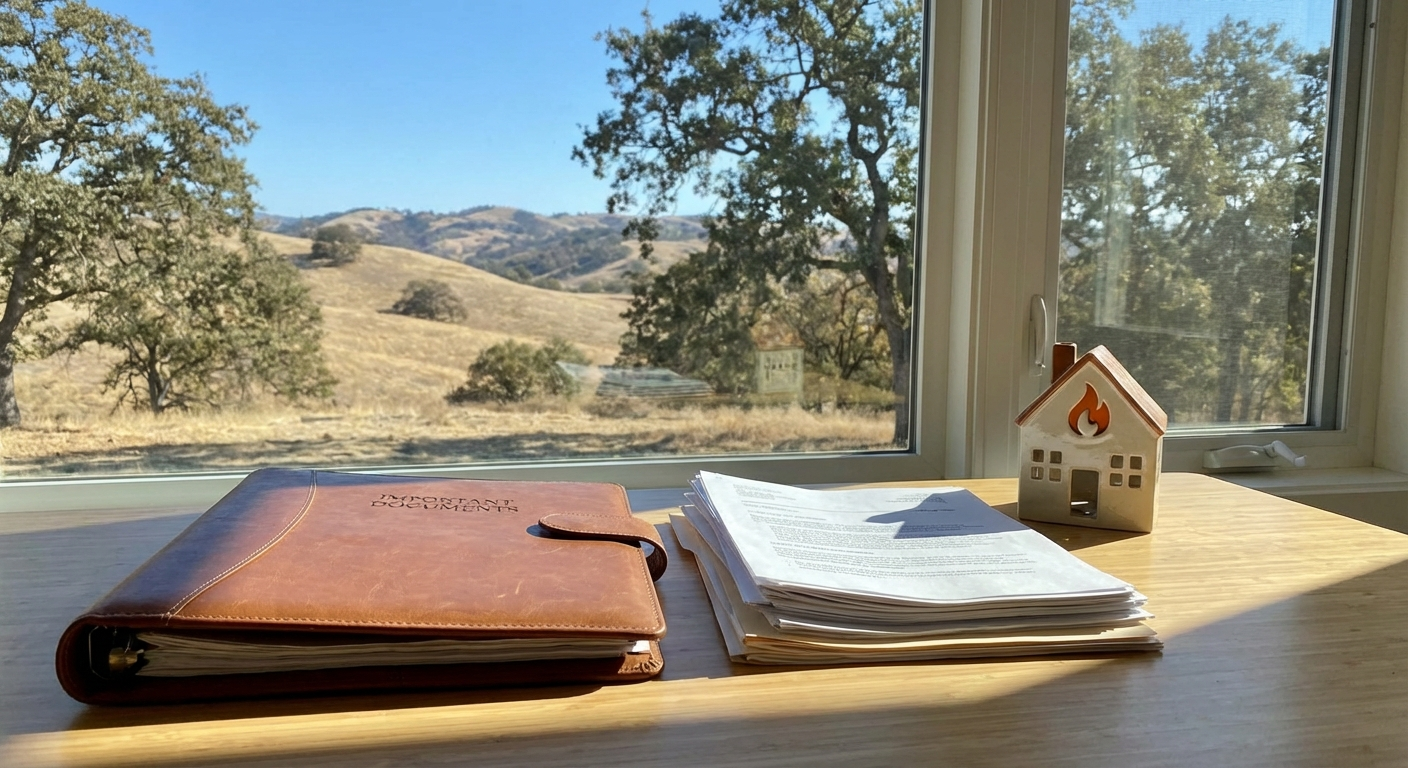
Getting a policy isn’t a one-and-done deal. You wouldn’t buy a car and never get an oil change, right? Your insurance policy needs regular check-ups too. Each year, when your policy renews, you’ll get new documents. Don’t just file them away without a look. Premiums change. Coverage limits shift. Sometimes, an insurer might even change the terms of your policy. Prop 103, for instance, affects how insurers can change rates, but that doesn’t mean your specific policy won’t see adjustments.
Consider keeping an updated home inventory. This is huge. Think about everything you own: furniture, electronics, jewelry, clothing. Take photos or videos of each room. Keep receipts for big-ticket items. Store this information digitally, perhaps in a cloud service, and maybe a physical copy in a fireproof safe off-site. If you ever have a fire, proving what you lost becomes infinitely easier with a detailed inventory. It’s a pain to do, sure, but it’s a bigger pain trying to remember every single item you owned after a devastating loss.
The Worst-Case Scenario: Documents for a Fire Claim
If the unthinkable happens and a wildfire—or even a house fire—damages or destroys your home, the documents you’ve diligently kept will be your lifeline. What will you need?
- Your Policy Document: The full policy, including the declarations page, endorsements, and conditions. This lays out exactly what you’re covered for, the limits, and your responsibilities as the policyholder.
- Home Inventory: We just talked about this. Photos, videos, receipts. This is your proof of what was lost.
- Temporary Living Expenses (ALE) Receipts: If you’re displaced, your policy likely covers Additional Living Expenses (ALE)—hotel stays, meals, laundry, rental car. Keep every single receipt. Insurers won’t just take your word for it.
- Repair Estimates: Once you start getting bids for repairs or rebuilding, keep all estimates and contractor agreements.
- Communication Log: Keep a detailed record of every conversation with your insurance company: dates, times, names of adjusters or representatives, and a summary of what was discussed. This can be invaluable if there’s ever a dispute.
- Photos of Damage: Before and after photos, if possible. Documenting the extent of the damage is critical for your claim.
Dealing with a claim is stressful enough. Having these documents organized beforehand means you can focus on your family and rebuilding your life, rather than scrambling for paperwork.
The Value of a Good Guide
Navigating California’s fire insurance market isn’t something you should do alone. It’s complex, it’s changing fast, and the stakes are incredibly high. A good independent insurance agent doesn’t just sell you a policy; they’re an advocate. They understand the nuances of the market, the specific requirements for different carriers, and how to best position your property for coverage.
Someone like Karl Susman of LA Fire Coverage Insurance, CA License #0B75129, has seen it all. He knows the ins and outs of getting coverage in tricky areas, whether it’s dealing with the FAIR Plan or finding a specialty carrier. His team understands what documents you’ll need, how to present them, and how to help you if you ever need to file a claim. You need someone who speaks the language of insurance and can translate it for you.
Don’t wait until the next fire season to figure out your coverage. Get ahead of it. Talk to an expert who can help you gather the right documents and secure the protection you need. It might just be the most important phone call you make this year.
Ready to ensure your home is properly protected? Get a fire insurance quote today!
Frequently Asked Questions About California Fire Insurance Documents
Q: Can I get fire insurance without proving defensible space?
A: It’s getting harder. Many insurers, especially private ones, require proof of defensible space and home hardening efforts to even offer a quote, particularly in high-risk zones. The FAIR Plan might be more lenient, but even they prefer to see mitigation efforts.
Q: My home was built decades ago. Do I need an updated appraisal?
A: It’s highly recommended. Construction costs have soared, especially in California. An old appraisal might seriously undervalue your home’s replacement cost, leaving you underinsured if a fire destroys it.
Q: How long should I keep old insurance policies and claim documents?
A: Keep old policies for at least three to five years after they expire, or longer if there were any open claims. For claim-related documents, keep them indefinitely, especially if they relate to a major loss.
Q: What if I lose all my documents in a fire?
A: This is why off-site or cloud storage for copies of critical documents is so important. If everything is gone, your insurance company can often provide copies of your policy, but your personal inventory and receipts will be harder to replace.
Q: Does my insurance company share my mitigation documents with other insurers?
A: Generally, no, not directly. However, they may report property characteristics to shared databases that other insurers can access. It’s always best to have your own copies ready for any new application.
Don’t leave your biggest asset exposed to California’s unpredictable fire season. Secure your peace of mind and your future. Click here to get a fire insurance quote now! Or call Karl Susman at LA Fire Coverage Insurance, CA License #0B75129, at (877) 411-5200 for expert guidance.
This article is for informational purposes only and does not constitute financial advice.