The Shifting Sands of California Fire Insurance
Picture the Millers. They’ve called Ventura County home for twenty-five years. Their kids grew up playing in the canyons, and the smell of jasmine often drifts through their windows. They’ve seen wildfires before, too many of them. Each time, they’ve breathed a sigh of relief as the flames veered away, or firefighters held the line.
But recently, their relief turned to worry. Their homeowner’s insurance renewal landed, and the numbers were jarring. Not only had the premium jumped nearly 60% from their last policy, but their long-time insurer, one of the big names like State Farm, was suddenly out of the picture. They weren’t alone. Friends in the Inland Empire, neighbors in the Santa Clarita Valley, everyone’s telling similar stories.
Honestly, it’s a tough time for California homeowners. Insurers are pulling back, saying the wildfire risk is just too high, and the costs to rebuild after a big fire are through the roof. It’s not just the big names either; smaller companies are rethinking their California presence. This leaves a lot of folks scrambling, trying to figure out how to protect what they own.
Most people immediately think about their house itself, the structure. That’s natural. But here’s where it gets interesting. What about everything inside? Your furniture, your clothes, the family photos, your grandfather’s antique clock – all the personal property that makes a house a home. Those items represent memories, comfort, and significant financial value. If a fire rips through, losing your dwelling is devastating enough. Losing every single belonging with it adds another layer of heartbreak and expense.
What “Personal Property” Really Means for Fire Protection
When we talk about personal property, we’re discussing pretty much anything in your home that isn’t permanently attached to the house. Think about it: your sofa, your television, the entire contents of your kitchen, the clothes in your closet, your kids’ toys, your computer. Even your toothbrush. All of it falls under personal property coverage in a standard homeowner’s policy.
This coverage isn’t just a small line item. It’s often a substantial part of your policy, usually set as a percentage of your dwelling coverage—say, 50% or 75%. So, if your house is insured for $500,000, your personal property might be covered for $250,000 to $375,000. That’s a lot of stuff.

Actual Cash Value (ACV) vs. Replacement Cost Value (RCV): A Big Difference
Here’s a distinction that trips up many homeowners, and it’s a huge one when a fire happens. Imagine the Millers’ vintage record collection. If it’s covered at Actual Cash Value (ACV), the insurance company pays out what the records were worth at the time of the fire, factoring in depreciation. That means if a record cost $20 new ten years ago, and it’s now valued at $5 used, you get $5.
Now, if that same collection is covered at Replacement Cost Value (RCV), the insurer pays you what it would cost to buy a brand-new, similar record today. Big difference. ACV will almost always leave you short, forcing you to replace items with significantly less money than you need. RCV is what you want. Always. Most standard homeowner’s policies offer RCV for personal property, but it’s not a given, especially if you’re exploring alternative coverage options.
Which brings up something most people miss. Some items have special limits. Jewelry, fine art, firearms, valuable collections—these often have sub-limits, meaning the policy might only pay out a few thousand dollars for them, regardless of their true value. If you have expensive pieces, you’ll need to “schedule” them separately, adding an endorsement to your policy. It’s an extra step, but it’s the only way to ensure those irreplaceable items are truly protected.
The FAIR Plan: A Safety Net, But With Strings
For many California homeowners, especially those in high-risk zones like parts of the Valley or the foothills of the Sierra Nevada, finding traditional fire insurance has become nearly impossible. When the standard insurers say “no,” the California FAIR Plan steps in. It’s designed to be the “insurer of last resort,” ensuring everyone can get basic fire coverage.
But wait—it’s not a full homeowner’s policy. The FAIR Plan typically covers fire and smoke, basic wind, and some other perils. It doesn’t cover liability, theft, or water damage, which are standard in a typical policy. And for personal property, it often defaults to Actual Cash Value (ACV). That’s a problem, as we just discussed.
To get comprehensive coverage, including Replacement Cost Value for your personal property and protection against other perils, you’ll need what’s called a “Difference in Conditions” (DIC) policy. This is a separate policy you buy from another insurer that “wraps around” your FAIR Plan policy, filling in all those gaps. It’s a two-policy solution, and it can be a bit clunky, but for many, it’s the only way to get real protection.
The FAIR Plan has seen some changes recently. In 2023 and 2024, they increased their coverage limits, which was a welcome move for many homeowners struggling with rising property values. But despite these improvements, it remains a complex system. You still need that DIC policy to feel truly secure.
Getting Coverage: Your Options and Challenges
The struggle is real. Many homeowners feel trapped, stuck between insurers pulling out and the high costs of the FAIR Plan plus a DIC policy. Some are even going uninsured, a truly dangerous gamble in a state prone to devastating fires.
How do you find your way through this maze? For most California homeowners, the answer isn’t a quick online quote. It’s about working with someone who knows the local market inside and out. Someone like Karl Susman at LA Fire Coverage Insurance.
Three things drive your premium up. First, your home’s “risk score.” This isn’t just about where you live, but how your property is prepared. Do you have defensible space? What’s your roof made of? Is there brush clearance around your home? These factors significantly impact whether an insurer will even consider you, and at what price.
Then there’s the broader market. Premiums have jumped significantly. Some areas have seen rates rise 40% between 2022 and 2024. That’s not just a small hike; it’s a major hit to a household budget.
Preparing Your Home, and Your Policy
Defensible space isn’t just a good idea; it’s a lifesaver, both for your property and for your policy. Clearing brush, maintaining landscaping, making sure your roof is fire-resistant—these steps can make your home a more attractive risk to insurers. Some carriers are even starting to offer discounts for homes that meet certain wildfire mitigation standards, though these programs are still developing.
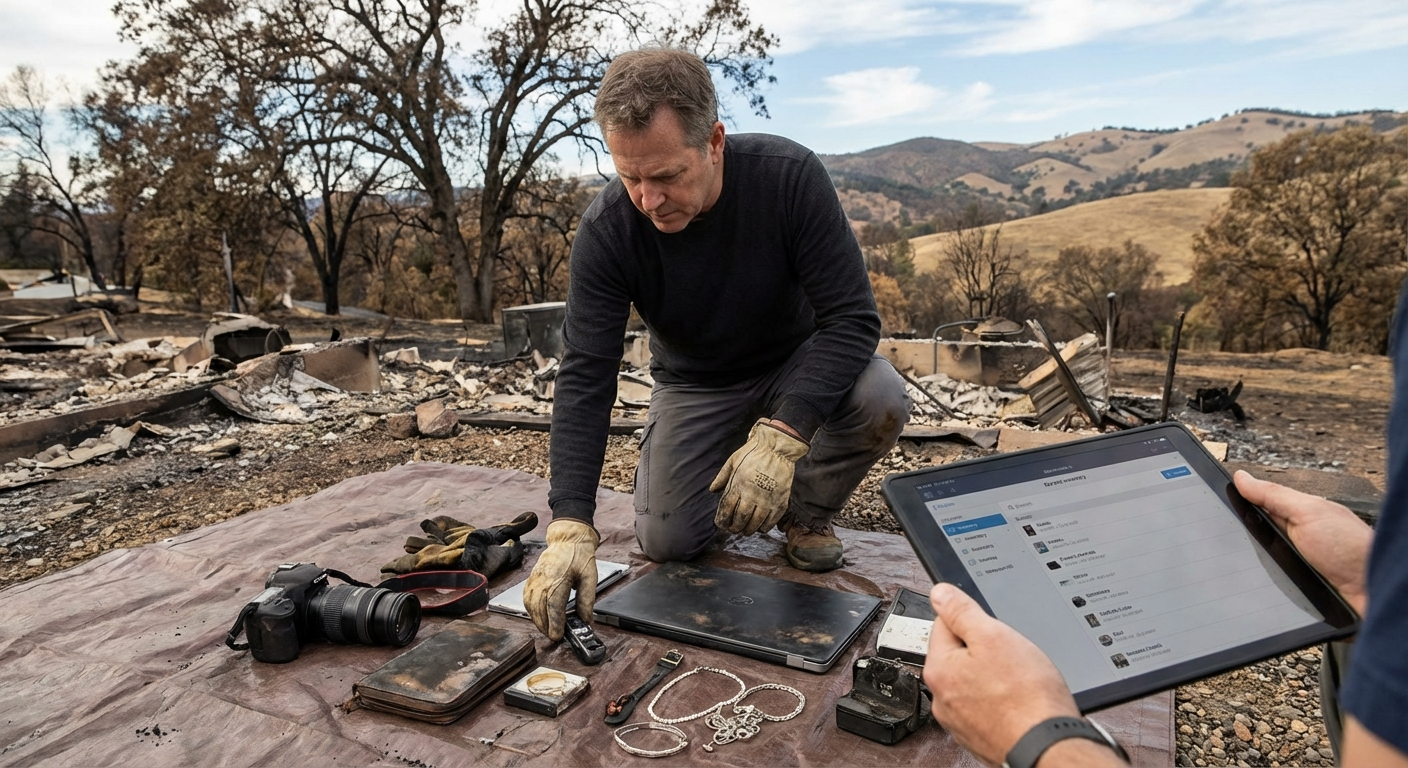
Here’s a practical step everyone should take: inventory your belongings. Take photos, shoot videos, make a detailed list. Keep it somewhere safe, off-site, maybe in a cloud service. This isn’t just busywork. If you ever have to file a claim after a fire, proving what you owned is half the battle. Without an inventory, you’re relying on memory, and that’s incredibly difficult during a stressful time.
And please, review your policy annually. Don’t just let it auto-renew. Markets change, your home value changes, and your personal property value changes. What was adequate coverage five years ago might leave you severely underinsured today. It’s worth the time to understand what you’re paying for and what you’re actually getting in return.
Navigating the Maze with an Expert Guide
This is precisely where an independent insurance agent becomes invaluable. Unlike agents who work for a single company (like State Farm or AAA), independent agents like Karl Susman work with many different insurers. They’re not beholden to one company’s rates or rules. They can shop around, compare policies, and find you the best fit—even if that means combining a FAIR Plan policy with a DIC policy.
They know the local market, too. They know which insurers are still writing policies in Ventura County, or what kind of coverage challenges residents face in the Inland Empire. It’s like having a guide who knows all the hidden paths through a tricky landscape.
Karl Susman and the team at LA Fire Coverage Insurance (CA License #OB75129) specialize in helping Californians find fire insurance solutions, even in the toughest situations. They understand the nuances of personal property coverage, the ins and outs of the FAIR Plan, and how to build a comprehensive protection plan for your home and everything in it.
Don’t leave your personal property to chance. It’s not just stuff; it’s your life’s accumulation. Start protecting it today. Get your personal property fire insurance quote here.
The Future of Fire Insurance in California
It’s not all doom and gloom, but it’s not getting easier overnight. California’s Department of Insurance, led by Commissioner Ricardo Lara, is working on reforms. They’re looking at things like encouraging insurers to offer more coverage if homeowners make wildfire mitigation improvements. Discussions around Prop 103, which governs how rates are approved, are ongoing.
The goal is to stabilize the market and ensure Californians can get affordable coverage. But these things take time. Until then, being proactive, understanding your options, and working with an experienced professional is your best defense against the uncertainty.
Get Your Personal Property Fire Insurance Quote Today
You’ve worked hard for your home and everything in it. Don’t let a wildfire erase years of memories and financial investment. Take the first step toward securing your peace of mind. Click here to get a personalized quote for your California fire insurance personal property coverage.
Frequently Asked Questions About Personal Property Fire Insurance
Is personal property automatically covered by my homeowner’s insurance?
Yes, standard homeowner’s insurance policies typically include coverage for personal property. It’s usually a percentage of your dwelling coverage, often 50-75%. However, the specifics of that coverage—like whether it’s Actual Cash Value or Replacement Cost Value—can vary, and there might be sub-limits for certain high-value items.
What’s the difference between Actual Cash Value (ACV) and Replacement Cost Value (RCV) for my stuff?
This is a big one. Actual Cash Value (ACV) pays you the depreciated value of your items at the time of the loss. So, if your five-year-old TV is destroyed, you’d get its current market value, not what it costs to buy a new one. Replacement Cost Value (RCV) pays you what it would cost to buy a brand-new, similar item today, without deducting for depreciation. RCV is almost always better for homeowners.
Will the FAIR Plan cover all my personal belongings if I live in a high-risk area?
The California FAIR Plan provides basic fire insurance, including some coverage for personal property. However, it often defaults to Actual Cash Value (ACV) for personal property and doesn’t cover many perils found in a standard policy (like theft or water damage). To get Replacement Cost Value for your personal property and broader coverage, you’ll need to purchase a separate “Difference in Conditions” (DIC) policy to complement your FAIR Plan coverage.
Can I get fire insurance if my home is in a high-risk wildfire area?
It can be challenging, but yes, coverage is available. Many traditional insurers have reduced or stopped writing policies in high-risk areas. In these cases, the California FAIR Plan is designed to be an insurer of last resort, providing basic fire coverage. You’ll likely need to combine a FAIR Plan policy with a “Difference in Conditions” (DIC) policy to get comprehensive coverage for your dwelling and personal property.
How do I know how much personal property coverage I need?
The best way to figure this out is to create a detailed home inventory. List all your belongings, especially larger items and anything of significant value. Take photos or videos. Estimate replacement costs for everything. This inventory will not only help you determine the right coverage amount but also be incredibly useful if you ever need to file a claim. An experienced insurance agent can help you review your inventory and ensure your coverage limits are appropriate.
This article is for informational purposes only and does not constitute financial advice.