Think Fire Insurance in LA is Just About Fire? Think Again.
For most Los Angeles homeowners, the idea of fire insurance conjures images of flames licking at hillsides, ash falling like snow. You’re not wrong to think that way. But here’s the thing: by 2026, understanding your fire insurance in Southern California is going to be about a lot more than just the fire itself. It’s about the bigger picture, the shifting ground beneath the entire insurance market.
Honestly, many people assume their standard home insurance policy automatically covers every fire risk. That’s a myth that could cost you everything. The short answer is yes, your homeowner’s policy *should* cover fire. The real answer is more complicated, especially here in the Golden State. Insurers are changing the rules, pulling back, or hiking rates in ways we haven’t seen before.
“My insurer covered me last year. They’ll cover me in 2026, right?”
Not always. This is probably the biggest misconception floating around right now. We’ve seen major players like State Farm and Allstate hit the brakes on new policies in California. Farmers isn’t far behind with tighter restrictions. If you’re currently insured with one of them, you might be okay for now. But when renewal time rolls around in 2026, you could get a non-renewal notice. Suddenly, you’re scrambling.
Why the exodus? Wildfires. Plain and simple. The past few years have been brutal. Think about the fires that swept through Ventura County, or the scary close calls in the Santa Clarita Valley. These aren’t isolated incidents anymore; they’re becoming a regular part of life in California’s wildland-urban interface — and even in areas once thought safe. Insurers look at their balance sheets, see billions in losses, and decide it’s just too risky. They’re not charities.
Which brings up something most people miss: it’s not just the direct damage from fire. Smoke damage, ash contamination, debris removal, temporary living expenses if you’re evacuated – these all add up. A good policy covers these “indirect” costs, but the cost of that “good policy” is what’s really changing.

“If my old insurer drops me, the FAIR Plan will just pick me up, won’t it?”
Well, yes, the California FAIR Plan is there as a last resort. It’s a state-mandated program designed to provide basic fire coverage when traditional insurers won’t. But wait — “basic” is the key word there. It’s not a full homeowner’s policy. It covers fire, smoke, explosions, and some other related perils. What it often doesn’t cover are things like liability, theft, water damage, or personal property beyond a very limited scope. For those, you’d need to buy a separate “Difference in Conditions” (DIC) policy from another insurer.
It’s a two-policy dance. And for many, it’s a much more expensive dance. Premiums for FAIR Plan policies have jumped, too. We saw rates climb significantly between 2022 and 2024, and there’s no sign of that slowing down as more homeowners are forced onto the plan. It’s simply not the ideal solution. It’s a safety net, but it’s got some big holes.
“Okay, so what drives my premium up? Is it just my zip code?”
That’s part of it, sure. If you live in Malibu Canyon or the hills above Glendale, you know your fire risk is higher. But it’s not *just* your zip code. Three things drive your premium up:
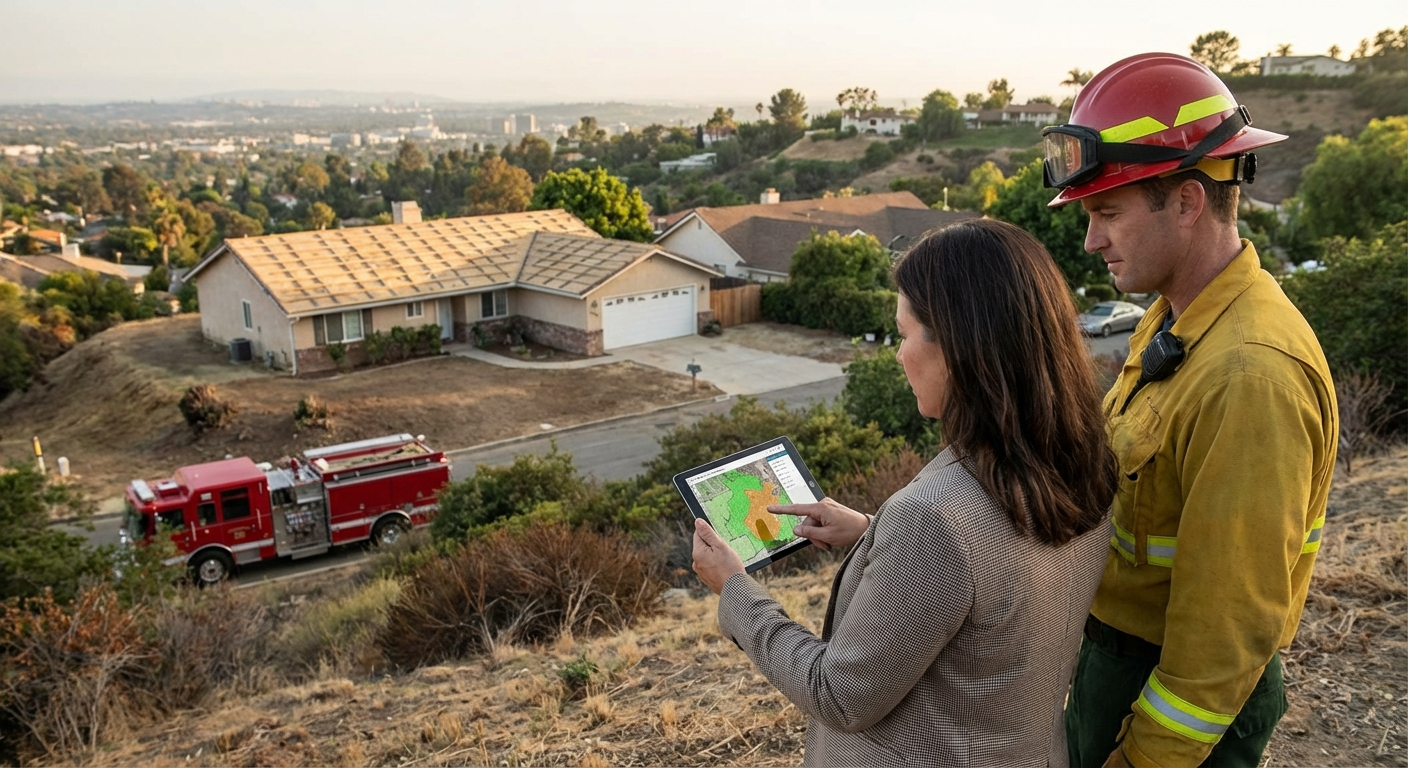
1. **Your Home’s Specific Location:** Insurers use highly detailed mapping software. They look at brush clearance around your property, the slope of the land, the width of the roads for fire truck access, and how far you are from the nearest fire station. Even if you’re in a generally safe zip code, a lot next to an open space could be flagged.
2. **Your Home’s Construction:** What’s your roof made of? Are your eaves open or boxed in? Do you have tempered glass windows? Homes built with fire-resistant materials — a metal roof, stucco siding, dual-pane windows — are often seen as less risky. Older homes, especially those with wood shake roofs or single-pane windows, face higher premiums.
3. **The Overall Market:** This is the big one for 2026. Even if your home is perfectly hardened, the sheer volume of claims across the state pushes everyone’s rates up. Prop 103, which gives the state insurance commissioner power over rates, is always a factor. There’s constant tension between insurers wanting to charge what they believe is fair for the risk, and the state wanting to keep insurance affordable for residents.
Honestly, it’s a tough balancing act. Insurers need to be profitable to stay in business, but homeowners need affordable coverage.
“Is there anything I can actually *do* to get better coverage or lower my costs?”
Absolutely. This isn’t just a waiting game. You have options, and taking action now can make a real difference for 2026.
* **Harden Your Home:** This is huge. Clear defensible space around your house – 100 feet is the standard. Trim trees, remove dead brush, clean gutters. Replace wood roofs with fire-resistant materials. Install ember-resistant vents. These steps don’t just protect your home; they can also make you more attractive to insurers. Some carriers even offer discounts for these improvements.
* **Shop Around, Aggressively:** Don’t just accept your non-renewal. Don’t assume the FAIR Plan is your only option. Many smaller, regional carriers are still writing policies, especially if your home mitigation efforts are strong. This is where an independent insurance agent becomes invaluable. They work with multiple carriers and can compare policies and prices for you.
* **Understand Your Policy:** Don’t just glance at the premium. Read the fine print. What’s your deductible? What are the coverage limits for your dwelling, other structures, and personal property? Do you have “replacement cost” coverage or “actual cash value”? (Always go for replacement cost if you can – it pays to rebuild with new materials, not depreciated value.)
Finding the right coverage in Los Angeles for 2026 won’t be a simple click of a button. It’s going to require diligence, maybe some home improvements, and definitely a good guide. Someone like Karl Susman at LA Fire Coverage Insurance has been helping Californians navigate these complex waters for years. With CA License #OB75129, he understands the local market and knows which carriers are still writing in areas like the Inland Empire or the Valley.
You don’t have to face this alone. Getting expert advice can save you stress, time, and ultimately, money.
Ready to see your options for LA fire coverage? Don’t wait until the last minute. Get a personalized quote today and understand what your home needs. Visit https://lafirecoverageinsurance.com/quote/ to start the conversation.
“What if I’m building a new home? Will it be easier to get coverage?”
Not necessarily easier, but potentially better. New construction usually incorporates modern building codes, which often include more fire-resistant materials and design principles. Think stucco siding, concrete tile roofs, double-pane windows, and proper attic ventilation. These features are a big plus for insurers. However, if your new build is in a high-risk area, you’ll still face challenges and higher premiums. The location still rules.
“Are there any legislative changes coming that might help homeowners?”
There’s constant talk and some movement. California’s Department of Insurance is pushing insurers to offer discounts for home hardening efforts. There’s also discussion around making the FAIR Plan more robust, but that often comes with its own set of challenges, like how to fund it. Prop 103 is always in the mix, with consumer advocates pushing for rate stability and insurers arguing for rates that reflect risk. It’s a slow-moving ship. Don’t count on a legislative silver bullet to solve all your problems by 2026. Proactive steps on your end are your best bet.
“My agent just tells me what’s available. Why should I talk to an independent agent?”
Big difference. A captive agent works for one insurance company – they can only sell you *that* company’s products. An independent agent, like Karl Susman, works for *you*. They have relationships with multiple carriers, sometimes dozens. This means they can shop the market for you, compare different policies, and find the best fit for your specific needs and budget, especially when the market is tight. It’s like having a personal shopper for insurance.
The truth is, the insurance market for Los Angeles fire coverage in 2026 isn’t going to get simpler. It’s going to require more homeowner involvement, more home hardening, and more careful shopping. But it’s not impossible to get good coverage. You just need to know where to look and who to trust.
Don’t let the complexities of the LA fire insurance market leave you exposed. Take control of your coverage. Contact Karl Susman at LA Fire Coverage Insurance, CA License #OB75129, or call (877) 411-5200 for personalized guidance. You can also get started online right now: https://lafirecoverageinsurance.com/quote/.
FAQ
What’s the difference between “replacement cost” and “actual cash value” for my home?
Replacement cost pays to rebuild your home with new materials, at today’s prices, without deducting for depreciation. Actual cash value only pays out the depreciated value of your home and its contents. Always aim for replacement cost for your dwelling if possible; it offers much better protection.
Do I need separate wildfire insurance if I have a homeowner’s policy?
Most standard homeowner’s policies include fire coverage, which typically covers wildfires. However, in high-risk areas, traditional insurers may exclude fire or non-renew your policy, forcing you to get a separate fire-only policy (like through the FAIR Plan) and then a “Difference in Conditions” policy for everything else.
What exactly is “defensible space” and why is it important?
Defensible space is the area around your home that’s been cleared of flammable vegetation and materials. California law generally requires 100 feet. It creates a buffer that helps slow or stop the spread of wildfire, giving firefighters a safer space to defend your home. Insurers often look at your defensible space when assessing risk.
Can my insurance company drop me even if I’ve never had a claim?
Yes, they can. Insurers can choose not to renew your policy for various reasons, especially if the risk profile of your area changes dramatically due to increased wildfire threat. It’s not about your individual claims history in these situations, but the overall risk the company is taking on.
This article is for informational purposes only and does not constitute financial advice.