
Here’s what you’ll learn:
- How standard homeowner’s insurance covers wildfire damage and evacuation costs.
- The specific part of your policy, “Loss of Use,” that pays for temporary living expenses.
- Why evacuation costs in California can add up much faster than you think.
- What’s happening in California’s tough insurance market and how it affects you.
- Practical steps you can take right now to protect your home and finances.
Understanding Your Homeowner’s Policy – The Basics of Fire Coverage
Living in California means living with the constant hum of wildfire season. It’s not just a possibility; it’s a yearly reality for so many communities. When the sirens blare and the evacuation orders come down, your mind races. Is your family safe? What about your home? And then, the gnawing question: what happens to your finances?
Most California homeowners assume their insurance covers fire. And yes, for the most part, a standard homeowner’s policy (often called an HO-3 or HO-5) does include fire damage. But here’s where it gets interesting. Fire isn’t just about rebuilding your house. It’s also about the days, weeks, sometimes months, you spend away from it.
Dwelling Coverage (Coverage A)
This is the big one. It pays to repair or rebuild the physical structure of your home if it’s damaged or destroyed by a covered peril, like fire. Think walls, roof, foundation – the whole shebang. Getting this amount right is absolutely critical, especially with construction costs soaring in places like the Inland Empire and the Valley.

Other Structures (Coverage B)
Got a detached garage? A shed out back? Maybe a fence or a guesthouse? This part of your policy covers those. It’s usually a percentage of your dwelling coverage, say 10% or 20%. People often forget about these smaller structures, but they can be expensive to replace after a fire.
Personal Property (Coverage C)
Everything inside your home – your clothes, furniture, electronics, even your toothbrush – falls under personal property. This coverage helps you replace those items. Most policies offer “actual cash value,” which means they pay out what your stuff was worth at the time of the loss, factoring in depreciation. You can often add “replacement cost” coverage, which pays to buy new items without deducting for age. That’s a big difference if you lose everything.
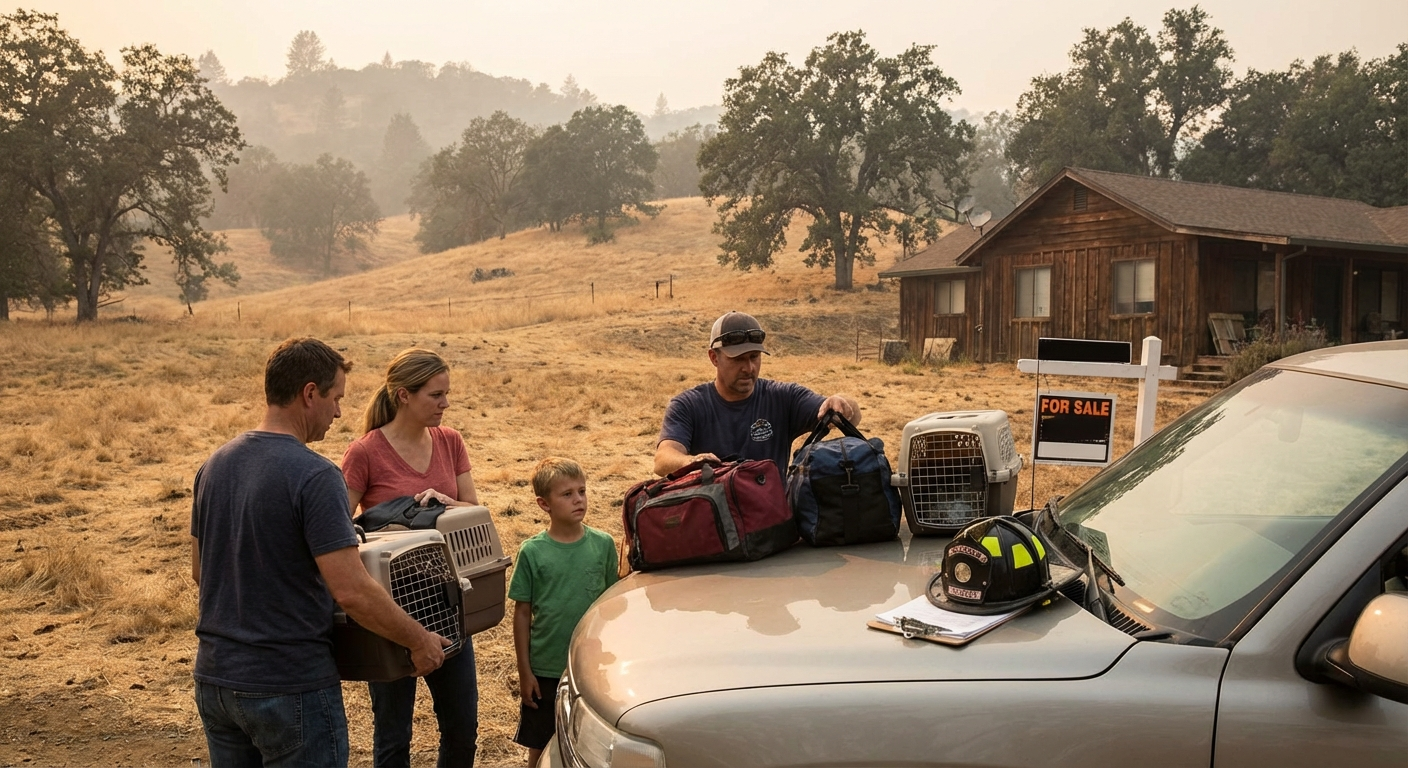
Loss of Use (Coverage D) – This is where evacuation costs come in.
This part of your policy is your financial safety net when you can’t live in your home because of a covered loss, like a wildfire. It’s called “Loss of Use,” or sometimes “Additional Living Expenses” (ALE). This is what pays for your temporary housing, food, and other necessary expenses while you’re evacuated or your home is being repaired. It’s not just a nice-to-have; it’s essential for peace of mind during a crisis.
Decoding “Loss of Use” (Coverage D) – Your Evacuation Lifeline
So, you’ve been ordered to evacuate. The roads are jammed, the air is thick with smoke, and you’re heading to who-knows-where. This is exactly what Loss of Use coverage is for. It kicks in when your home becomes uninhabitable due to a covered event. That means if a wildfire forces you out, your policy should help cover the extra costs you face.
What exactly does it cover? Think about your normal living expenses, then think about what’s *extra* because you’re displaced. It pays for things like:
- Temporary Housing: Hotel rooms, short-term rentals, even RV parks.
- Food: Restaurant meals, groceries you wouldn’t normally buy because you can’t cook at home.
- Transportation: Extra gas if you’re driving further for work or school.
- Laundry: If you don’t have access to your own machines.
- Pet Boarding: Fido and Fluffy need somewhere to stay too.
- Lost Rental Income: If you rent out part of your home and lose that income because of the damage.
But wait — there are limits. Your Loss of Use coverage isn’t endless. It usually has a dollar limit, often a percentage of your dwelling coverage (e.g., 20% or 30%), or a time limit, like 12 or 24 months. You’ll also still have to pay your regular mortgage and bills. The policy only covers the *additional* expenses. Understanding these limits before a disaster strikes is incredibly important. You don’t want to find out you’ve run out of coverage when you still have no home to return to.
For example, if the 2025 LA fires were to sweep through, forcing tens of thousands from their homes for weeks, those hotel bills and restaurant tabs would pile up fast. That’s not the whole story, though. Some policies also have a deductible that applies to Loss of Use, meaning you’d pay a certain amount out of pocket before coverage kicks in. Always check your policy details.
The Reality of Evacuation Costs – It Adds Up Fast
You might think, “Oh, a few days in a hotel won’t be that bad.” But let’s be real. Evacuations in California can last for days, sometimes weeks, especially in areas like Ventura County or the Santa Clarita Valley where fires burn for extended periods. The costs are sneaky. A hotel room in a safe area might run you $150-$300 a night. For a family of four, eating out three times a day can easily hit $100-$200. Add in gas, snacks, toiletries you forgot, maybe even clothes if you left in a hurry.
Consider this: two weeks of temporary living for a family could easily top $5,000-$10,000. And that’s if your home isn’t damaged. If your home is gone, and you’re displaced for a year, those costs could be $50,000 or more. Your Loss of Use coverage is designed to absorb that shock, but only up to its specified limits. Many people find their coverage limits too low for extended displacement in California’s expensive market.
Which brings up something most people miss. The emotional toll of an evacuation is immense. The last thing you need is financial stress on top of everything else. Having adequate Loss of Use coverage means you can focus on your family’s safety and well-being, rather than worrying about where the next meal is coming from or how you’ll pay for another night in a motel.
Navigating California’s Tough Insurance Market
Honestly, getting fire insurance in California has become a nightmare for many homeowners. Insurers like State Farm, AAA, and Farmers have either pulled back from writing new policies in wildfire-prone areas or significantly raised their rates. Premiums jumped 40% between 2022 and 2024 for some homeowners, particularly those in high-risk zones. It’s a tough pill to swallow, but it’s the reality of a changing climate and increased wildfire activity.
For homeowners who can’t find coverage in the traditional market, there’s the California FAIR Plan. It’s often called the “insurer of last resort.” The FAIR Plan provides basic fire insurance, but it’s important to understand its limitations. It usually only covers fire, smoke, and some other perils, leaving out things like liability, theft, or water damage. To get full coverage, you often need to buy a “Difference in Conditions” (DIC) policy from a separate insurer to bundle with your FAIR Plan policy. It’s more complicated, and often more expensive, than a standard homeowner’s policy.
The state’s insurance regulator, the Department of Insurance, has been trying to make changes. They’re looking at things like allowing insurers to use forward-looking wildfire models – not just historical data – to set rates. And there’s always the shadow of Proposition 103, which requires rate changes to be approved by the state. It’s a complicated dance between consumer protection and keeping insurers willing to do business here.
The short answer is yes, you can get fire insurance. The real answer is more complicated. It might cost more, and you might have fewer options. That’s why being informed and working with an experienced agent is more important than ever.
Proactive Steps – What You Can Do Now
Don’t wait for the smoke to appear on the horizon. Take action today. Seriously. It can make a world of difference.
- Review Your Policy Annually: Don’t just pay the bill. Get a copy of your policy and read it. Understand your dwelling coverage, personal property limits, and especially your Loss of Use coverage. Are the limits high enough for your family to live comfortably for several months if needed?
- Understand Your Coverage Limits: If your home is worth $700,000, but your policy only covers $500,000 for rebuilding, you’re severely underinsured. Construction costs have risen dramatically. Make sure your dwelling coverage reflects the true cost to rebuild today, not what your home was worth years ago.
- Document Your Belongings: Walk through your home with a video camera or smartphone. Open closets, drawers, and cabinets. Narrate what you see. Keep this video (and photos) in a safe, off-site location or cloud storage. This makes filing a personal property claim much easier.
- Create an Evacuation Plan and Emergency Fund: Know your escape routes. Have a “go bag” ready. Beyond insurance, having some cash on hand for immediate needs, like a tank of gas and a night at a motel, can reduce stress during the first few hours of an evacuation.
- Defensible Space Efforts: Insurers are increasingly looking at what you’re doing to protect your property. Clearing brush, maintaining a “defensible space” around your home, and hardening your home against embers can sometimes help you qualify for better rates or even get coverage at all. Some insurers offer discounts for these efforts.
Getting the Right Advice
Trying to figure out California fire insurance on your own can feel like navigating a maze blindfolded. The rules change, the market shifts, and what was true last year might not be true today. That’s why having an experienced guide is so valuable.
Karl Susman and the team at LA Fire Coverage Insurance, CA License #0B75129, have been helping Californians understand their coverage options for years. They know the ins and outs of the market, the nuances of different policies, and how to help you find the best protection for your home and family, including adequate coverage for those unexpected evacuation costs.
Don’t guess when it comes to something as important as your home and your financial future. Get clear answers and personalized advice.
Ready to explore your options and get a clear picture of your fire insurance coverage? Get a fire insurance quote today.
Frequently Asked Questions About Fire Insurance and Evacuation Costs
Does my standard homeowner’s policy automatically include Loss of Use coverage?
Yes, almost all standard homeowner’s policies (HO-3, HO-5) in California include Loss of Use (Coverage D) as a fundamental part of the policy. However, the specific limits – both dollar amounts and timeframes – can vary significantly. It’s always a good idea to confirm these details with your agent.
What if I’m evacuated but my home isn’t actually damaged? Does Loss of Use still apply?
Generally, yes. If a civil authority (like the fire department or sheriff’s office) orders a mandatory evacuation of your area due to a covered peril like a wildfire, and your home is inaccessible, your Loss of Use coverage typically kicks in. You don’t necessarily need actual damage to your property for this part of your policy to help cover your additional living expenses.
My premiums keep going up. What can I do to lower them?
Rising premiums are a harsh reality for many Californians. While you can’t control the overall market, you can take steps. Focus on making your home more resilient to fire through defensible space and home hardening. Some insurers offer discounts for these efforts. Also, consider raising your deductible if you have a robust emergency fund. Most importantly, shop around. An independent agent like Karl Susman can compare options from multiple carriers for you.
What if I have the California FAIR Plan? Does it include Loss of Use?
The California FAIR Plan usually includes basic Loss of Use coverage. However, like all FAIR Plan coverages, it might be more limited than what you’d find in a traditional policy. The dollar limits or timeframes might be lower. If you have a FAIR Plan policy, you should carefully review the Loss of Use section and consider if it’s adequate for your needs, especially if you’ve also purchased a Difference in Conditions (DIC) policy.
Protecting your home and family from the financial fallout of a wildfire requires more than just hoping for the best. It means understanding your insurance, planning ahead, and taking proactive steps. Don’t leave yourself exposed to the unexpected costs of an evacuation. Take control of your coverage today.
For personalized guidance and to review your options, reach out to Karl Susman at LA Fire Coverage Insurance, CA License #0B75129, phone (877) 411-5200. Or, start your quote process online right now: Get your fire insurance quote here.
This article is for informational purposes only and does not constitute financial advice.