“Hardening” Your Home: A Magic Bullet for California Fire Insurance?
Many folks think that if they just follow the basic rules for brush clearance, their insurance company will be happy. They assume a few feet of trimmed shrubs is enough to keep their premiums in check. The short answer is yes, clearing around your home helps. The real answer is much, much more complicated.
California’s wildfire problem isn’t just a news story anymore; it’s a financial crisis for homeowners. Insurers like State Farm and AAA have pulled back or stopped writing new policies in parts of the state. Farmers isn’t far behind. Premiums jumped 40% between 2022 and 2024 for many unlucky residents in places like Ventura County and the Inland Empire. Why? Because the old ways of assessing risk just don’t cut it when entire neighborhoods can vanish in a single afternoon.
A Common Misconception About Your Roof
You might believe your asphalt shingle roof is “fire-resistant.” And sure, it’s better than cedar shakes. But here’s the thing: most modern wildfires don’t spread primarily by direct flame contact with your roof. They spread by embers. Tiny, glowing pieces of burning vegetation can travel for miles on the wind, landing in gutters, under eaves, or finding their way into attic vents.
Think about it. A fire starts miles away, say, up in the hills overlooking the Valley. The wind picks up. Suddenly, your home isn’t just facing a fire front; it’s getting peppered by thousands of miniature incendiaries. An asphalt shingle roof might not burst into flame, but those embers can find an unprotected vent, a gap in your flashing, or a pile of dried leaves in your gutter, and that’s all it takes.

It’s Not Just About Your House. It’s About Your Yard, Too.
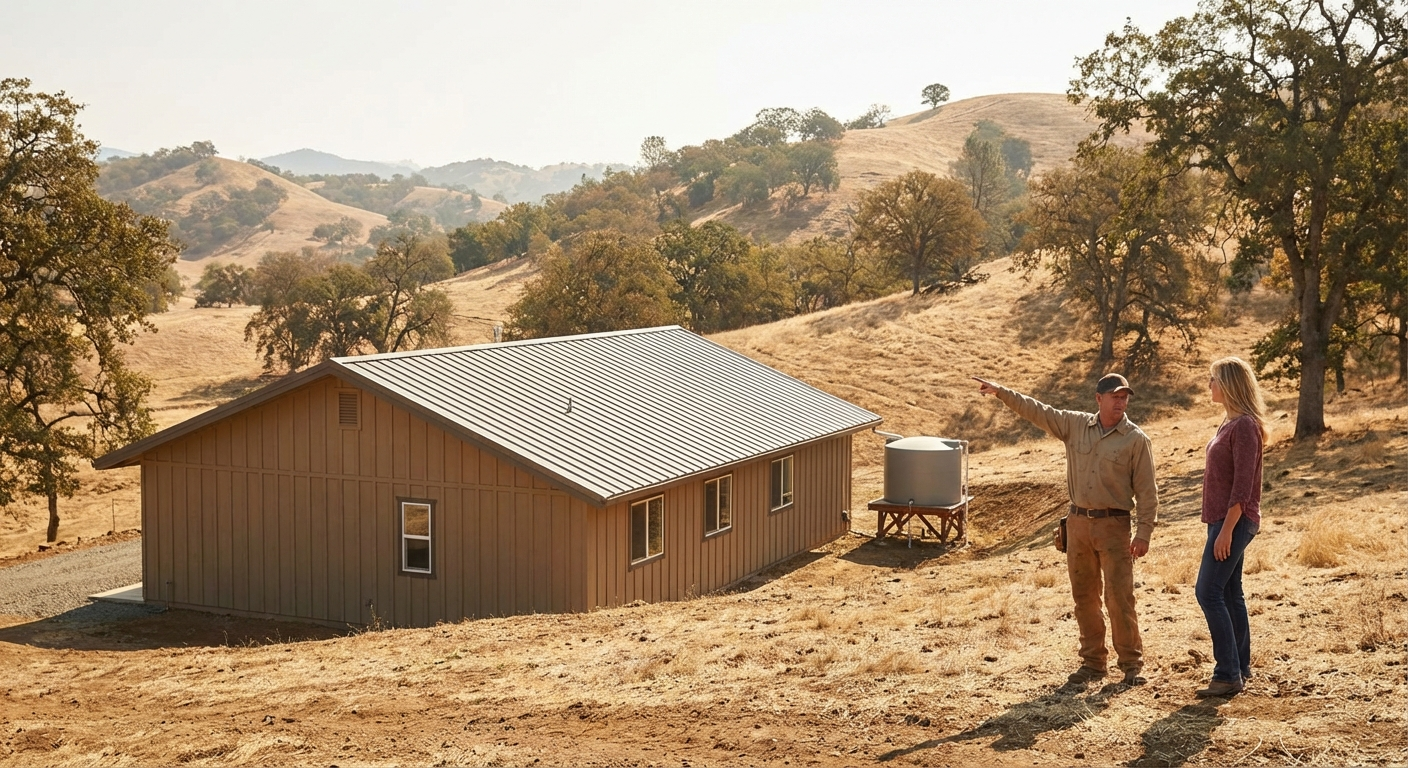
Homeowners often focus solely on the structure itself. They’ll upgrade windows, sure. Maybe even replace some siding. But they forget the immediate surroundings — what experts call the “ignition zone.” This area, typically 0-5 feet from your home, is incredibly important.
A beautiful redwood deck, for example, looks fantastic. But is it made of fire-resistant material? Are there leaves and debris underneath it? What about those pretty shrubs right up against the house? These details, seemingly small, can make a huge difference to an insurance underwriter looking at satellite imagery of your property.
The “Defensible Space” Puzzle
California law mandates “defensible space” around homes in high fire-risk areas. You’re required to clear away flammable materials within 100 feet. That’s a good start. But insurers are looking beyond just compliance. They want to see a true “hardened” home, one that actively resists ember intrusion and radiant heat.
For example, a lot of people think a green lawn is good enough. It’s certainly better than dry grass. But wait — what if that lawn has a bunch of junipers planted within five feet of the house? Those are highly flammable. What if your firewood stack is right next to the garage? Even if it’s outside the 30-foot zone, it’s still a risk. These are the kinds of specific vulnerabilities that can send your insurance premiums skyrocketing or even lead to non-renewal.
The Big Picture: Why Insurers Care So Much
This isn’t about insurers being greedy, though some might argue that point. This is about pure, cold risk assessment. When an entire region is burning, as we’ve seen in Paradise or Santa Rosa, the financial losses are catastrophic. Insurers have to pay out billions. Prop 103, passed back in 1988, regulates insurance rates, but it doesn’t force companies to write policies they deem financially unsound.
The state is trying to fix things. Commissioner Ricardo Lara has been pushing new rules, encouraging insurers to consider “home hardening” discounts. The idea is simple: if you make your home safer, you should get a break on your premium. But the devil’s in the details. What exactly counts as “safe enough”? And how do you prove it to an insurer who might be thousands of miles away?
The FAIR Plan — Not a Silver Bullet
When private insurers pull out, many homeowners end up on the California FAIR Plan. It’s the “insurer of last resort,” meant to provide basic fire coverage when you can’t get it anywhere else. It’s better than nothing, absolutely. But here’s where it gets interesting. The FAIR Plan can be significantly more expensive than a private policy. It also offers less coverage — often just fire, not liability or theft.
Which brings up something most people miss. Even if you’re on the FAIR Plan, your home’s vulnerability still matters. While it’s designed to take on higher risks, the push for hardening isn’t going away. If the 2025 LA fire season is anything like what we fear, with more intense, unpredictable blazes, even the FAIR Plan might start looking for ways to encourage or eventually mandate these upgrades.
So, What Exactly Are These “Code Upgrades” We’re Talking About?
It’s more than just clearing brush. We’re talking about making your home a fortress against embers and radiant heat. These aren’t just “suggestions” anymore; they’re becoming the price of admission for affordable insurance.
From Ember Traps to Hardened Homes
* **Roofs and Gutters:** Class A fire-rated roof materials are a must. But it’s also about vent coverings (1/8-inch mesh to keep embers out), enclosed eaves, and keeping gutters free of debris. Metal gutters are a good idea.
* **Vents:** All vents — attic, foundation, gable — should have fine mesh screens to block embers. Some new designs are even “ember-resistant” by baffling airflow.
* **Siding:** Replace vinyl or wood siding with non-combustible materials like fiber cement, stucco, or metal. If you can’t replace it all, focus on the first five feet from the ground.
* **Windows:** Dual-pane, tempered glass windows offer better protection against radiant heat. The frames matter too; vinyl can melt.
* **Decks and Fences:** Wooden decks attached to the house are a huge liability. Consider non-combustible decking materials. Fences should have a non-combustible section — maybe five feet of metal — where they connect to the house. That stops a fire from running straight up the fence line to your home.
* **Defensible Space Plus:** Beyond the 100 feet, consider the “ignition zone” (0-5 feet from the house) and the “intermediate zone” (5-30 feet). No flammable plants, mulch, or items in the ignition zone. Reduce density in the intermediate zone.
Honestly, it sounds like a lot. And it can be. But these aren’t just cosmetic changes. They’re structural fortifications designed to give your home a fighting chance.
The Financial Side: Can Upgrades Really Save You Money?
This is the million-dollar question for many homeowners. You’re already facing rising costs for everything else. Is it really worth spending thousands on upgrades if your insurance company just raises your rates again next year?
The short answer is yes. The real answer is it’s a long-term investment in both your financial stability and your peace of mind. Insurers are starting to offer discounts — sometimes significant ones — for homes that meet specific hardening standards. It’s not a guaranteed rate, no insurance agent can promise that, but it certainly improves your chances.
The Carrot and The Stick of California Insurance
Right now, the state is mostly offering a “carrot” — the promise of discounts. But the “stick” is already visible: losing your private insurance, ending up on the FAIR Plan, or simply having your home become uninsurable at any reasonable cost. If you’re in a high-risk area, say, one of those beautiful canyon homes in Malibu or a property nestled in the hills of San Bernardino, these upgrades aren’t just about saving money; they’re about keeping your home insurable, period.
Consider this: if you sell your home, a potential buyer’s insurance costs will be a major factor. A hardened home is a more attractive, and insurable, property. It’s an investment that pays off now and down the road. Karl Susman, from LA Fire Coverage Insurance, CA License #OB75129, has seen this firsthand. “Homeowners who proactively harden their properties often find themselves in a much better position,” he says. “They have more options, and sometimes, those options come with better rates.”
Finding the Right Path Forward
So, what should you do? Start with an assessment. Many local fire departments or organizations offer free or low-cost home evaluations to identify your specific vulnerabilities. Get a report. Then, prioritize. Maybe your biggest risk is an old wood fence connecting to the house, or those open attic vents. Tackle those first.
Don’t try to do it all at once if you can’t afford it. Make a plan. Show your insurance agent what you’re doing. Document your upgrades with photos and receipts. This documentation can be incredibly valuable when trying to prove your home’s improved risk profile.
It’s clear that simply hoping for the best isn’t an option anymore in California. Taking proactive steps to harden your home is becoming less of an option and more of a necessity. If you’re wondering about your specific situation and what these upgrades could mean for your policy, it’s always smart to talk to an expert.
Ready to explore your options for fire coverage? Get a quote today and see what’s possible for your home. Visit https://lafirecoverageinsurance.com/quote/ to start.
Finding the right coverage in California’s challenging market requires a knowledgeable guide. Karl Susman and his team at LA Fire Coverage Insurance, CA License #OB75129, can help you understand these complex changes. Give them a call at (877) 411-5200.
Frequently Asked Questions About California Fire Insurance and Upgrades
Do all California homeowners need to harden their homes, even if they’re not in a high-risk zone?
Not necessarily by law, but it’s becoming a smart move for everyone. Even homes in seemingly low-risk areas can be affected by embers during a strong wind event. Insurers are increasingly looking at overall regional risk, not just your immediate neighborhood. Plus, hardening your home offers peace of mind.
Will I automatically get a discount if I make these upgrades?
Not automatically, no. You’ll need to inform your insurance company or agent about the upgrades. They might require documentation, like photos or receipts, or even send an inspector. Some insurers are offering specific discounts for certified “hardened” homes, but it varies widely by company and policy. It’s best to discuss this with your agent, like Karl Susman at LA Fire Coverage Insurance.
What’s the most important upgrade I can make for fire resistance?
That’s tough because it depends on your home’s specific vulnerabilities. However, experts often point to the roof and the first five feet around the home (the “ignition zone”) as critically important. Ensuring a Class A fire-rated roof, covering all vents with fine mesh, and keeping the immediate area around your house clear of any flammables are usually high-priority items.
I’m on the FAIR Plan. Should I still bother with these upgrades?
Absolutely. While the FAIR Plan is designed for higher-risk properties, these upgrades protect your home first and foremost. They also demonstrate a commitment to risk reduction, which could be beneficial if you ever try to return to the private market. Even on the FAIR Plan, a hardened home has a better chance of surviving a wildfire.
Where can I get a professional assessment of my home’s fire risk?
Many local fire departments offer free or low-cost home assessments. Organizations like the Fire Safe Council of California or your local resource conservation district might also provide evaluations or connect you with qualified professionals. Some insurance companies may even offer assessments as part of their service.
If you’re ready to get a quote and learn more about your fire coverage options in California, visit https://lafirecoverageinsurance.com/quote/.
This article is for informational purposes only and does not constitute financial advice.